China Recovery Stumbles Again as Domestic Demand Shock Deepens
Summary
- China’s key April indicators, including industrial production, retail sales and fixed-asset investment, all slowed at once, suggesting the economic recovery is being pushed back.
- A property slump, a drop in private investment, and weak consumption have combined to weigh on domestic demand, making it difficult for private companies to expand capital spending and business operations.
- China’s leadership reaffirmed a more proactive fiscal policy and an accommodative monetary policy stance, but demand for stronger consumption support and property-market stabilization measures could grow depending on second-quarter GDP growth and upcoming data.
Forecast Trend Report by Period


Exports Fail to Revive China’s Domestic Economy
April Activity Indicators Cool Sharply Across the Board
Middle East Energy Shock Adds Pressure on Consumption
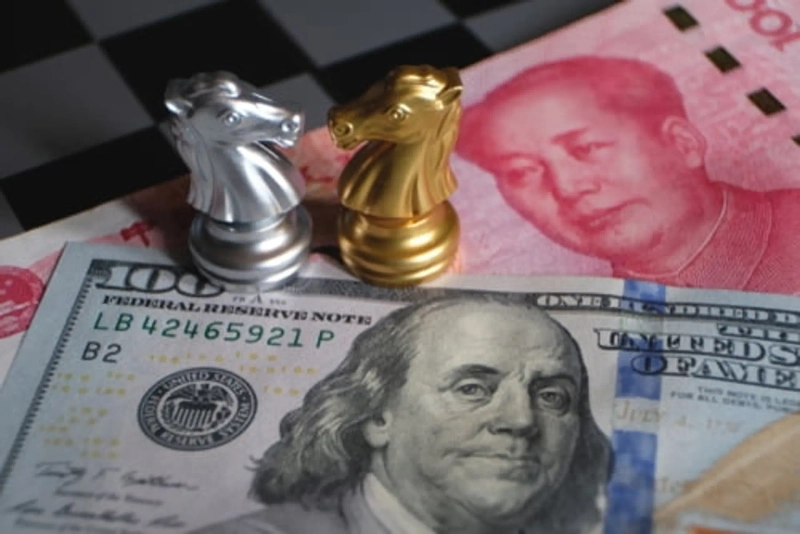
Warning signs are flashing again for China’s economy just as a recovery appeared to be taking hold. A prolonged war in the Middle East has raised costs for companies, while the property slump and weakening household spending have combined to chill domestic demand.
Even strong exports have failed to revive the weakening domestic economy, adding to concerns that the broader recovery is being delayed.
China’s April Economic Indicators All Weakened
China’s main economic indicators all deteriorated in April, according to data released on May 18 by the National Bureau of Statistics.
Industrial production rose 4.1% from a year earlier last month. That marked a sharp slowdown from March’s 5.7% gain and was well below economists’ 6% forecast. It was also the weakest increase since July 2023, when output rose 3.7%. On a month-over-month basis, production edged up 0.05%, close to stagnation.
The slowdown in industrial output was attributed to an energy shock caused by the Iran war. Higher global oil prices and supply concerns drove up costs, but weak domestic demand left companies unable to pass those increases on fully to consumers.
Retail sales, a key gauge of consumption, rose just 0.2% from a year earlier in April. That was down sharply from 1.7% in March and far below the market forecast of 2%. It was the weakest reading since December 2022, when sales fell 1.8%.
Fixed-asset investment fell 1.6% in January through April from a year earlier. The measure had shown signs of recovery in the first quarter, rising 1.7%, but slipped back into contraction a month later.
Economists see the data as the fallout from a domestic-demand shock. As recently as the first quarter, the prevailing view was that China’s economy was holding up better than expected. Gross domestic product grew 5% from a year earlier in the quarter, while industrial production rose 6.3% in January and February and 5.7% in March, underscoring resilient manufacturing activity.
Reuters said the solid first-quarter performance relied heavily on exports and parts of advanced manufacturing rather than on steady expansion in domestic demand. The April figures, it added, point to an early loss of first-quarter momentum in the second quarter.
The Weak Underbelly of China’s First-Quarter Resilience
Economists are most worried about consumption. Retail sales growth was effectively flat last month.
Weak spending is intertwined with the property downturn, one of the Chinese economy’s structural vulnerabilities. Real estate development investment dropped 13.7% in January through April from a year earlier, a steeper decline than the 11.2% fall in the first quarter. Over the same period, floor area sold for new homes fell 10.2% and the value of those sales dropped 14.6%. New housing starts declined 22%, while financing for property developers fell 18.4%.
The housing-market slump is no longer just a problem for the construction sector. It continues to weigh on household wealth sentiment, consumption, local-government finances and private investment more broadly.
The investment slowdown was more pronounced in the private sector. Private investment fell 5.2% in the first four months of the year from a year earlier. Even excluding real estate, it was down 1.9%. By contrast, investment in basic infrastructure, high-technology industries and aerospace equipment manufacturing all increased.
That suggests Beijing is continuing to channel fiscal and industrial policy support toward strategic industries and infrastructure. “It is difficult to revive the broader economy through government-led investment alone when private companies are not actively expanding capital spending or business operations,” an industry official said.
Policymakers are facing a growing challenge as well. At a Politburo meeting last month, China’s leadership reaffirmed a more proactive fiscal policy and an appropriately accommodative monetary policy stance. It also signaled that, for now, it would not roll out large-scale additional stimulus.
Industry participants expect Beijing to revisit its policy stance only after second-quarter GDP data are released. Still, if April’s weakness persists through May and beyond, calls could grow for stronger measures to boost consumption, stabilize the property market and cushion energy costs.
Kim Eun-jung, Beijing correspondent, Korea Economic Daily, kej@hankyung.com

Korea Economic Daily
hankyung@bloomingbit.ioThe Korea Economic Daily Global is a digital media where latest news on Korean companies, industries, and financial markets.