Summary
- The three major New York stock indexes closed lower after the 30-year US Treasury yield climbed to 5.197%, its highest level since 2007.
- About two-thirds of global asset managers said the 30-year US Treasury yield could rise above 6% within 12 months, underscoring anxiety in the bond market.
- In the fed funds futures market, the odds of a rate hike this year have begun to exceed the probability of a hold, while the VIX index also moved higher, signaling weaker risk appetite.
Forecast Trend Report by Period


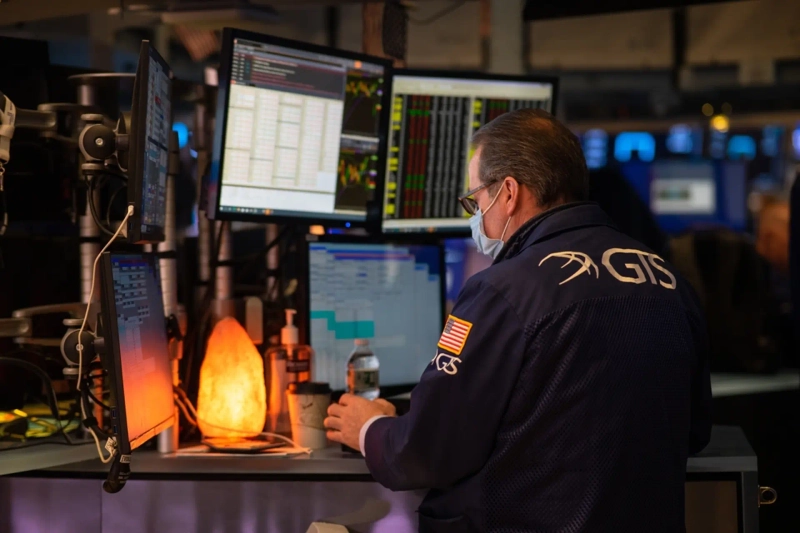
US stocks closed broadly lower on May 19 as a sharp jump in Treasury yields pressured risk assets.
The Dow Jones Industrial Average fell 322.24 points, or 0.65%, to 49,363.88 on the New York Stock Exchange. The S&P 500 dropped 49.44 points, or 0.67%, to 7,353.61, while the tech-heavy Nasdaq Composite lost 220.02 points, or 0.84%, to 25,870.71.
The 30-year US Treasury yield climbed to as high as 5.197% during the session, surpassing its previous peak from October 2023. That was the highest level since July 2007.
On Wall Street, some expect the 30-year yield to rise into the mid-5% range, with 6% also in sight. If the war in Iran fails to find an exit and inflation becomes entrenched, investors in long-dated bonds would have little choice but to demand a higher term premium.
A Bank of America survey of global asset managers showed about two-thirds of respondents think the 30-year US Treasury yield could top 6% within the next 12 months. Only 20% said it would fall below 4%.
The current bond selloff's real litmus test will be whether US equities can withstand the weakness in the Treasury market, Ian Lyngen, head of US rates strategy at BMO Capital Markets, said. He added that if the 30-year yield reaches 5.25% in the coming weeks, stock valuations will continue to retreat.
By sector, health care and energy rose more than 1%, while materials dropped more than 2%. Industrials, financials, consumer discretionary and communication services also fell more than 1%.
The Philadelphia Semiconductor Index, which includes AI and chip-related stocks, ended little changed. Nvidia, TSMC, Broadcom and AMD fell, while Micron Technology and Intel each gained more than 2%. Arm rose more than 3%.
Home Depot added nearly 1% after strong first-quarter results. Defensive names such as Walmart and Verizon also advanced, and Eli Lilly climbed more than 3%.
By contrast, all megacap technology companies with market values above $1 trillion fell except Apple, which was little changed.
According to CME Group's FedWatch tool, fed funds futures reflected a 41.1% chance that the benchmark rate will be raised by 0.25 percentage point by the end of December this year. The odds of a 0.5 percentage-point increase also rose to 14.9% from 11.3% a day earlier. The probability of a rate hike this year has now moved above the 40.3% chance that rates will remain unchanged.
The Cboe Volatility Index, or VIX, rose 0.24 point, or 1.35%, to 18.06.
Ko Jeong-sam, Hankyung.com reporter jsk@hankyung.com

Korea Economic Daily
hankyung@bloomingbit.ioThe Korea Economic Daily Global is a digital media where latest news on Korean companies, industries, and financial markets.