Summary
- The won-dollar exchange rate climbed to the 1,513 won level in early trading, reaching its highest point in about six weeks.
- Rising U.S. Treasury yields, a stronger dollar and inflation concerns tied to high oil prices are pushing the exchange rate higher.
- Domestic government bond yields are also rising, and the exchange rate has recently been moving more in response to oil prices and the Iran issue than to the stock market.
Forecast Trend Report by Period


"Korea and U.S. Treasury Yields Matter More Than Foreign Stock Selling"
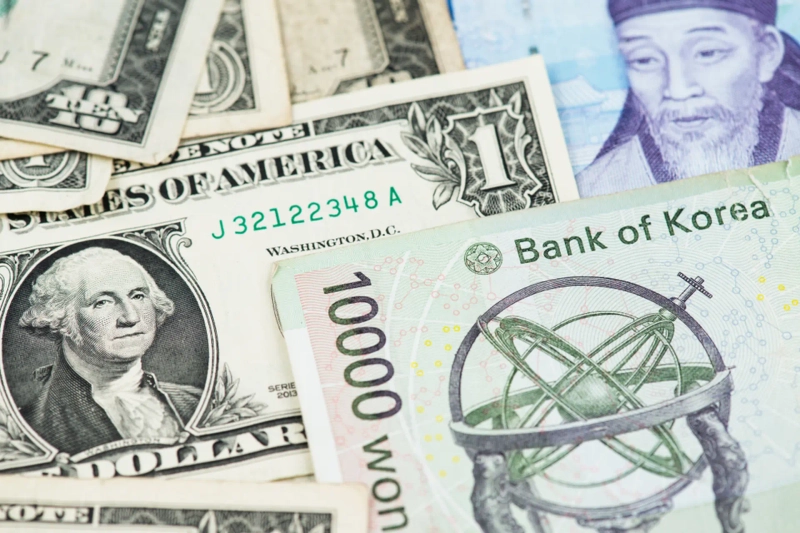
The won weakened to 1,513 per dollar in early trading on May 20.
In Seoul's foreign-exchange market, the won opened at 1,509 per dollar and climbed to the 1,513 level early in the session. It was the highest level in about six weeks.
The won-dollar rate ended daytime trading at 1,507.8 the previous day, the highest closing level since May 2, when it finished at 1,519.7. Intraday, it reached 1,509.4, the highest since May 7, when it touched 1,512.6.
The move appears to reflect a stronger dollar driven by rising U.S. Treasury yields, which has weakened demand for the won as a relatively risk-sensitive currency. The dollar index, which measures the greenback against six major currencies, stood at 99.34, up slightly from 99.33 a day earlier.
The 30-year U.S. Treasury yield rose as high as 5.189% overnight, the highest since July 2007. The 10-year yield climbed to 4.683%, the highest since January 2025. The two-year yield, which is sensitive to policy-rate expectations, also rose into the 4.13% range.
"The dollar is strengthening as U.S.-Iran ceasefire talks remain deadlocked, while concerns persist over a possible military clash, oil-driven inflation and rising U.S. Treasury yields," said Kim You-mi, an analyst at Kiwoom Securities. She added that the 30-year U.S. Treasury yield had climbed to its highest level since 2007, keeping pressure on markets elevated.
South Korean government bond yields were also rising. The yield on the 10-year Korean Treasury bond was up 4.4 basis points at 4.249% in exchange trading.
"The 30-year Korean Treasury bond has continued to rise on caution over domestic fiscal concerns and ahead of government bond issuance plans, following moves in Japan and the U.K.," said Kim Ji-na, an analyst at Eugene Investment & Securities. "At one point during intraday trading, the curve inversion with the 10-year bond normalized. Recently, the exchange rate has been more sensitive to oil prices and the Iran issue than to the stock market."
Noh Jung-dong, Hankyung.com reporter dong2@hankyung.com

Korea Economic Daily
hankyung@bloomingbit.ioThe Korea Economic Daily Global is a digital media where latest news on Korean companies, industries, and financial markets.