Samsung Electronics Union to Begin General Strike Friday as $72.5 Billion Loss Risk Looms
Summary
- Post-mediation talks between Samsung Electronics and its union collapsed, raising concerns that a general strike involving about 50,000 workers set for May 21 could cause direct and indirect losses of $72.5 billion.
- The report said a strike could lead to disruptions in semiconductor production, memory supply bottlenecks and damage to the global supply chain, while also spreading financial strain to suppliers and neighborhood businesses.
- Samsung said it continues to oppose a strike, arguing that the union’s demands related to performance bonuses are excessive and could undermine the basic principles of company management.
Forecast Trend Report by Period


Samsung Electronics labor talks break down after post-mediation
Union chief says company rejected mediation proposal
Samsung says union demands are excessive
Industry estimates an 18-day strike could cost $72.5 billion
Global semiconductor supply chain also faces risks
Suppliers and local businesses may also take a hit
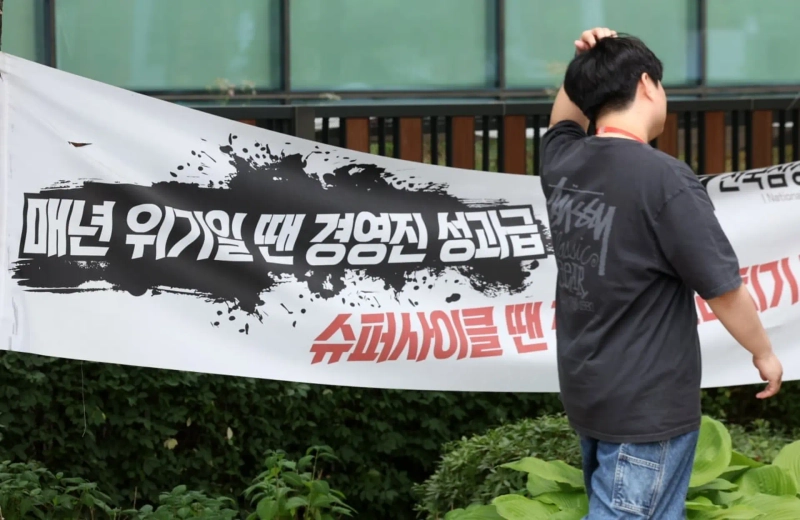
Post-mediation talks between Samsung Electronics Co. and its union at South Korea’s National Labor Relations Commission ended without a deal, raising alarms for the domestic chip industry and the global supply chain. Semiconductor production lines are designed to run around the clock. If a strike causes actual production disruptions, the fallout could spread beyond Samsung to suppliers, local merchants and overseas customers.
The Samsung Electronics chapter of the Samsung Group National Labor Union said in a statement on May 20 that the post-mediation process had ended and that it would begin a legal general strike as planned on May 21. The union said it had agreed at about 10 p.m. on May 19 to a mediation proposal presented by the labor commission, but management rejected it.
It added that the company’s chief bargaining representative later withdrew the refusal and asked for more time. By 11 a.m. on May 20, however, management was still repeating that no decision had been made.
The biggest immediate concern is the economic damage. Industry estimates put losses from an actual strike at about $21.8 billion. Given that semiconductors account for nearly 40% of South Korea’s exports, the impact would extend well beyond a labor dispute at a single company.
Any production setback would come as demand for artificial intelligence chips is surging. That could trigger memory supply bottlenecks, customer delivery delays, price swings and lower tax revenue at the same time. Some in the industry estimate that a full strike running for 18 days from May 21 could cause direct and indirect losses of as much as $72.5 billion. Prime Minister Kim Min-seok also publicly raised the possibility of 100 trillion won in damages in a national address on May 17.
The nature of chip manufacturing also raises safety risks. Samsung has said safety facilities at semiconductor plants and work to prevent wafer degradation must continue normally even during a labor dispute. Wafers can deteriorate if they do not move to the next production stage within the required waiting time. Clean-room systems could also suffer damage that is difficult to reverse if temperature and humidity controls, consumables replacement and emergency response are interrupted. Scrapped wafers would not only create direct losses but could also lead to prolonged supply disruptions and the loss of customers.
The shock could also hit suppliers. Production disruptions at Samsung could add to financial strain for small and mid-sized makers of semiconductor materials, parts and equipment. If delivery schedules are thrown off, the burden on partner companies would rise, affecting operations and employment at smaller businesses.
That is also why the Korea Federation of Micro Enterprises called for the strike to be withdrawn near Samsung’s Pyeongtaek campus. The group said disruptions in semiconductor production could deepen financial stress at smaller suppliers of materials, parts and equipment. It added that a sales cliff would be hard to avoid for commercial districts and neighborhood businesses around large corporate sites.
Internal conflict within the union is also emerging as an issue. Members in the DX division of the broader union filed for an injunction to halt collective bargaining, saying the leadership failed to go through normal opinion-gathering procedures, including a general vote, when confirming bargaining demands. Some members also filed complaints with the Ministry of Employment and Labor, alleging illegal acts in the bargaining and strike process. Their grievance is that the union focused negotiations on bonus demands for the DS division and failed to adequately reflect the interests of other businesses, including DX.
A legal dispute over whether performance bonuses can be subject to collective bargaining and labor action is also set to continue. South Korea’s Supreme Court has previously ruled that excess profit incentives, or OPI, formerly known as PS, are not average wages used to calculate severance pay. The court viewed management performance bonuses as an ex-post distribution of business results rather than compensation for labor. That is fueling debate in legal circles over whether a strike that risks production disruptions over the distribution of management performance falls within the legitimate scope of bargaining.
Union Chairman Choi Seung-ho said in a statement after the post-mediation process ended that the union had participated in good faith for three days and had done its best to find common ground. He said it had accepted the proposal presented by the labor commission and expressed deep regret that the process ended because of delays in management’s decision-making. He added that the union would not stop trying to reach an agreement during the strike period.
Samsung said it deeply regretted the end of the post-mediation process and would not give up dialogue until the last moment to prevent the worst-case scenario.
The company said there should be no strike under any circumstances. It said a last-minute deal was not reached because accepting the union’s excessive demands as they stood could undermine the basic principles of company management. Samsung also said that even though it had accepted most of the scale and substance of the performance bonus proposal, the union had not backed down from demanding compensation on a scale that would be socially difficult to accept even for loss-making divisions.
Samsung said it would keep trying to resolve the issue through additional mediation or direct talks with the union. But with the union now formally committing to a general strike, the labor dispute is expanding beyond potential economic losses into a broader crisis involving legal controversy and internal union divisions.
Hong Min-seong / Kim Dae-young, Hankyung.com reporters

Korea Economic Daily
hankyung@bloomingbit.ioThe Korea Economic Daily Global is a digital media where latest news on Korean companies, industries, and financial markets.