Samsung Strike Nears as South Korea Weighs Emergency Intervention
Summary
- Samsung Electronics and its union failed to reach an agreement over the distribution of performance bonuses and compensation for loss-making divisions, and the union said it would begin an 18-day general strike on May 21.
- The government said it is still too early to invoke emergency intervention, but indicated it could step in if the strike goes ahead and disruption to semiconductor production and supply chains worsens.
- Some in and around the industry estimate that if the 18-day general strike proceeds, direct and indirect losses could reach as much as $72.5 billion.
Forecast Trend Report by Period


One day before Samsung's planned general strike
Emergency intervention back in focus
Labor Ministry says voluntary talks come first
Government weighs last-minute involvement
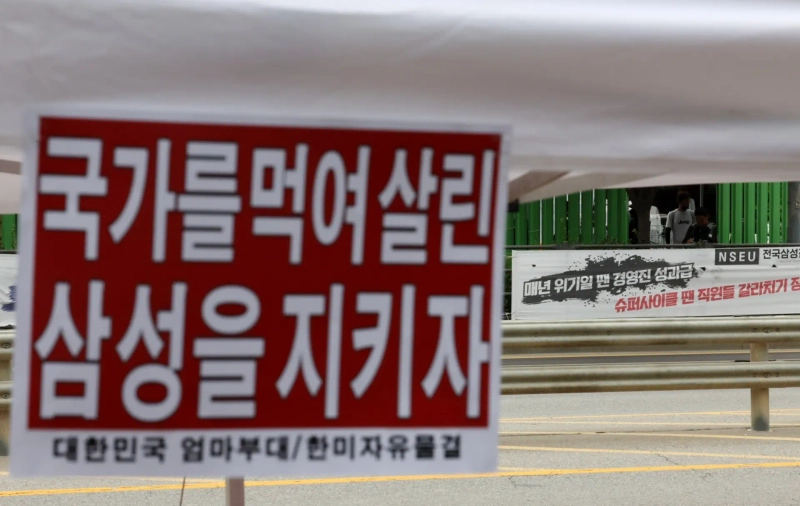
Samsung Electronics Co. and its union failed to reach an agreement in follow-up mediation at the National Labor Relations Commission on May 20, bringing a general strike planned for May 21 closer to reality. The union said it accepted the commission's proposal, but management failed to make a decision. Samsung countered that union demands for hefty compensation even for loss-making divisions could undermine the company's management principles.
Concern over a potential hit to the national economy has put the government's emergency intervention power back in focus. Prime Minister Kim Min-seok said in a public address on May 17 that the government was reviewing that option after citing the potentially severe damage a Samsung strike could cause. Still, the government said on May 20 that it was too early to act and that it would first support voluntary negotiations between labor and management.
Labor Ministry Says Emergency Intervention Is Premature
The Ministry of Employment and Labor took a cautious stance on invoking emergency intervention after the latest follow-up mediation ended without a deal. A ministry official told reporters at an emergency briefing that the second round of post-mediation at the National Labor Relations Commission had failed and called the outcome deeply regrettable. With time still left, the official said, the government would support efforts in any form to help the two sides resolve the dispute through direct talks.
Asked whether the ministry had completed its legal review for invoking emergency intervention, the official said that would be premature because both sides still had time to negotiate. The official gave the same response when asked whether the government had considered using the measure before the planned general strike.
That leaves room for one last round of talks instead of an immediate move to compulsory intervention. Samsung and the union could still apply for additional follow-up mediation at the labor commission.
The emergency intervention power is based on Article 76 of South Korea's Trade Union and Labor Relations Adjustment Act. The labor minister may order emergency adjustment when a labor dispute is judged likely to seriously harm the national economy or endanger daily life. If invoked, the union must halt collective action and any strike is barred for 30 days. If no agreement is reached during that period, the chair of the National Labor Relations Commission may refer the case to arbitration.
Government Intervention Remains a Wild Card
While the government has been cautious for now, emergency intervention remains the last option available if voluntary negotiations collapse and the general strike goes ahead. If disruption at semiconductor plants spreads through supply chains, it may become difficult for the government to simply stand aside.
Senior officials have already signaled that possibility. President Lee Jae-myung wrote on social media recently that management rights deserve respect just as labor rights do, and that constitutional rights may be restricted for the public good. The remarks were widely read as suggesting the government could intervene if a strike had a serious impact on the economy.
Kim also referred in his public address to the possibility of large-scale damage from a Samsung strike and urged both sides to reach an agreement. Industry Minister Kim Jung-kwan had earlier said that emergency adjustment would be unavoidable if a strike occurred.
The government also faces political and legal risks if it moves ahead. In the latest follow-up mediation, the union accepted the labor commission's proposal while management withheld its position and did not sign. If the government invokes compulsory adjustment to stop a strike, it could trigger a backlash from organized labor over responsibility for rejecting the proposal.
Another variable is an earlier court ruling that security work and the maintenance of safety and protective facilities must continue at normal levels even during labor action. That means the government may wait to see whether the strike causes actual production disruption before moving directly to compulsory intervention.
Union Says It Accepted Proposal; Samsung Says Bonus Principles Can't Be Compromised
The Samsung Electronics branch of the National Metal Workers-style umbrella union said it would proceed as planned with an 18-day general strike from May 21 through June 7. The union said it accepted the labor commission's proposal during follow-up mediation, but the talks ended because management failed to present its final position.
Choi Seung-ho, head of the union branch, said in a statement that the union had participated in good faith throughout the three days of follow-up mediation and had done its best to find common ground. At about 10 p.m. on May 19, the union agreed to the proposal presented by the labor commission, but management indicated it would reject it. Choi said Yeo Myeong-gu, the company's chief bargaining representative, withdrew that rejection just before the commission chair declared the mediation unsuccessful and asked for more time, extending the talks into a third day.
The union said management still failed to present its final position on the morning of May 20. According to Choi, the company kept repeating that no decision had been made and never clarified its stance. As a result, the follow-up mediation ended under the commission's procedures.
He said the union deeply regretted that the process had ended because of delays in management's decision-making and stressed that it would legally begin its general strike on May 21 as scheduled. The union also said it would continue efforts to reach a settlement during the strike period.
Samsung said it deeply regretted the end of the follow-up mediation. The company said it would not give up dialogue until the last moment to prevent the worst-case outcome and added that there should be no strike under any circumstances.
The main issue preventing an agreement was how to distribute performance bonuses. Differences were especially sharp over compensation for loss-making divisions. Samsung said no agreement was reached in the final stage of follow-up mediation because accepting the union's excessive demands as they stood could shake the company's basic management principles. That, it said, would directly violate its principle that compensation should follow performance.
Samsung added that abandoning that principle could hurt not only the company itself but also other businesses and industries. It said it would continue trying to resolve the issue through additional mediation or direct talks with the union.
If a Samsung strike goes ahead, the fallout could be broad. Semiconductor production lines are designed to run continuously around the clock. If the strike leads to actual production disruption, it could affect memory-chip supply, deliveries to customers, operations at partner companies and even local business districts. Some in and around the industry estimate that an 18-day strike could cause as much as $72.5 billion in direct and indirect losses.
Kim Dae-young / Hong Min-seong, Hankyung.com reporters

Korea Economic Daily
hankyung@bloomingbit.ioThe Korea Economic Daily Global is a digital media where latest news on Korean companies, industries, and financial markets.