US, China Weigh Matching $30 Billion Tariff Cuts, Put Rare Earths on Agenda
Summary
- The US and China said they would jointly discuss $30 billion in tariff cuts and the issue of export controls on rare earths and other critical minerals.
- The two sides said they would use a trade committee to review tariff cuts on an equal value of goods and the possible application of most-favored-nation rates or even lower tariffs to some items.
- China said it would move ahead with the purchase of 200 Boeing aircraft, expand imports of US agricultural products and beef, and restore registration qualifications for US beef exporters.
Forecast Trend Report by Period


US, China discuss cutting tariffs on at least $30 billion of goods each
Boeing order, beef trade also set to resume
From tit-for-tat escalation to tariff reductions, both sides give ground
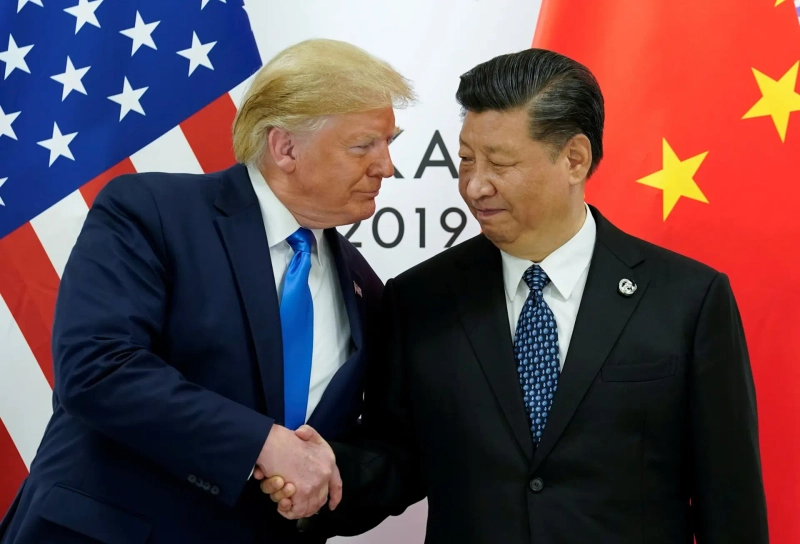
The US and China, now in a truce in their tariff war, agreed after a summit in Beijing to discuss large tariff cuts and the issue of export controls on rare earths. The move reflects calculations in both capitals that a prolonged trade conflict could put heavy pressure on their economies, especially with instability in the Middle East adding to uncertainty.
China’s Ministry of Commerce said on May 20 that the two sides had held detailed discussions on the outcomes of talks in South Korea on May 12-13 and the Beijing summit on May 13-15, reaching what it described as a positive common understanding.
At the center of the talks was a proposal for each side to discuss lowering tariffs on $30 billion of goods and to jointly study export controls on rare earths and other critical minerals.
The ministry said the two countries had, in principle, agreed to use a trade committee they decided to establish to discuss a framework for matching tariff cuts on an equal value of goods. “The scale will be $30 billion each, or more,” it said.
It added that goods identified by both sides as priorities could be subject to most-favored-nation tariff rates or potentially even lower rates.
“If this plan is implemented, it will not only help stabilize and expand bilateral trade, but also provide a useful reference point for global openness and cooperation,” the ministry said. The two countries’ economic and trade teams will remain in close contact, work out specific plans and move to implement them as soon as possible, it added.
The ministry, however, stopped short of making any specific commitment on rare earths, which have emerged as one of China’s strongest tools in its trade conflict with the US. It said only that Beijing was willing to study the issue with Washington.
China is enforcing export controls on rare earths and other critical minerals in accordance with laws and regulations, while reviewing license applications that comply with those rules and are for civilian use, the ministry said. It added that China was willing to work with the US to create favorable conditions for mutually beneficial cooperation between companies in both countries and to safeguard the security and stability of global industrial and supply chains.
Earlier, the White House said in a fact sheet posted on its website that China would address US concerns related to shortages in supply chains for rare earths and other critical minerals. It also said China would address US concerns over bans or restrictions on sales of equipment and technology used in the production and processing of rare earths.
The ministry also said that, in line with an agreement between President Xi Jinping and President Donald Trump, Chinese airlines would buy 200 Boeing aircraft based on their transport development needs and commercial principles. At the same time, the US would ensure adequate supplies of engines and parts to China.
The ministry said it welcomed the entry of high-quality US agricultural products into the Chinese market, while also highlighting potential demand in the US for Chinese dairy products and some agricultural and fishery goods.
It also said the two sides had agreed to include some agricultural products within the framework for reciprocal tariff cuts as part of measures to expand farm trade.
In addition, the ministry said it had decided to restore registration qualifications for US beef exporters whose shipments to China had been blocked after approvals were not renewed for an extended period.
China had temporarily suspended approval of those registrations to guard against the spread of highly pathogenic avian influenza in the US and to ensure the safety of US beef, the ministry said. It decided to restore them after concluding that steps taken by the US side met China’s requirements.
Beijing — Kim Eun-jung, Korea Economic Daily correspondent kej@hankyung.com

Korea Economic Daily
hankyung@bloomingbit.ioThe Korea Economic Daily Global is a digital media where latest news on Korean companies, industries, and financial markets.