China, Japan Cut Treasury Holdings as US 30-Year Yield Hits 19-Year High
Summary
- The US 30-year Treasury yield has surged to its highest level in 19 years, extending a selloff across global bond markets.
- China and Japan have sharply reduced their US Treasury holdings to defend their currencies, adding another driver of rising yields (falling bond prices).
- The likelihood of a Fed rate hike this year has increased, with the probability of a 25-basis-point increase by December rising to 41.4%.
Forecast Trend Report by Period


Oil Surge Sends Asian Currencies Tumbling
Central Banks Sell US Debt to Defend Exchange Rates
Odds of Fed Rate Hike This Year Jump From 0% to 41%
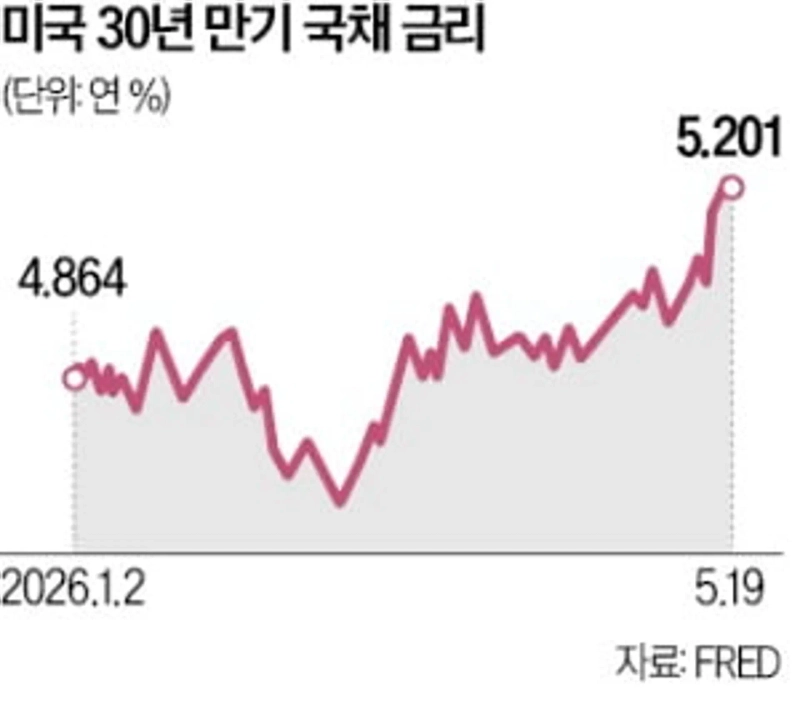
US long-term Treasury yields climbed to their highest level in 19 years as surging energy prices tied to a prolonged war in Iran compounded concerns about a widening fiscal deficit, fueling a global bond selloff.
On May 19, the yield on the 30-year US Treasury touched 5.2% intraday, the highest level since 2007. Bond prices and yields move in opposite directions.
The yield on the 10-year Treasury, which influences US mortgage rates, also rose to about 4.67%, the highest in more than a year. It had been below 4% before the war broke out, but has jumped in recent weeks as the selloff in bonds intensified.
A key driver of the move higher in yields is concern that inflation will stay elevated for longer. Global oil and natural-gas prices have climbed to their highest levels in four years, stoking fears that price pressures will spread across the broader economy, including food and airfares.
That has also reinforced bets on further increases in bond yields. In Bank of America's May global fund manager survey released on May 19, 62% of respondents said the yield on the 30-year US Treasury would rise to 6%. Just 20% said it would fall to around 4%.
China and Japan have also sharply reduced their US Treasury holdings since March, adding to the rise in yields and decline in bond prices. Data released by the US Treasury on May 19 showed China's holdings fell about 6% from a month earlier to $652.3 billion in March, the lowest level since September 2008. Japan, the largest foreign holder of US Treasuries, cut its holdings by $47 billion to $1.191 trillion.
The main reason appears to be that Asian currencies, including the yen, tumbled after the outbreak of war in the Middle East and the subsequent surge in oil prices, prompting central banks in the region to sell dollar-denominated assets to defend their exchange rates.
The yield on the two-year US Treasury also rose to the highest level in more than a year. The move reflects fading expectations for Federal Reserve rate cuts, with markets now also pricing in the possibility of another increase.
Expectations for a Fed rate hike this year are gaining traction. CME Group's FedWatch tool showed on May 19 that interest-rate futures markets were pricing in a 41.4% chance the Fed would raise rates by 25 basis points by December. A month earlier, that probability was zero. The odds of rates remaining unchanged fell to 40.3% from 49.3% a month earlier.
Park Shin-young, New York correspondent, Korea Economic Daily nyusos@hankyung.com

Korea Economic Daily
hankyung@bloomingbit.ioThe Korea Economic Daily Global is a digital media where latest news on Korean companies, industries, and financial markets.