Trump Says US Is ‘Liberating Cuba’ as Hormuz Tanker Passages Send Oil Prices Down More Than 5%
Summary
- Trump said negotiations with Iran had reached the final stage, and news that tankers had passed through the Strait of Hormuz sent oil prices tumbling.
- The report said two very large crude carriers (VLCCs) carrying Iraqi crude to China and one VLCC transporting Kuwaiti crude to South Korea passed through the Strait of Hormuz.
- July Brent futures fell 5.6% to the $105-a-barrel range, while July West Texas Intermediate (WTI) plunged 5.5% to the $98-a-barrel range.
Forecast Trend Report by Period


President Donald Trump said May 20 that his administration is “liberating Cuba” through economic pressure on the island and the indictment of former Cuban leader Raul Castro, whom he accused of controlling the country from behind the scenes.
Trump made the remarks to reporters while returning to the White House after delivering a commencement address at the U.S. Coast Guard Academy in Connecticut. He said the indictment of Castro would be “one of the most important things” for many Cubans.
The U.S. Justice Department disclosed charges against six people, including Castro, who was defense minister at the time, over the 1996 shootdown by the Cuban military of two aircraft operated by Brothers to the Rescue, a Miami-based Cuban exile group. Four people were killed.
The U.S. is effectively imposing a full embargo on Cuba’s economy by sanctioning countries that supply fuel to the island. Cuba is suffering economic distress, including widespread blackouts, but Secretary of State Marco Rubio said a day earlier that the crisis was not caused by the U.S. squeeze and instead reflected Cuban leaders’ failure to care for their people.
Trump is seeking to apply to Cuba the approach he used after the arrest of Venezuelan President Nicolas Maduro in January. In March, he said “Cuba is next.” White House officials and senior Republican lawmakers have also repeatedly identified Cuba as the next target in South America.
Asked how much longer Cuba-related sanctions would remain in place, Trump said, “We’ll see,” adding that an announcement would come soon. On whether military tensions with Cuba could rise, he said there would be no escalation. “There’s no need for it,” Trump said. “That place is collapsing. They have lost control.”
On negotiations to end the war with Iran, Trump said, “We need to get the right answer. It has to be a complete and 100% good answer.” If that happens, he added, “we save a lot of time and energy and, most importantly, lives.”
He said the talks “could end very quickly, or it could take a few days.”
Asked whether he could pursue a “small deal” centered on reopening the Strait of Hormuz, Trump said the waterway must be reopened and that such a move would happen immediately. He said he planned to try, though it was not clear whether negotiations focused only on reopening the strait were actually underway.
Trump also said he was in no rush. While some may think he is hurrying because of the approaching midterm elections, “there is absolutely no urgency,” he said. He also said that, ideally, only a small number of people would be sacrificed rather than many, hinting that a large-scale attack remained possible if talks go badly.
Later on May 20, Trump said negotiations with Iran had reached the “final stage.” His remarks, along with news that tankers were moving through the Strait of Hormuz, sent oil prices sharply lower.
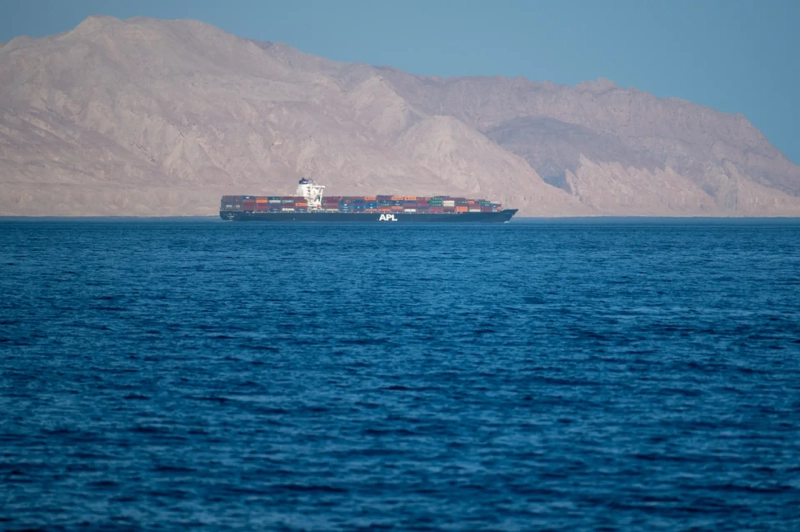
The Financial Times reported that two very large crude carriers, or VLCCs, carrying Iraqi crude to China passed through the Strait of Hormuz on May 20. Another VLCC carrying Kuwaiti crude to South Korea also transited the strait.
The three tankers were carrying about 6 million barrels of crude in total. The FT said that may have been the largest volume of oil to pass through the chokepoint in a single day since the Iran war began in late February. Matthew Wright, Kpler’s senior shipping analyst, said the passage of the three tankers was likely coordinated in advance with Iran.
Oil prices fell more than 5%. July Brent futures (LCO1) dropped 5.6% to the $105-a-barrel range. July West Texas Intermediate futures (CL1) slid 5.5% to the $98-a-barrel range, falling back below $100.
Lee Sang-eun, Washington correspondent, Korea Economic Daily, selee@hankyung.com

Korea Economic Daily
hankyung@bloomingbit.ioThe Korea Economic Daily Global is a digital media where latest news on Korean companies, industries, and financial markets.