PiCK
Thailand Pushes Bitcoin, Ether ETFs as Southeast Asia Competes to Become a Digital-Asset Hub
Summary
- Southeast Asian governments, banks and Web3 companies said they are accelerating the buildout of on-chain financial infrastructure based on digital assets, tokenized finance and stablecoins.
- Thailand said it is pushing Bitcoin ETFs, Ether ETFs, tokenized deposits and e-money tokens as it moves to bring digital assets into the regulated investment asset class universe.
- Financial institutions in Indonesia and Thailand said the tokenized asset market could grow to about 10% of global GDP as IP tokenization, RWA tokenization and payment and settlement systems using stablecoins expand.
Forecast Trend Report by Period


Southeast Asia Blockchain Week 2026 runs May 20-21
Thailand and Indonesia step up efforts to foster the digital-asset industry
AI, stablecoins and tokenization accelerate the buildout of financial infrastructure
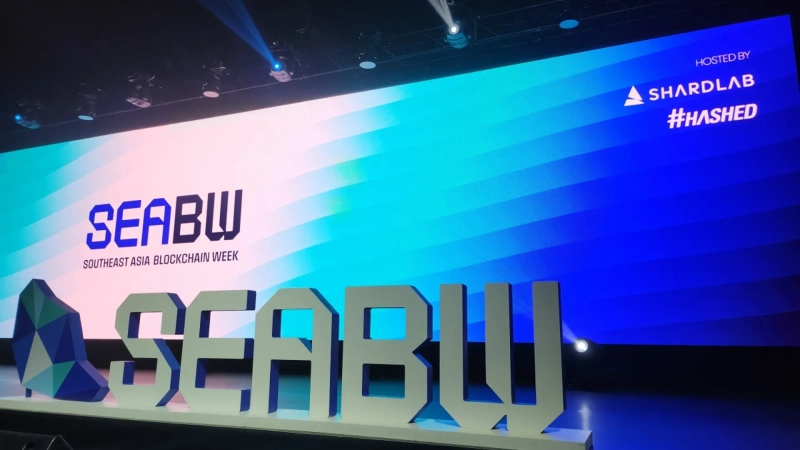
Southeast Asia is stepping up its race to build the next generation of global financial infrastructure. Governments, banks and Web3 companies are moving at the same time to bring digital assets into the regulated financial system.
At Southeast Asia Blockchain Week 2026, held on May 20-21 at Bangkok's Iconsiam, artificial intelligence, tokenized finance, stablecoins and on-chain asset infrastructure emerged as key themes.
Southeast Asia Speeds Development of On-Chain Finance
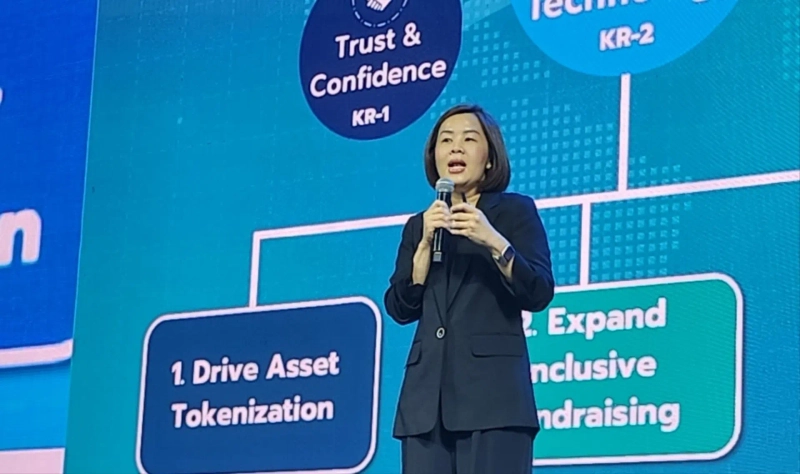
Government officials from across Southeast Asia used the event to underscore their commitment to formalizing the digital-asset industry and moving financial systems on-chain. The focus is expanding beyond cryptocurrency trading to tokenized securities, tokenized deposits and stablecoin-based financial infrastructure.
Butree Vongsiriroongruang, a director at Thailand's Securities and Exchange Commission, said support for digital technology and the digital-asset industry is one of the regulator's core strategies for the next three years. The SEC plans to expand on-chain issuance and real-time settlement to improve financial access and market efficiency. It is also reviewing digital payment structures including stablecoins, tokenized deposits and e-money tokens.
Single-asset exchange-traded funds based on Bitcoin and Ether are set to launch in the third quarter, he said. Digital assets will become an asset class accessible to investors. He added that industry growth and investor protection must advance together, with the SEC also planning to strengthen market surveillance using AI.
Muhammad Neil El Himam, deputy for digital and technology creativity at Indonesia's Ministry of Creative Economy, said the market is entering an era in which intellectual property and blockchain can be combined to turn creative works into investable assets.
Referring to Pokemon and Indonesian local IP project Tahilalats, he said intellectual property is evolving into a financial asset capable of generating recurring revenue. Blockchain, he added, is a key technology for improving transparency and liquidity in IP assets and expanding access to global markets.
Indonesia is currently running the Infinity Accelerator Program for Web3 projects and supporting IP tokenization and on-chain royalty systems. It is also expanding experiments in tokenizing real-world assets backed by real estate, gold and bonds.
Hashed's Kim Seo-jun Says Digital Assets Will Be Core Infrastructure in the AI Era
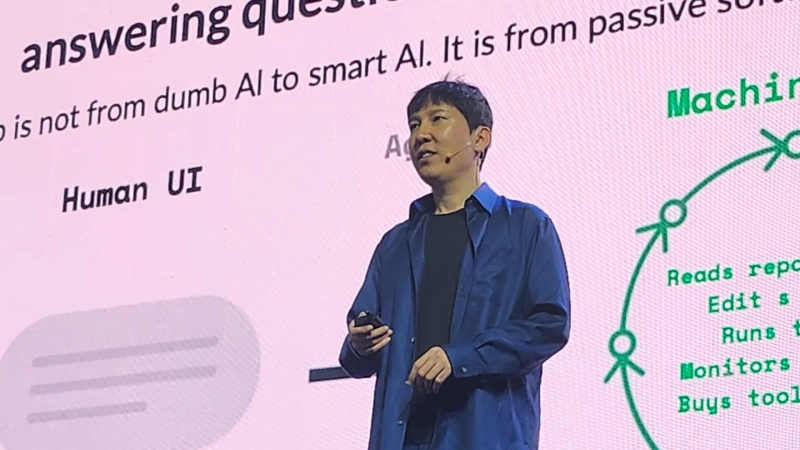
The convergence of AI and digital assets was also a major topic at the event. Speakers said blockchain-based data and payment infrastructure will become more important as the AI industry expands.
Hashed Chief Executive Officer Kim Seo-jun said in a keynote speech that data ownership and global payment systems will become far more important in the AI era. As the AI-agent economy expands, the role of digital assets and blockchain-based financial infrastructure will grow as well.
He said the existing internet was built around platform-centric structures for data ownership and value transfer, and that this framework will change quickly as AI adoption broadens. As AI models and agents become more active, issues around data contribution, settlement and global value transfer will become more important.
Blockchain is the key technology for building data ownership and settlement systems in the AI era, Kim said. Digital assets are not merely investment products. They will serve as infrastructure connecting the global internet economy.
AI and blockchain are unlikely to remain separate industries, he added. If AI generates content and services, blockchain will handle value transfer and compensation.
Stablecoins and Tokenization Poised to Blend Into the Financial System
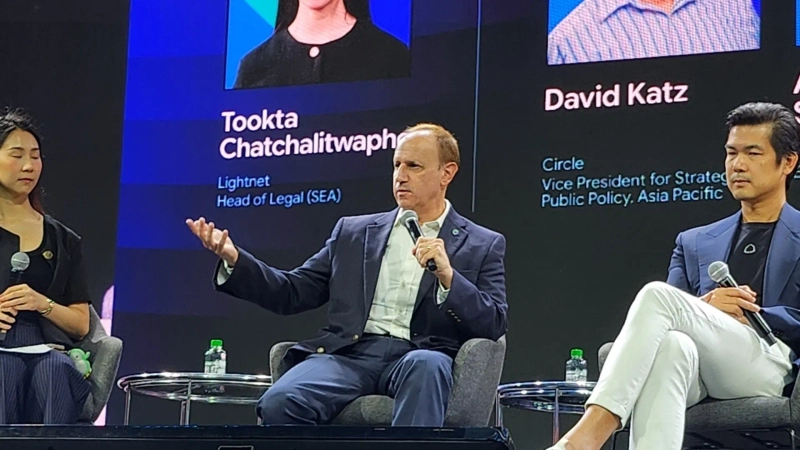
Stablecoins and tokenized finance also featured prominently. Traditional financial institutions and global fintech firms are beginning to treat digital assets not as a speculative market, but as a new layer of financial infrastructure.
David Katz, Circle's vice president for strategy and public policy, said stablecoins will naturally be absorbed into the financial system. The crypto industry is no longer just a speculative market. It is moving into a phase that could reshape global payments and asset transfers.
Stablecoins are likely to spread quickly through the banking system and global payment networks, he said. Financial institutions and fintech companies are now competing to build remittance, payment and settlement systems using stablecoins.
Users will soon enter an environment where they no longer need to recognize directly that they are using stablecoins, Katz said. Digital-asset technology is likely to be integrated seamlessly into financial services.
Thailand's financial industry is also accelerating work on tokenized finance. Kaweewut Temphuwapat, chief executive officer of SCB 10X, the venture capital arm of Siam Commercial Bank, said digital assets will become a core pillar of future financial infrastructure rather than simply an investment asset. Within two to three years, the tokenized-asset market could expand to about 10% of global gross domestic product.
Stablecoin transaction volume has already grown beyond Visa and Mastercard, he said. Most real-world assets, including bonds, stocks, real estate, gold and commodities, can be tokenized.

YM Lee
20min@bloomingbit.ioCrypto Chatterbox_ tlg@Bloomingbit_YMLEE