Korean Retail Investors Sell Nvidia for Samsung, SK Hynix in $1.4 Billion RIA Shift
Summary
- Funds from South Korean retail investors are moving out of Nvidia, Tesla and SOXL and into Samsung Electronics, SK Hynix and domestic ETFs.
- The government’s Return to the Domestic Market Account (RIA) offers a capital gains tax exemption when investors sell overseas stocks and reinvest the proceeds in South Korea’s capital markets.
- The Korea Financial Investment Association said the RIA could serve as a channel for overseas liquidity to enter the domestic stock market, helping support exchange-rate stability and South Korea’s capital market.
Forecast Trend Report by Period


RIA Draws $1.4 Billion in Two Months as Overseas Funds Move Into Korean Stocks
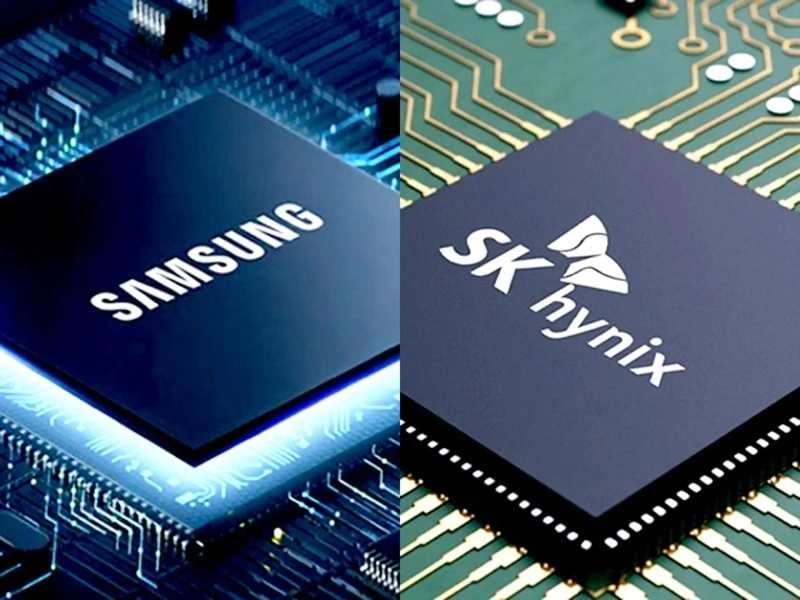
South Korean retail investors who had piled into Nvidia Corp., Tesla Inc. and the Direxion Daily Semiconductor Bull 3X Shares ETF are starting to redirect money into Samsung Electronics Co., SK Hynix Inc. and domestic exchange-traded funds. The shift suggests overseas investment funds are flowing back into the local stock market through the government’s Return to the Domestic Market Account, or RIA.
The Korea Financial Investment Association said on May 21 that cumulative RIA accounts reached 242,856 as of May 19, with total balances of 1.9443 trillion won. The program was launched on March 23 and is now offered by 24 securities firms. Detailed data, including investor age groups and trading activity, was compiled from the 10 brokerages with the largest number of accounts.
The RIA is a temporary tax incentive that runs through 2026. It exempts investors from capital gains tax when they transfer foreign stocks they already hold into a dedicated account, sell them and reinvest the proceeds in South Korea’s capital markets. The measure was introduced to help stabilize the foreign-exchange market and support the domestic stock market. Investors can deposit up to 50 million won per person across all brokerages, and the benefit applies only to overseas stocks held as of Dec. 23, 2025. Sale proceeds are automatically converted into won. Investors can then buy locally listed shares and domestic equity funds, or leave the money on deposit.
Investors mainly sold overseas big-tech shares and leveraged ETFs through the accounts. Nvidia topped the list at 180.1 billion won, followed by the Direxion Daily Semiconductor Bull 3X Shares ETF, or SOXL, at 94.7 billion won.
Other heavily sold holdings included Tesla at 50.4 billion won, Alphabet Inc. Class A at 45.1 billion won, Apple Inc. at 36.5 billion won, Palantir Technologies Inc. at 28.2 billion won, the ProShares UltraPro QQQ ETF, or TQQQ, at 19.5 billion won, Micron Technology Inc. at 15.3 billion won and Advanced Micro Devices Inc. at 15 billion won.
Among domestic stocks, Samsung Electronics led net purchases at 78 billion won, followed by SK Hynix at 66.7 billion won. Other top buys were Hyundai Motor Co. at 14.6 billion won, KODEX 200 at 13.4 billion won, TIGER Semiconductor TOP10 at 12.3 billion won, Samsung Electronics preferred shares at 12.1 billion won, KODEX 200 Target Weekly Covered Call at 11.1 billion won, KODEX AI Power Core Equipment at 7.5 billion won, TIGER 200 at 7.1 billion won and Doosan Enerbility Co. at 5.4 billion won.
RIA signups were concentrated among investors in their 40s and 50s. By account count, investors in their 40s accounted for 31%, or 63,199 accounts, followed by those in their 50s at 26%, or 50,460. Investors in their 30s made up 21%, or 40,599 accounts, while those aged 60 and older accounted for 12%, or 23,507, and those in their 20s and younger represented 10%, or 19,145.
Balances were also concentrated among middle-aged investors. People in their 50s held 497.2 billion won, or 32% of total RIA assets, followed by those in their 40s with 424.5 billion won, or 27%. Those aged 60 and older held 306.1 billion won, or 19%, while investors in their 30s held 234.7 billion won, or 15%, and those in their 20s and younger held 113.6 billion won, or 7%.
Foreign-stock sales were highest among investors in their 50s at 248.1 billion won, or 31%. They were followed by those in their 40s at 215.1 billion won, or 27%, investors aged 60 and older at 156.5 billion won, or 20%, those in their 30s at 121.9 billion won, or 15%, and those in their 20s and younger at 53.2 billion won, or 7%. Investors aged 30 and younger accounted for 31% of all accounts, indicating that younger traders are also participating in sizable numbers.
“RIA is meaningful in that it has created an opportunity for liquidity that had remained in overseas markets to flow into South Korea’s capital market,” a Korea Financial Investment Association official said. The association will work with the industry to launch attractive domestic investment products so the RIA can serve as a channel that supports exchange-rate stability and productive finance, the official added.
Kang Kyung-ju, Hankyung.com reporter, qurasoha@hankyung.com

Korea Economic Daily
hankyung@bloomingbit.ioThe Korea Economic Daily Global is a digital media where latest news on Korean companies, industries, and financial markets.