Samsung Electronics Margin Debt Tops 4 Trillion Won for First Time
Summary
- Samsung Electronics' margin-loan balance topped 4 trillion won for the first time, signaling a sharp rise in retail demand for debt-fueled investing.
- Analysts said improving semiconductor industry conditions and discussions on long-term supply contracts make Samsung Electronics an opportunity to increase exposure.
- Still, the chip-led market and the listing of single-stock leveraged and inverse ETFs could heighten volatility and the risks of excessive leveraged investing.
Forecast Trend Report by Period


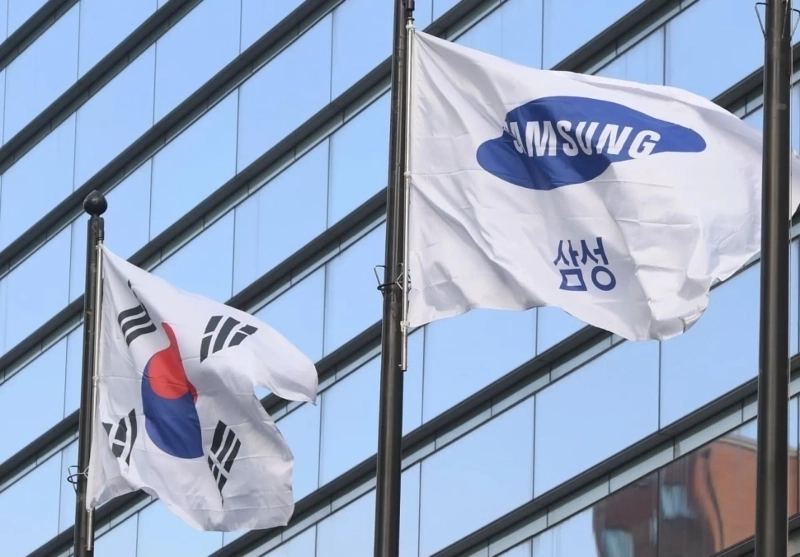
Margin debt tied to Samsung Electronics Co. has exceeded 4 trillion won ($2.99 billion) for the first time, as expectations for a semiconductor recovery and easing concern over labor unrest spurred debt-fueled retail buying. Still, analysts say volatility may increase as the stock market becomes more concentrated in chip shares and single-stock leveraged products linked to Samsung are set to launch next week.
According to the Korea Financial Investment Association on May 21, outstanding margin loans for Samsung Electronics stood at 4.0682 trillion won as of May 20. It was the first time the balance had topped 4 trillion won. Margin loans are funds investors borrow from brokerages to buy shares and have not yet repaid. A rising balance signals growing demand for leveraged stock purchases.
Samsung Electronics' margin-loan balance rose for nine consecutive trading sessions from May 8 through May 20, increasing by about 903.1 billion won over that stretch. The surge appears to reflect bargain buying after the stock came under pressure from fears of a union strike amid stalled wage talks. Individual investors alone snapped up 2.4 trillion won of Samsung shares on May 19, when the stock tumbled intraday on concern over a possible general strike by the company's union.
Ko Young-min, an analyst at Daol Investment & Securities, said Samsung had faced short-term uncertainties including strike risk and unresolved employee compensation. Even so, the stock had lagged despite strong industry conditions. With further upward revisions to earnings estimates still possible, he said the shares were attractive for investors looking to raise exposure.
Ko added that discussions on long-term supply contracts with server and mobile customers are active. Starting in the third quarter, those volumes should begin to be reflected in results, supporting a stable and sustained rise in prices.
Still, the market's growing concentration in semiconductor shares and the imminent debut of single-stock leveraged products tied to Samsung could amplify volatility.
Samsung Electronics and SK Hynix Inc., the market's two dominant chip stocks, now account for as much as 48% of the Kospi by market capitalization. Based on projected net profit over the next 12 months, the two companies make up nearly 72% of the benchmark, reinforcing the view that the current chip-led rally may persist for now.
On May 27, single-stock leveraged products tracking Samsung Electronics and SK Hynix at twice their moves, along with inverse products tracking minus two times their moves, are scheduled to list simultaneously.
According to the Korea Financial Investment Association, more than 70,000 people completed the mandatory pre-trading course for single-stock leveraged and inverse exchange-traded products between April 28, the first day of the program, and May 18.
Lee Chan-jin, head of the Financial Supervisory Service, said financial firms should be vigilant against encouraging excessive debt-backed or leveraged investing while stock-market volatility persists.
Ha Jae-seok, an analyst at NH Investment & Securities, said Samsung Electronics and SK Hynix already account for a substantial portion of the more than 15 trillion won in listed Kospi 200 and semiconductor leveraged ETFs. But the medium- to long-term direction of the shares is more closely tied to continued inflows into ETFs tracking broad benchmarks such as the Kospi 200 than to leveraged ETFs, where money tends to move in and out more erratically because of short-term trading.
Noh Jeong-dong, Hankyung.com reporter, dong2@hankyung.com

Korea Economic Daily
hankyung@bloomingbit.ioThe Korea Economic Daily Global is a digital media where latest news on Korean companies, industries, and financial markets.