PiCK
[Blooming Lunch] Bok Jin-sol Says Blockchain Can Build a System of ‘Physical Trust’
Summary
- Bok said that after studying Bitcoin and blockchain, he came to see the trustless model as a concept with no precedent in human history.
- Bok said blockchain can provide the online world with a form of physical trust that does not yet exist there.
- Bok said the Web3 industry entered full-fledged mass adoption one to two years ago, but added that he regrets the decline of early experiments in decentralization, DeFi, and P2E.
Forecast Trend Report by Period


Bok Jin-sol, Research Lead at 4pillars
Holds a doctorate in chemical and biological engineering
“I was drawn to blockchain’s trustless model”
Joined 4pillars after Decipher
“Web3 entered mass adoption one to two years ago”

“Meeting good people and having good conversations” is the idea behind Blooming Lunch. We meet compelling people in the crypto scene — the blockchain and digital-asset ecosystem — and tell the stories of their work and lives.
I met Bok Jin-sol, research lead at 4pillars, at Hyun Udon’s Yaksoo branch in Seoul’s Jung district. The restaurant, known for Osaka-style udon with a light, clear broth, was featured in Michelin’s Bib Gourmand for six consecutive years from 2020 through 2025.
Bok likes udon. He says he does not have especially strong preferences in food, but udon is the exception. If he craves udon on the way home from work, he meets his wife at Hyun Udon, has dinner and heads home with her. With a laugh, he said his wife did not like udon a few years ago, but after eight years of dating and frequent trips to udon restaurants, she has come to enjoy it too.
After we sat down, I ordered bukkake udon, served with tsuyu poured over the noodles. Bok chose zaru udon, in which the noodles are dipped into tsuyu. Because the noodles are thick, the dish takes more than 15 minutes to prepare.
While we waited, I asked how he first entered the crypto scene. His answer was simple. Many people in the industry, he said, started out losing money on cryptocurrency investments, then began studying the sector and eventually moved into Web3. He said his own path was similar.
Bok earned a doctorate in chemical and biological engineering. He began investing in 2020, in the early months of the Covid-19 pandemic. The reason he chose cryptocurrency for his first investment was also straightforward. Stocks felt difficult, and brokerage apps looked complicated. Crypto exchange apps, by contrast, seemed more intuitive, so he decided to give investing a try.

‘Trustless’ Model Was Something Human History Had Never Seen
The first time Bok lost a large amount of money was in the so-called “Buddha Beam” selloff in May 2020, when Bitcoin and other major cryptocurrencies plunged. That episode prompted him to study Bitcoin and blockchain in earnest. He said he began organizing what he learned on a personal blog as a record. Those blog posts became the link that led him to Decipher, a blockchain society founded at Seoul National University in 2018.
As Bok deepened his blockchain research through Decipher, what captivated him was the idea of a trustless model. A trustless model is a core feature of decentralization, referring to a system in which transactions can be carried out safely without trusting intermediaries such as institutions. Trust has been one of the most important keywords in the development of human civilization, Bok said. In his view, blockchain’s trustless model is something human history had never seen before.
He compared trustlessness to “physical trust.” Trust grounded in scientific principles such as gravity, he said, is more fundamental than the social trust formed by communities such as religion or the state. Physical trust is the most basic and unchanging form of trust. But the online world still lacks that kind of physical trust. That is where he sees blockchain’s potential.
As we talked, the udon arrived. I poured tsuyu over the chilled noodles and added ground sesame. The noodles were chewy and firm, and the broth had a clean, savory depth. Bok remarked that the noodles are so chewy they need to be thoroughly chewed.
After a few bites, we resumed the conversation. Bok joined 4pillars, a South Korean Web3 research firm, in 2025, shortly after completing his doctorate. He said he came to know 4pillars Chief Executive Officer Kim Nam-woong through Decipher. Because the job allowed him to keep studying a field he likes, he did not hesitate much about joining.
He described 4pillars as a place where people genuinely love cryptocurrency. Some joined the firm because they liked its culture of talking every day with colleagues about issues across the Web3 industry.
Research work, he said, suits him well. Researchers write on topics they choose themselves, which lets them keep studying the fields that interest them and dig into subjects they find compelling. Self-directed research also has the advantage of allowing people to work at their own pace.
Bok said his doctoral program helped him build what he called “research muscles” by pushing deeply into a single subject. Working in Web3 may make it seem as though he is not using his academic training, he said, but his long years of study at university ultimately taught him how to do research properly.
Web3 Mass Adoption Is Welcome, but Also Disappointing
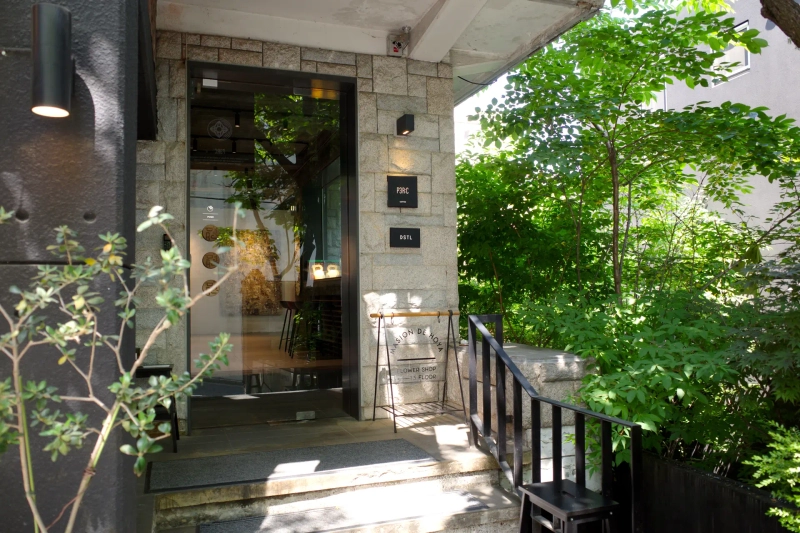
After the meal, Bok and I moved to Pearl Seeker Coffee near the restaurant. The cafe is a detached house near Yaksoo Station that was converted into a coffee shop. We sat by a first-floor window and ordered a matcha latte and a filter coffee made with Ethiopian Guji Hambela Goro beans.
Asked about the biggest recent change in the cryptocurrency industry, Bok picked mass adoption without hesitation. He said the Web3 industry entered full-fledged mass adoption one to two years ago. While that shift is visible across multiple Web3 sectors and is welcome, he added, it also leaves something to be desired.
As mass adoption has accelerated, much of the decentralized sensibility that once defined the crypto scene — including its cypherpunk spirit — has faded, he said. He also expressed disappointment that the broad range of experiments seen in Web3’s early years, such as DeFi, decentralized streaming and play-to-earn gaming, has become harder to find.
Bok said there is a future he hopes to see while working in crypto: one in which the backend systems for every process involving the movement of money, including remittances and payments, run on blockchain. If blockchain becomes the backend for different kinds of infrastructure, fragmented financial activity spread across platforms and services could be integrated into one, he said. His goal goes beyond accomplishing something personally in Web3. He wants to see that world arrive.
After the interview, I walked with Bok to Yaksoo Station. He said he has been deeply into whiskey since late 2025. Over the past six months, he has visited whiskey bars across Seoul and tasted more than 500 varieties of whiskey. Whenever he drinks whiskey at a bar, he writes down tasting notes and organizes them. Once he starts something, he said, he tends to pursue it to the end.
We arrived at Yaksoo Station and said goodbye. We agreed to make plans to visit a whiskey bar near Nonhyeon Station that he recommended. Just then, the train he was about to board arrived, and he hurried on.
This interview was conducted without sponsorship or financial compensation from any restaurant or brand, and with no commercial intent. The Blooming Lunch series is intended to feature relaxed, informal interviews at the interviewee’s favorite regular restaurant.

JOON HYOUNG LEE
gilson@bloomingbit.ioCrypto Journalist based in Seoul