S2W Takes Aim at Defense Market With Dark Web Analytics
Summary
- S2W said it will step up its defense and security business based on its dark web, Telegram and cryptocurrency transaction analysis technology.
- The company said it plans to reduce the share of its security business, which currently accounts for more than 90% of revenue, and lift the share of artificial intelligence transformation (AX) business sales to more than half.
- S2W said it identified hospitals, medical institutions, parts of the public sector and secondary suppliers as vulnerable cybersecurity areas and plans to target related demand.
Forecast Trend Report by Period


Detecting signs of hacking through data analysis
AX business targeted to account for more than half of revenue
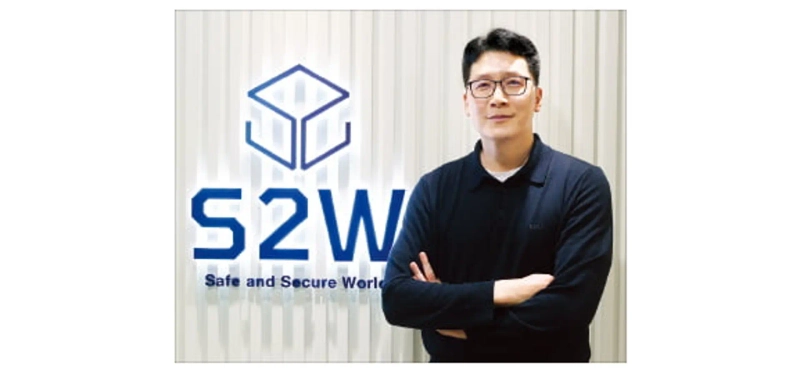
"We will push in earnest into defense and security to realize our vision of becoming Asia's Palantir."
Seo Sang-deok, chief executive officer of South Korean cybersecurity company S2W, made the remarks in a recent interview at the company's headquarters in Pangyo, Gyeonggi Province. He said orders related to the Ministry of National Defense's information strategy planning projects are set to ramp up from the second half of this year through next year.
S2W, which listed on the Kosdaq last year after presenting its vision of becoming "Asia's Palantir," has grown to a market capitalization of about $217 million. While conventional security equipment and antivirus software detect and block malicious activity once it occurs, S2W specializes in collecting and analyzing large volumes of data from the dark web, Telegram and cryptocurrency transactions to spot signs of attacks in advance and trace the groups behind them.
The company's origins also mirror Palantir's. Seo handles management, while co-founder and former college classmate Shin Seung-won, a professor in KAIST's School of Electrical Engineering, leads technology development. S2W began with a solution that analyzes hacking-related information traded on the dark web and cryptocurrency flows, then supplies that intelligence to investigative and intelligence agencies including Interpol. It later expanded into enterprise security solutions. Major clients include companies in finance, semiconductors, manufacturing, e-commerce and platform services.
Seo singled out hospitals and medical institutions as especially vulnerable. Security standards at South Korean financial firms and large manufacturers are relatively high, but hospitals, medical institutions and parts of the public sector remain exposed, he said. Secondary suppliers in the semiconductor and automotive industries have also become major hacker targets because they hold contract documents, patent materials and technical documents tied to large corporations. Attackers often use second-tier vendors as a route into major companies, he added.
A new growth driver is the company's artificial intelligence transformation, or AX, business. Seo said S2W's experience collecting, refining and analyzing data in its messiest forms has given it strong capabilities in combining different datasets. More than 90% of current revenue comes from security operations, but the company aims to lift the AX business share to more than half over time.
Seongnam - Lim Da-yeon, Hankyung.com reporter allopen@hankyung.com

Korea Economic Daily
hankyung@bloomingbit.ioThe Korea Economic Daily Global is a digital media where latest news on Korean companies, industries, and financial markets.