US Rate Framework May Be Recast as Treasury-Fed Coordination Gains Focus: Park Moon-hwan
Forecast Trend Report by Period


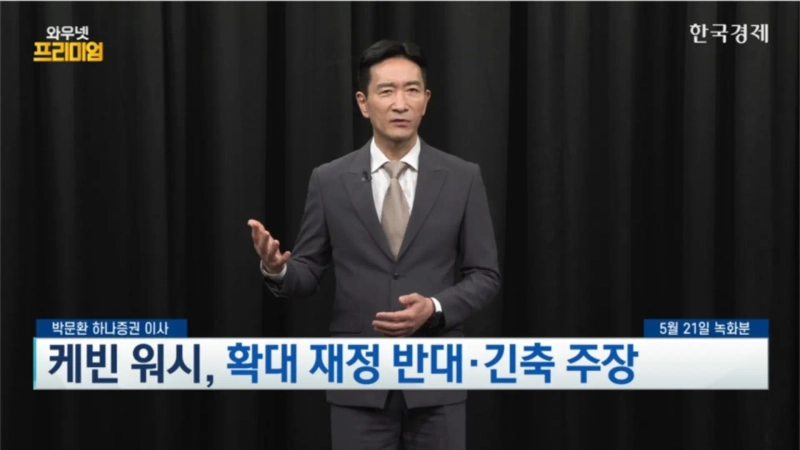
Park Moon-hwan, a managing director at Hana Securities and a WowNet partner, said concerns over Federal Reserve independence following Kevin Warsh's nomination as the next Fed chair may be missing the bigger picture. The real issue, he said, is a broader effort to overhaul the US interest-rate and debt structure.
Park described Warsh as a leading hawk who has consistently criticized quantitative easing and what he sees as excessive Fed intervention in financial markets. He has also stressed the need to shrink the Fed's balance sheet and restore a more traditional central-bank role. In Park's view, Donald Trump's camp chose Warsh not simply to push for rate cuts, but because he could help reshape debt management through coordination between the Treasury Department and the Fed.
Park said Warsh has repeatedly argued that the US should move beyond a framework focused solely on Fed independence and that the Treasury and the Fed should jointly coordinate debt and interest-rate policy. Given the US government's heavy interest burden and the current high-rate environment, a new policy framework aimed at lowering rates could emerge, he added.
Park also pointed to a recent slowdown in US consumer spending. Spending power among low- and middle-income households is deteriorating rapidly, he said. Increased use of buy now, pay later services, rising revolving credit balances and higher credit-card delinquency rates show that high borrowing costs are starting to weigh on the real economy. The US economy is far more sensitive to interest rates than many assume, he added.
He also identified outsourced semiconductor assembly and test, or OSAT, as a key beneficiary of the AI era. As AI chips grow more sophisticated, the importance of packaging and testing is increasing sharply, Park said. He said Doosan Tesna's strengths in wafer testing, package testing and system-level testing position it to benefit from the AI semiconductor boom.
On investment strategy, Park said the OSAT segment could remain relatively resilient through the later stages of the semiconductor cycle. He advised investors to focus less on short-term volatility and more on longer-term trends and supply-demand dynamics.
Park Moon-hwan's "Siseonjipjung" program airs at midnight on the second and fourth Friday of each month on Korea Economic TV and the WowNet YouTube channel.
Park Kwon-min, Korea Economic TV reporter reice@wowtv.co.kr

Korea Economic Daily
hankyung@bloomingbit.ioThe Korea Economic Daily Global is a digital media where latest news on Korean companies, industries, and financial markets.