Draft US-Iran Deal Would Restore Hormuz Traffic to Prewar Levels, but Terms Remain Disputed
Forecast Trend Report by Period


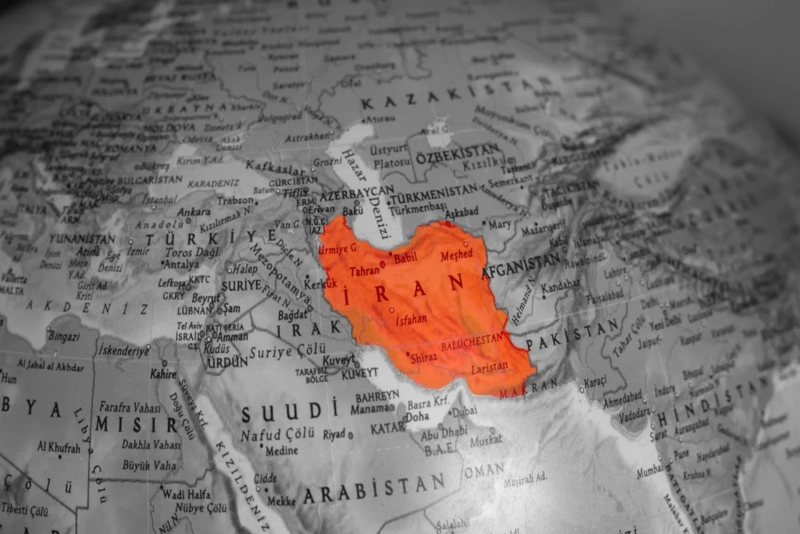
A peace deal to end the US-Iran war appears close, 84 days after the conflict began with US and Israeli strikes on Feb. 28.
President Donald Trump wrote on Truth Social on May 23 that a peace agreement, in the form of a memorandum of understanding, was "largely complete." He said he had spoken with leaders in Pakistan, Turkiye and other key countries in the region, adding that final details were still being discussed and would be announced soon. Reopening the Strait of Hormuz, he added, is part of the deal.
Trump did not disclose specific terms. A US draft obtained by Axios and Iranian demands reported by Iranian media indicate the two sides would first enter a 60-day ceasefire and then hold further talks on nuclear issues, including the removal of enriched uranium. Lebanon would also be covered by the ceasefire.
The two sides also appear to agree in principle on reopening the Strait of Hormuz. Iran's Fars News Agency reported that Tehran had agreed to allow shipping traffic at prewar levels. Axios said the US draft calls for navigation to resume during the ceasefire without transit fees. Iran, however, insists it would retain authority over management of the strait.
The draft agreement would also release about $25 billion of Iranian assets frozen overseas and phase out various sanctions on Iran.
If such a deal is reached, the US would be ending the war without achieving key aims such as the removal of Iran's enriched uranium. Senator Roger Wicker of Mississippi, the Republican chairman of the Senate Armed Services Committee, criticized that outcome, saying it would wipe out gains made in Operation Vast Fury.
○ Two frantic days
Trump and the White House moved urgently on May 23. Vice President JD Vance, who had been in Ohio, and Defense Secretary Pete Hegseth, who was visiting West Point, were called back to the White House. Trump also canceled plans to attend the wedding of his eldest son, Donald Trump Jr. He said he spoke with 10 leaders from the Middle East and nearby regions, including Pakistan, Turkiye and Qatar, over the course of the day. He also wrote that he had a "very successful call" with Israeli Prime Minister Benjamin Netanyahu.
Tehran was equally busy. Pakistan's Chief of Army Staff Asim Munir held a series of meetings over two days starting May 22 with President Masoud Pezeshkian and Parliament Speaker Mohammad Bagher Ghalibaf. Qatar, which had been attacked by Iran, also visited Iran over the weekend as a mediator to coordinate details of the agreement.
Iranian Foreign Ministry spokesman Esmaeil Baghaei said on May 22 that reaching an agreement could take "weeks or even months." Trump, meanwhile, publicly raised the prospect of large-scale airstrikes on Iran. As late as the morning of May 23, he told Axios and CBS News in separate calls that the odds of US strikes and a negotiated settlement were "50-50." By the afternoon, the tone had shifted sharply. Iranian media also began portraying the developments positively.
○ Nuclear issue pushed back
The two sides could announce a peace agreement as early as May 24. The core of the deal is to halt the war, reopen the Strait of Hormuz and continue discussions on Iran's nuclear program during the ceasefire.
With hostilities suspended since April 8, the agreement would extend the ceasefire by another 60 days. That would amount to a US pledge not to launch additional strikes. It would also mean ending continued clashes in Lebanon between Israel and Hezbollah despite the truce. Netanyahu has reportedly voiced concerns to Trump on that point, leaving uncertainty over whether the ceasefire would hold in practice.
The US had demanded an upfront concession on Iran's nuclear program. It now appears to have stepped back and agreed to address the issue during the 60-day ceasefire. Iran's Tasnim News Agency and Fars News Agency stressed on May 23 that Tehran had not accepted any terms on its nuclear program. Countries in the Middle East that urgently want the Strait of Hormuz reopened may have persuaded Trump that the issue could not remain deadlocked indefinitely. The New York Times, citing US officials, reported that every leader who spoke with Trump that day backed the agreement.
The New York Times said Iran would agree in the future to give up enriched uranium. Axios also reported that Iran had made a "verbal commitment."
○ Strait of Hormuz reopening plan
The two sides appear close to agreeing on restoring traffic through the strait to prewar levels. They still differ on how that would be carried out and under what conditions.
After Trump mentioned reopening the Strait of Hormuz on Truth Social, Fars pushed back immediately, saying that description did not match the facts. The agency said Iran would continue to control management of the strait, route decisions, transit times, methods of passage and permits. That, it said, did not mean a return to the free passage that existed before the war.
Iranian media have not directly addressed transit fees. Secretary of State Marco Rubio, while expressing optimism about a deal, has also said a tolling system would not be acceptable. Tasnim reported that negotiations over the Strait of Hormuz would continue for 30 days after the 60-day ceasefire begins.
Iran is portraying the outcome of the talks as a victory. In a post on X, formerly Twitter, Baghaei shared an image of a rock relief commemorating the Sasanian ruler Shapur I's victory over a Roman emperor. He wrote that Romans believed Rome was the center of the world, but Iranians shattered that illusion.
Sang-Eun Lee, Washington correspondent, Hankyung.com, selee@hankyung.com

Korea Economic Daily
hankyung@bloomingbit.ioThe Korea Economic Daily Global is a digital media where latest news on Korean companies, industries, and financial markets.