US Official Says Iran Agreed in Principle to Scrap Enriched Uranium as 60-Day Truce Is Drafted
Summary
- The US and Iran are drafting a peace agreement that includes scrapping enriched uranium and a 60-day ceasefire, while Washington is preparing phased sanctions relief tied to the extent of Tehran’s nuclear rollback.
- The US is pursuing a phased exchange involving sanctions relief, the surrender of nuclear materials, and the release of frozen overseas assets sought by Iran, with any deal conditioned on the reopening of the Strait of Hormuz and Iran’s implementation of a nuclear agreement.
- As the likelihood of reopening the strait increased, Brent crude and WTI each fell by more than 5%, trading in the $98-a-barrel range and around $91 a barrel, respectively.
Forecast Trend Report by Period


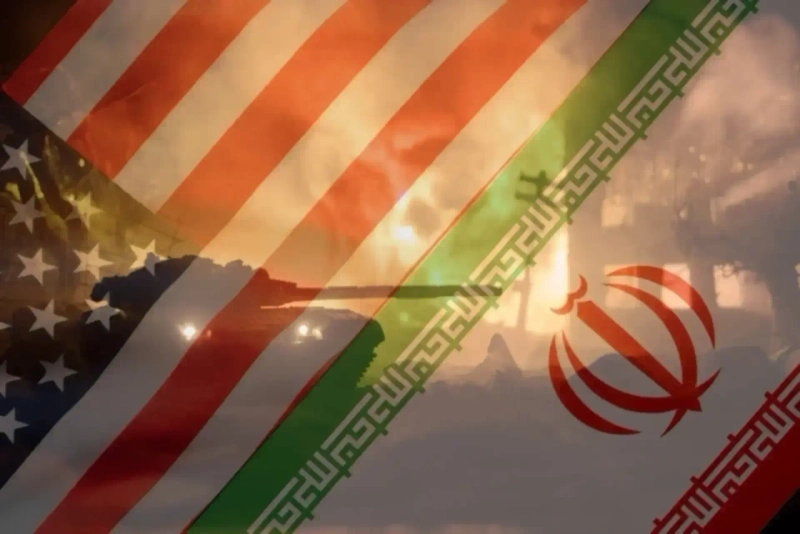
The US and Iran are drafting a peace agreement to end the war, including a 60-day ceasefire, and a US official said Tehran has agreed in principle to scrap its enriched uranium. Washington is also preparing to ease sanctions in stages based on the extent of Iran’s nuclear rollback. The additional details appeared aimed at countering criticism that the US was moving to extend a ceasefire without clearly resolving Iran’s nuclear program. Iran did not immediately deny the claim.
President Donald Trump wrote on Truth Social on May 24 that if he reaches a deal with Iran, it will be a “good and proper” agreement and different from the one former President Barack Obama reached, referring to the Joint Comprehensive Plan of Action, or JCPOA. He added that no one yet knows the details and that the negotiations are not fully complete. “Don’t listen to the losers criticizing something they know nothing about,” he wrote. Earlier that day, Trump said the talks were proceeding in an orderly and constructive way and that he had instructed negotiators not to rush into an agreement.
Trump’s remarks came after US and Iranian media reported a draft accord that would prioritize reopening the Strait of Hormuz while leaving Iran’s nuclear issue to be discussed later. The reports triggered criticism from hard-liners. Senator Roger Wicker, the Mississippi Republican who chairs the Senate Armed Services Committee, said a 60-day ceasefire based on trust in Iran’s goodwill would be a disaster. Senator Lindsey Graham, a Republican from North Carolina, said the agreement would act as “steroids” for Lebanon’s Hezbollah and Shiite militias in Iraq.
The US official’s comment that Iran had made an agreement in principle on the nuclear issue appeared intended to calm those concerns. The New York Times and other media reported that the official told reporters in a May 24 briefing that Iran had agreed in principle both to reopen the Strait of Hormuz and to scrap its enriched uranium. The official added that it could take days to secure approval from Trump and from Mojtaba Khamenei, identified in the report as Iran’s supreme leader. Still, an agreement in principle appears to mean a declaratory understanding, not an immediate commitment to transfer enriched uranium.
Secretary of State Marco Rubio, who is visiting India, told reporters on May 24 that the nuclear issue is not something that can be settled in 72 hours “on the back of a napkin.” He said he had expected good news on the night of May 23, or possibly on May 24, signaling that an accord was close. Even so, he cautioned against reading too much into the situation.
The New York Times reported that the US is pursuing a phased exchange under which Iran would get the sanctions relief it wants in return for giving up nuclear materials. That would involve releasing frozen overseas assets and lifting various sanctions in proportion to Tehran’s nuclear rollback. CNN, citing a US official, reported that sanctions relief and the unfreezing of Iranian assets would be possible only if the Strait of Hormuz is reopened and Iran implements a nuclear agreement.
Iranian media, unlike a day earlier, focused less on directly rebutting the US account and more on whether promises made to Tehran would be kept. Fars News Agency said Iran negotiates with Washington only when there is a tangible economic benefit. It identified the release of frozen assets and the lifting of sanctions on oil, petrochemicals and derivatives as Iran’s core interests, and said the main point of debate is whether the US will honor commitments in those areas. The tone suggested that a broad understanding had been reached.
The terms for reopening the strait and securing a ceasefire in Lebanon remain unresolved. On the 60-day truce, Iran is demanding an end to fighting across all theaters, including Lebanon. The US broadly agrees, but Prime Minister Benjamin Netanyahu has expressed concern to Trump, according to the report. Rubio said on May 24 that Israel always has the right to defend itself and that it would be acceptable for Israel to respond militarily to Hezbollah attacks. That leaves the situation largely unchanged.
The two sides also remain apart on the terms for reopening the strait. Iran is insisting on retaining control, while Rubio is demanding an immediate reopening with no transit fees. Tasnim News Agency reported that Foreign Ministry spokesman Esmail Baghaei said on May 24 that while agreement has been reached on many issues, that does not mean a deal is ready to be signed. He added that the US position keeps changing.
Oil prices tumbled as the chances of reopening the strait increased. Brent crude for July delivery fell about 5% on May 24 and traded in the $98-a-barrel range. West Texas Intermediate for July delivery dropped more than 5% to around $91 a barrel.
Lee Sang-eun, Washington correspondent, Hankyung.com selee@hankyung.com

Korea Economic Daily
hankyung@bloomingbit.ioThe Korea Economic Daily Global is a digital media where latest news on Korean companies, industries, and financial markets.