Global Chip Rally Pushes SK Hynix, Micron Into $1 Trillion Club
Summary
- SK Hynix crossed the $1 trillion market-cap threshold, joining Samsung Electronics in reflecting the global memory-chip boom.
- About 4.995 trillion won flowed into single-stock leveraged ETFs tied to Samsung Electronics and SK Hynix on their debut, highlighting retail investors’ growing preference for leverage.
- With South Korea’s ETF market capitalization topping 500 trillion won and net assets also estimated to have crossed 500 trillion won, expectations for a prolonged semiconductor cycle are driving inflows into Samsung Electronics, SK Hynix and related ETFs.
Forecast Trend Report by Period


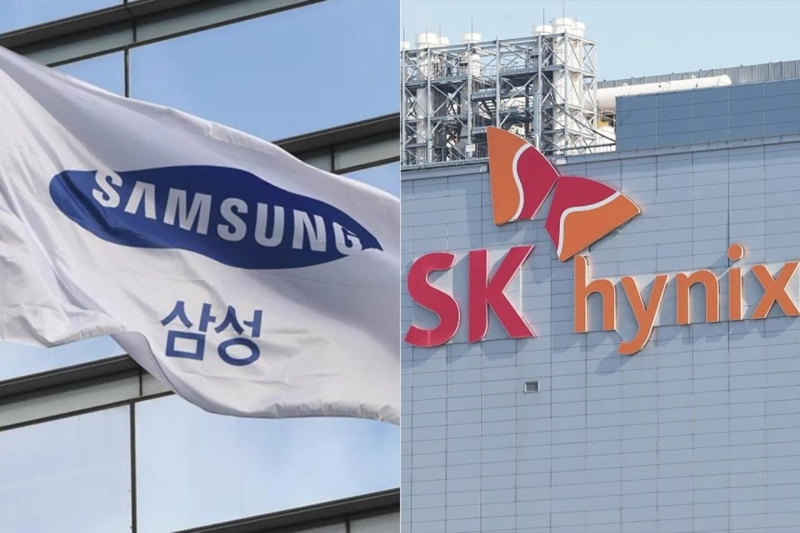
SK Hynix’s market capitalization topped $1 trillion on May 27 as bets on a prolonged boom in the global memory-chip market gathered pace. The move put SK Hynix alongside Samsung Electronics and Micron Technology in the $1 trillion club. Nearly $3.63 billion, or 4.995 trillion won, poured into newly listed single-stock leveraged exchange-traded funds tied to Samsung Electronics and SK Hynix on their first trading day.
The Kospi closed 2.25% higher at 8,228.70. The benchmark reached the 8,200 level just one day after crossing 8,000 and rose above 8,400 during intraday trading.
Large semiconductor stocks that have led South Korea’s equity rally climbed again. SK Hynix jumped 9.31% to 2.243 million won at the close. Its market value swelled to 1,598.5914 trillion won, or about $1.065 trillion, making it the second South Korean company after Samsung Electronics on May 6 to enter the $1 trillion club.
SK Hynix ranked 12th globally by market capitalization, ahead of Berkshire Hathaway at $1.043 trillion. It also moved back ahead of Micron, which crossed the $1 trillion mark overnight and stood at $1.01 trillion. Samsung Electronics gained 2.68%, ending the regular session above 300,000 won for the first time.
Improving sentiment toward semiconductor stocks on Wall Street on May 26 spilled into South Korea. UBS tripled its price target on Micron, arguing the sector should be valued on more normal metrics rather than through the lens of the old semiconductor cycle, in which booms were followed by sharp downturns. The 12-month forward price-to-earnings ratio UBS applied to Micron was 15 times, well above the 6 to 7 times used for Samsung Electronics and SK Hynix.
Mizuho said memory remains “the backbone of AI” and that demand will outstrip supply through 2026 and 2027. The firm also said there was no clear timeline for when the demand-led imbalance would end, reinforcing the case for a longer cycle.
Investor money also flowed into single-stock ETFs tracking Samsung Electronics and SK Hynix, which debuted in South Korea on May 27. The combined market capitalization of 16 such ETFs reached 4.995 trillion won.
With SK Hynix crossing the $1 trillion threshold, South Korea became the second country after the US to have more than one company in the $1 trillion club. Only four non-US companies worldwide have market capitalizations above $1 trillion, and half of them are South Korean.
According to CompaniesMarketCap, which tracks the market value of global companies, 14 firms worldwide are in the $1 trillion club. Ten are US companies, including Nvidia at $5.204 trillion, Alphabet at $4.662 trillion, Apple at $4.528 trillion, Microsoft at $3.09 trillion and Amazon at $2.853 trillion.
South Korea has the second-largest number of $1 trillion companies after the US. Samsung Electronics ranks 11th at $1.347 trillion and SK Hynix ranks 12th at $1.066 trillion. SK Hynix’s market capitalization on the Kospi rose 9.31% on May 27 to push it above the threshold. Among non-US companies, only Taiwan’s TSMC at $2.138 trillion and Saudi Aramco at $1.798 trillion are also in the club besides the two South Korean firms.
South Korea is the only country outside the US with two companies in the $1 trillion club because expectations for a prolonged global semiconductor cycle have driven Samsung Electronics and SK Hynix sharply higher. After Micron joined the club overnight in the US on growing confidence in the durability of the chip cycle, Samsung Electronics and SK Hynix surged the following day.
South Korean market analysts also see the semiconductor cycle lasting longer. Han Ji-young, an analyst at Kiwoom Securities, said earnings momentum in AI value-chain stocks was holding up, strengthening the dominance of chipmakers as market leaders. Ahn Ki-tae, an analyst at NH Investment & Securities, said AI-related investment by Alphabet, Amazon, Meta, Microsoft and Oracle would continue through 2028.
South Korea’s retail investors also bet the rally centered on Samsung Electronics and SK Hynix would continue. On May 27, individuals sold the shares and bought single-stock leveraged ETFs instead. The shift suggested investors judged that if chip companies’ earnings continue to improve, leveraged products would offer higher returns than holding the stocks outright.
According to the Korea Exchange, retail investors sold a net 1.0811 trillion won of SK Hynix on May 27, the biggest net sale among all stocks. They also sold a net 394.6 billion won of Samsung Electronics preferred shares and 359 billion won of Samsung Electronics common shares. The money moved into leveraged ETFs designed to deliver twice the daily move of those stocks. Net purchases of SK Hynix leveraged ETFs, the top two most-bought products, totaled 1.3581 trillion won. Samsung Electronics leveraged ETFs, ranked sixth and seventh, drew 593.9 billion won.
As investors rotated out of individual stocks and into ETFs, the total market capitalization of South Korea’s ETF market topped 500 trillion won on May 27. That figure represents the combined market value of 1,132 listed ETFs. It took just 42 days to add another 100 trillion won after the market first crossed 400 trillion won on April 15. Net assets, a measure of the ETFs’ underlying value, are also estimated to have exceeded 500 trillion won for the first time.
Kang Jin-gyu, Hankyung.com reporter josep@hankyung.com

Korea Economic Daily
hankyung@bloomingbit.ioThe Korea Economic Daily Global is a digital media where latest news on Korean companies, industries, and financial markets.