Exclusive: South Korean Police Target Tether-Based Money Laundering With Dedicated Task Force
Summary
- Police said they formed a task force to combat money laundering amid the spread of laundering using virtual assets such as Tether (USDT).
- Police said they plan an aggressive crackdown on unreported crypto exchange outlets and unregistered virtual-asset businesses by applying the Act on Reporting and Use of Specific Financial Transaction Information and the Act on Regulation and Punishment of Criminal Proceeds Concealment.
- Police said they will keep close watch after identifying signs that some high-limit deposit accounts linked to domestic crypto exchanges were being abused as money-laundering channels.
Forecast Trend Report by Period


Cyber, terror and narcotics units to be mobilized
“Upgrading criminal-proceeds tracking”
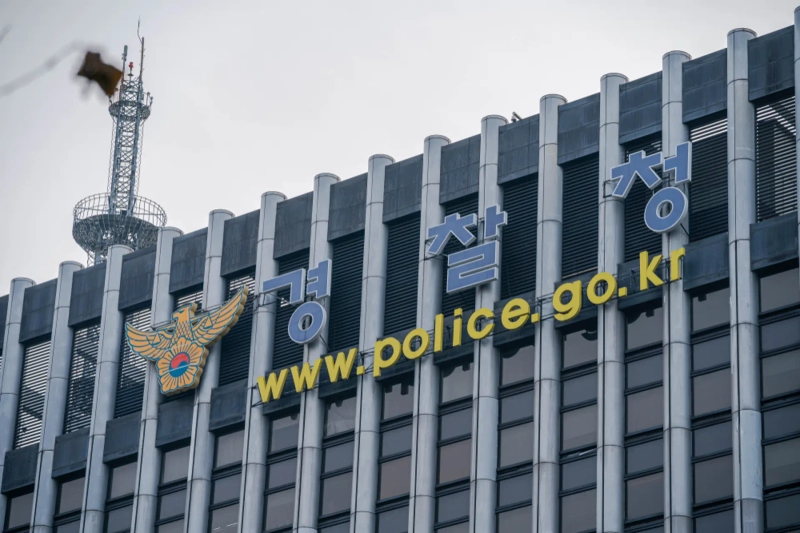
South Korean police are setting up a task force dedicated to money-laundering crimes as more criminal proceeds are being laundered through virtual assets such as Tether’s USDT. The agency also plans to strengthen its investigative capabilities as crypto transfers become a preferred laundering route.
The National Police Agency has drawn up a comprehensive response plan to eradicate money laundering, according to the agency on May 28. The move comes as Tether is increasingly being used for illicit laundering and unregistered crypto exchange outlets that convert the token into cash have spread across Seoul.
Under the plan, police formed a task force to combat money-laundering crimes, led by the head of the Economic Crime Investigation Division. It will include the Cybercrime Investigation Division, the Cyber Terror Response Division, the Violent Crime Investigation Division and the Narcotics Crime Investigation Division. The Criminal Intelligence Division was also added to improve the development and use of intelligence.
Police view crypto-based money laundering as spreading rapidly. A domestic and overseas laundering ring recently arrested by the Seoul Metropolitan Police Agency’s Metropolitan Investigation Unit also laundered criminal proceeds by buying Tether and sending it abroad.
Money laundering had often been treated as a secondary issue during investigations into predicate crimes such as narcotics, gambling and fraud. More recently, however, methods of concealing criminal proceeds through virtual assets and borrowed-name bank accounts have grown more sophisticated. Police have begun treating the tracing of money flows itself as a core investigative area.
Police plan to crack down aggressively by charging money-laundering acts separately under offenses including the Act on Regulation and Punishment of Criminal Proceeds Concealment, alongside investigations into predicate crimes such as fraud, gambling and narcotics. They also plan to apply charges under the Act on Reporting and Use of Specific Financial Transaction Information to unregistered virtual-asset businesses.
The agency also plans to actively support criminal-proceeds tracking teams at provincial and metropolitan police agencies so frontline investigators can focus on the underlying crimes. It will also assign evaluation weightings for money-laundering crimes when drawing up enforcement plans by function, in a bid to strengthen investigative commitment to such offenses.
Training will also be expanded to bolster investigative capabilities in money-laundering cases. Police plan to compile exemplary case studies and use them to design internal training programs. They will also work with outside specialist institutions to strengthen the expertise of criminal-proceeds tracking teams at provincial and metropolitan police agencies. Police secured 100 million won ($72,500) in the budget for virtual-asset tracing training.
Police also plan to keep close watch on high-limit deposit accounts linked to domestic crypto exchanges, which are suspected of serving as money-laundering channels for criminal organizations.
According to data that Democratic Party lawmaker Park Jeong-hyun obtained from the National Police Agency, some bank accounts linked to domestic crypto exchanges whose deposit caps had been lifted were found to have been abused as laundering routes. Before the cap is lifted, won-denominated deposit accounts linked to domestic crypto exchanges can receive only 5 million won ($3,620) a day. If users meet certain requirements and have the cap removed, they can deposit as much as 500 million won ($362,000) a day.
“Money laundering takes place across every area of crime,” a police official said. Through the task force, police will share and analyze information on money-laundering crimes and strengthen expertise.
Jin Yeong-gi / Woo Yeon-su, Hankyung.com reporters coincidence@hankyung.com

Korea Economic Daily
hankyung@bloomingbit.ioThe Korea Economic Daily Global is a digital media where latest news on Korean companies, industries, and financial markets.