Trump Administration Seeks Gulf Backing for $300 Billion Iran Reconstruction Fund
Summary
- The Trump administration has asked Middle Eastern countries to support Iran’s reconstruction and is discussing the creation of an investment fund worth $300 billion.
- The investment fund is tied to a plan under which real estate development projects in Tehran and other cities could move forward if Iran gives up nuclear weapons and signs a peace agreement, allowing the country to "prosper economically."
- The US said Iran’s transfer of enriched uranium, abandonment of nuclear arms, and the opening of the Strait of Hormuz are red lines, adding that it will not accept a bad deal and could resume military action if needed.
Forecast Trend Report by Period


US, Iran Near 60-Day Ceasefire
Tehran Real Estate Projects Could Follow
Bessent Says US Won’t Accept a Bad Deal
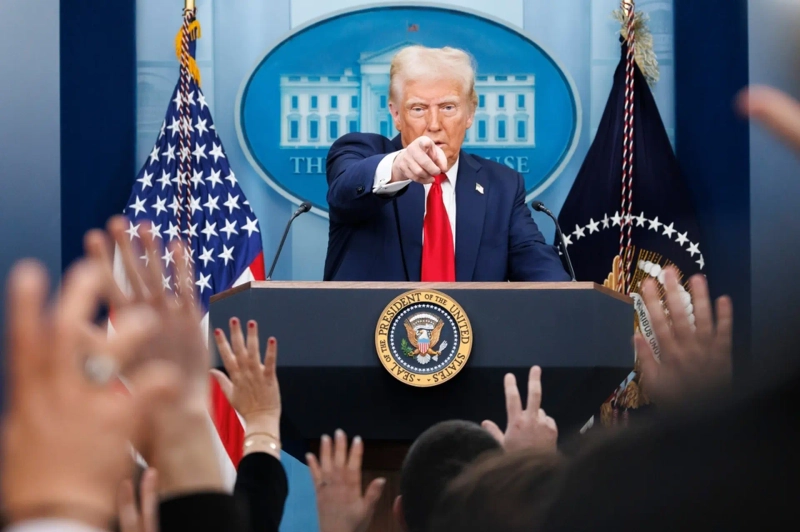
The Trump administration is pursuing a large investment fund for Iran as negotiations to end the war move into their final stage.
The New York Times reported on May 28, citing US officials, that the administration has asked Middle Eastern countries to support Iran’s reconstruction and is discussing an investment fund of $300 billion. The proposal appears to be tied to Iran’s demand that war reparations be included in a ceasefire agreement. Trump has told aides he would not sign any deal that could be seen as the US directly giving cash to Iran, the newspaper said. The position reflects his long-running criticism that former President Barack Obama "gave cash" to Iran.
According to the Times, an Iranian official cited the $300 billion figure for the proposed fund, while other people involved in the mediation did not provide an amount. The newspaper added that the idea overlaps with real estate development proposals linked to Steve Witkoff, the US special envoy to the Middle East, and Jared Kushner, Trump’s son-in-law. If Iran gives up nuclear weapons and signs a peace agreement, real estate projects in Tehran and other cities could proceed. That would let the US avoid direct payments while still delivering on Trump and Vice President J.D. Vance’s statements that Iran could "prosper economically."
Separately, Treasury Secretary Scott Bessent said at a White House briefing that Iran’s transfer of enriched uranium, abandonment of nuclear arms and the opening of the Strait of Hormuz are US red lines. "We will not make a bad deal with Iran," he said. If reaching a peaceful agreement proves too difficult, Trump would resume military action. Bessent also said Oman, which shares territorial waters in the strait with Iran, has no plans to impose transit fees.
Iranian media outlets, however, are still discussing control over the Strait of Hormuz.
Lee Sang-eun, Washington correspondent, Hankyung.com, selee@hankyung.com

Korea Economic Daily
hankyung@bloomingbit.ioThe Korea Economic Daily Global is a digital media where latest news on Korean companies, industries, and financial markets.