Europe Hardens Trade Defenses Against Wave of Cheap Chinese Imports
Summary
- The EU said trade tensions are escalating as it increasingly sees its trade imbalance with China and China’s manufacturing overcapacity as a structural conflict.
- The EU said it is seeking to protect Europe’s manufacturing base in sectors such as electric vehicles, batteries and solar through the Industrial Decarbonisation Accelerator Act and stronger trade-defense tools.
- China said it would respond firmly to the EU with selective retaliation involving critical raw materials such as rare earths, agricultural and food imports, and anti-dumping investigations.
Forecast Trend Report by Period


‘A matter of industrial survival’ as China-EU trade tensions escalate
EU says trade imbalance with China is unsustainable
Beijing vows to ‘fight back firmly’ in language echoing past US-China trade clashes
Europe moves to block a surge of low-cost Chinese goods
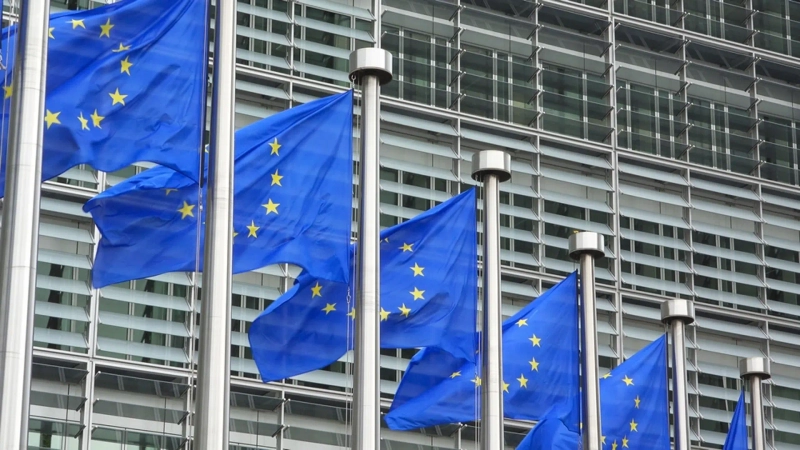
Trade tensions between China and the European Union are escalating. What began as separate disputes over electric-vehicle subsidies and tariffs is widening into a broader structural conflict involving China’s manufacturing overcapacity, Europe’s weakening industrial base and dependence on critical raw materials.
China pushes excess supply abroad
China’s Ministry of Commerce said in a statement on May 30 that if Europe rolls out new unilateral trade tools and adopts discriminatory measures, Beijing will “fight back firmly” and take effective steps to protect its interests.
The ministry also called on Europe to comply with World Trade Organization rules, uphold free trade and fair competition, and firmly oppose protectionism and unilateralism.
The language stood out because it mirrored phrases Beijing frequently used against Washington when US-China trade tensions intensified last year.
On May 29, the European Commission said cooperation and dialogue with China would continue because it remains an important partner. Even so, it said the current trade and investment relationship with China is not sustainable.
The commission added that economic and security interests are becoming increasingly intertwined, requiring a strong and consistent response on both fronts. It said trade imbalances with China would be discussed further at the Group of Seven leaders’ summit and an EU summit.
That signals the EU no longer views China simply as a trading partner. Brussels increasingly sees Beijing as a force undermining Europe’s industrial competitiveness.
Europe moves to protect its manufacturing base
Trade friction between China and the EU has intensified this year because Brussels no longer sees the imbalance as a temporary cyclical issue. The EU’s goods trade deficit with China has continued to widen.
China’s reach is also expanding rapidly from a limited number of products into a broader industrial ecosystem. Until now, the EU’s trade action against China had focused on anti-dumping and anti-subsidy investigations in specific sectors including solar panels, steel and electric vehicles.
Recently, low-priced Chinese exports have been putting pressure on the European market across multiple industries at once, including electric vehicles, batteries, solar, steel, chemicals, medical devices and e-commerce consumer goods.
The New York Times reported that the influx of cheap Chinese goods is threatening European manufacturing and adding urgency to discussions within the bloc over reducing dependence on China.
The EU is now preparing a wider range of policy tools. The European Commission is pursuing an Industrial Decarbonisation Accelerator Act designed to strengthen Europe’s manufacturing base by giving preferential treatment in public procurement and public support to European-made and low-carbon products.
China’s Ministry of Commerce has strongly objected to the bill, saying it would impose restrictive provisions on third-country investors in batteries, electric vehicles, solar and critical raw materials. Those provisions include technology-transfer requirements, foreign ownership limits, local hiring rules and local-content requirements.
France, Italy, Spain, the Netherlands and Lithuania have also argued that the EU’s trade-defense tools should become faster and tougher. They say existing anti-dumping and anti-subsidy measures are too slow, too narrow and too easy to circumvent.
Those countries have proposed broader investigations, company-level sanctions, sector-specific safeguards and tighter restrictions on indirect exports routed through third countries. China was not named directly, but the shared view is that the proposals target its structural overproduction and low-cost exports.
Experts say the trade conflict between China and the EU differs from the dispute between China and the US. The US-China clash has more of the character of a contest for supremacy, combining tariffs, technology controls and security alliances.
By contrast, tensions between China and the EU are closer to a fight over industrial survival and competing rules than to a military or security rivalry.
The US sees China as a strategic competitor and a challenger to its military and technological dominance. The EU also regards China as a rival, but Europe is more dependent on trade with China than the US and member states have differing interests.
That helps explain why Washington has focused on restricting China’s access to advanced technology through tariffs, export controls and pressure on allies, while the EU has favored World Trade Organization rules and internal legal mechanisms.
The New York Times said the EU is trying to respond forcefully to China while also worrying about retaliation, higher costs for consumers and divisions among member states.
China, meanwhile, is known to be preparing a range of countermeasures. During its trade dispute with the US, Beijing already used export controls on rare earths and critical minerals as leverage in negotiations. The impact also reached European companies.
Experts say a full-scale trade war would also be costly for China, making selective retaliation the more probable course. Possible tools include rare earths, agricultural and food imports, licensing and investigations involving European companies in China, and anti-dumping probes into specific products.
A source in Beijing said that if the gap in perceptions between China and the EU does not narrow, the relationship will probably remain one of managed conflict marked by repeated trade sanctions and selective retaliation.
Kim Eun-jung, Beijing correspondent kej@hankyung.com

Korea Economic Daily
hankyung@bloomingbit.ioThe Korea Economic Daily Global is a digital media where latest news on Korean companies, industries, and financial markets.