PiCK
Koo Yoon-cheol Says Much of Semiconductor Tax Windfall Will Go to Sovereign Wealth Fund
Summary
- Deputy Prime Minister Koo Yoon-cheol said a substantial portion of excess tax revenue generated by the semiconductor boom will be put into a sovereign wealth fund and used as investment capital for future generations.
- The government said it will create a Korean-style sovereign wealth fund of about $21.7 billion by adding excess tax revenue to stakes in state-owned companies and shares accepted in lieu of inheritance tax, and invest in promising companies in the country’s strategic industries.
- Koo said the government will not be involved in fund management and will hire top professionals to run the vehicle and create a virtuous cycle.
Forecast Trend Report by Period


“We won’t just distribute money earned from semiconductors”
Signals intent to use it as investment capital for the future
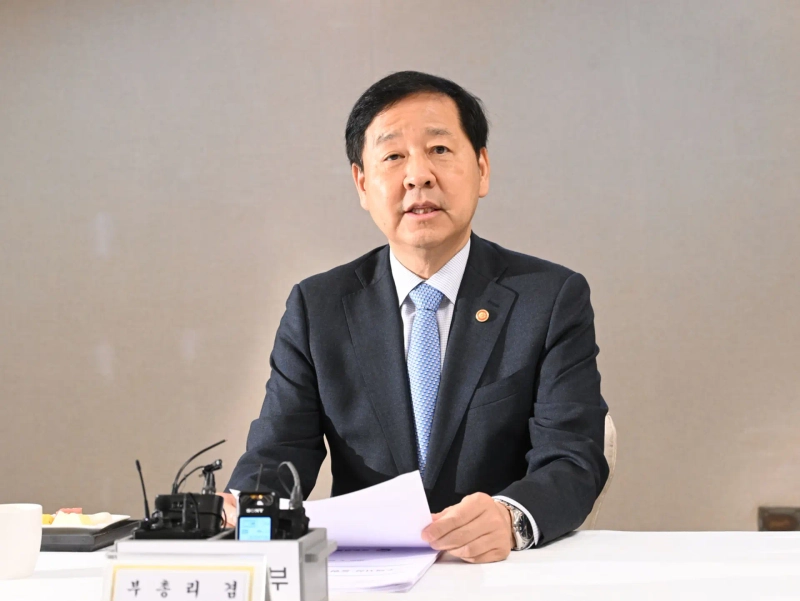
Koo Yoon-cheol, deputy prime minister and minister of finance and economy, said a substantial share of excess tax revenue generated by the semiconductor boom will be injected into a sovereign wealth fund. The goal is to bolster the fund’s initial capital, use it as an investment vehicle for future generations and create a buffer for the Korean economy.
Koo made the remarks during an appearance on a YouTube channel on May 30. “We won’t stop at simply distributing and spending the money earned from semiconductors,” he said. “We will build it into an asset for the future.” A sizable portion of extra tax revenue generated when the economy is strong will be put into the sovereign wealth fund, he added. The government then plans to invest the money, generate returns and establish a virtuous cycle of wealth creation.
The government is preparing to launch a Korean-style sovereign wealth fund modeled on Singapore’s Temasek, with a debut targeted for the second half of the year. The fund is intended to invest in promising companies in the country’s strategic industries, support their growth and pass the gains on to future generations. That distinguishes it from Korea Investment Corp., or KIC, which invests the country’s foreign-exchange reserves in overseas assets.
The government had initially planned to launch the new sovereign wealth fund with 20 trillion won ($14.5 billion) in in-kind contributions, including stakes in state-owned institutions such as Korea Development Bank and the Export-Import Bank of Korea, as well as shares accepted as payment in lieu of inheritance tax. It now plans to add excess tax revenue and raise the initial seed capital to nearly 30 trillion won ($21.7 billion). Koo added that the government will not be involved in managing the fund and instead will hire top professionals to run it.
Koo also pushed back against concerns that the Kospi may fail to hold the 8,000 level. “Those concerns arise when there is no effort to innovate,” he said. He declined to elaborate on the government’s forecast for this year’s growth, which is due to be announced in a second-half economic growth strategy update at the end of June.
The Ministry of Finance and Economy had presented a 2.0% real growth forecast for this year at the start of the year. Koo said some projections put nominal growth at 10%. He added that much will depend on developments in the Middle East and how long the semiconductor cycle lasts.
On the same day, Park Hong-keun, minister of planning and budget, also appeared on a YouTube channel and said the government would invest properly while tax revenue is flowing in. South Korea’s fiscal condition remains very sound, he said, adding that the government will spend where needed and aggressively cut unnecessary outlays.
Nam Jung-min / Kim Ik-hwan, Hankyung.com reporters peux@hankyung.com

Korea Economic Daily
hankyung@bloomingbit.ioThe Korea Economic Daily Global is a digital media where latest news on Korean companies, industries, and financial markets.