Iran Says US Can’t Be Trusted as Ceasefire MOU Talks Waver Again
Summary
- Iran and the US are continuing to exchange revisions in negotiations over a ceasefire MOU, with Tehran saying that “nothing has been finalized.”
- Iran said it is “fully preparing for a scenario in which no agreement is reached,” referring to the possibility of a no-deal outcome, and added that the US cannot be trusted.
- Delays in the talks are set to keep uncertainty in place for now over the Strait of Hormuz, oil supply, and the release of $12 billion in frozen assets.
Forecast Trend Report by Period


Iranian media says Tehran plans to submit its own revisions
Trump seeks additional concessions in draft ceasefire MOU
Tasnim source says nothing has been finalized
Iran says it is also preparing for a no-deal outcome
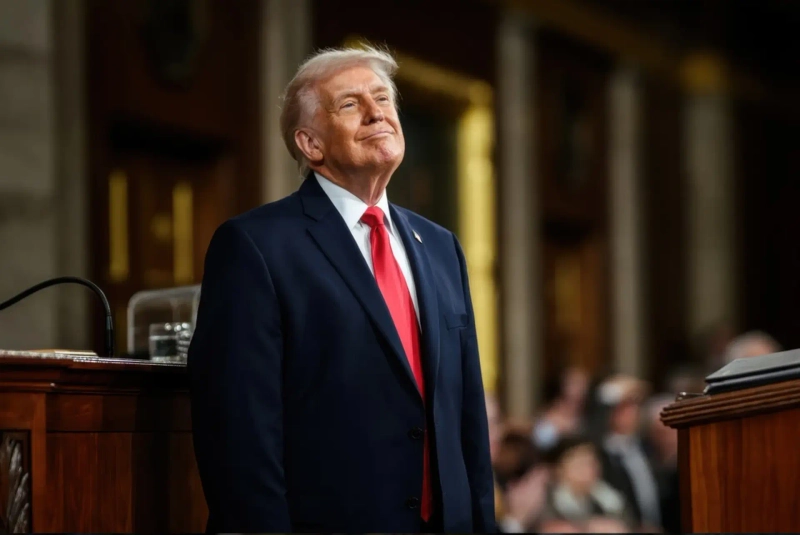
President Donald Trump has sought additional concessions in a draft memorandum of understanding aimed at ending the Iran conflict, and Iran plans to present revisions of its own, Iran’s Tasnim news agency reported on June 1. Iranian officials said no agreement has been finalized and that Tehran is also preparing for the possibility that the talks collapse.
Iran counters Trump revisions with changes of its own
Tasnim, a semi-official outlet affiliated with Iran’s Islamic Revolutionary Guard Corps, cited a source familiar with the negotiations as saying Iran would seek to incorporate its own revisions into the text. “The two sides are continuing to exchange language, and Iran will naturally reflect its own revisions in the agreement as well,” the source said. “Nothing has been finalized.”
A US revision does not mean Iran has agreed to accept it, the source added. Tehran’s standard is whether the wording is something it can directly accept. Revisions from Trump’s side do not automatically mean Iran will sign off.
The New York Times earlier reported, citing three officials, that Trump had hardened the terms of a provisional understanding in the ceasefire MOU and sent the revised document back to Iran. Axios also reported that Trump had demanded additional conditions in the existing draft.
The details of the revisions have not been confirmed. Still, the US has laid out several core demands, including reopening the Strait of Hormuz, ensuring Iran gives up nuclear weapons and resolving the issue of highly enriched uranium. Trump recently told Fox News that the guarantee he must secure is that Iran will have no nuclear weapons, adding that Tehran had agreed.
Iran, however, said nothing has been settled. Foreign Minister Abbas Araghchi told Iranian state television that talks and message exchanges between Iran and the US were continuing. No judgment can be made until a clear outcome emerges, he said.
He added that until the matter is finalized, people should disregard the speculation and rumors now circulating.
Iran raises prospect of no-deal outcome
Iran also publicly raised the possibility that the talks could fail. The source cited by Tasnim said Tehran was fully preparing for a scenario in which no agreement is reached. The remark underscored that Washington’s revised proposal would not necessarily lead to progress in the negotiations.
Hard-line comments have also surfaced in Iran over whether any deal should be approved. AFP reported that Iranian Parliament Speaker Mohammad Bagher Ghalibaf said on state television that no agreement would be approved until there is confidence that the rights of the Iranian people are fully guaranteed. He added that the US cannot be trusted.
The gap between the two sides is also evident in the terms of any nuclear deal. Iran is demanding the release of $12 billion in assets frozen by the US and its allies. Tehran also pushed back against Trump’s call to scrap its stockpile of enriched uranium, calling it an unfounded claim.
The two sides have also given conflicting accounts of the Strait of Hormuz. Trump said that if a deal is reached, Iran would not charge transit fees to ships passing through the waterway. Iran, by contrast, said no such clause exists.
Iran’s parliament is instead discussing control of the strait and possible administrative fees, according to the report. The Strait of Hormuz is a critical route for oil shipments. As long as negotiations drag on, uncertainty over normalization of traffic through the strait and any recovery in oil supply will persist.
Military activity outside the talks is continuing as well. CNN, citing satellite-image analysis, reported signs of repair work at parts of Iranian underground missile bases hit by US airstrikes. The report said 50 tunnel entrances at 18 bases had been restored. Iranian state television said the Revolutionary Guard had blocked a US drone from entering Iranian airspace and shot it down. The US has not confirmed the claim.
Hong Min-seong, Hankyung.com reporter mshong@hankyung.com

Korea Economic Daily
hankyung@bloomingbit.ioThe Korea Economic Daily Global is a digital media where latest news on Korean companies, industries, and financial markets.