Former BOJ Board Member Says Japan Risks Sharp Rate Hikes if It Falls Behind Inflation
Forecast Trend Report by Period


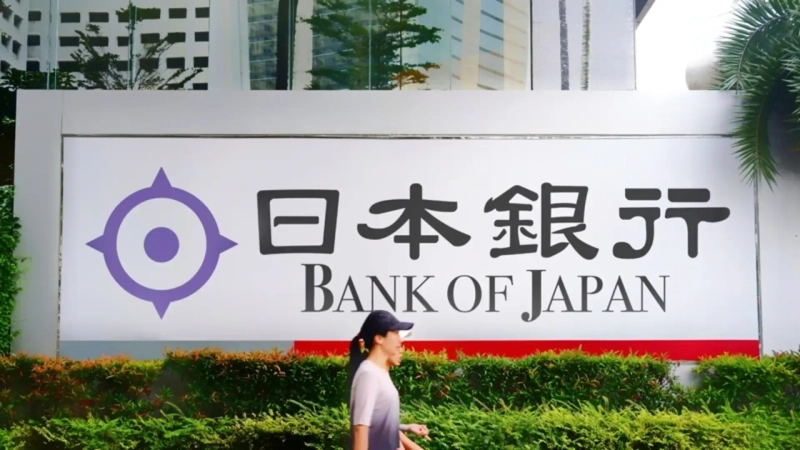
Former Bank of Japan board member Makoto Sakurai said Japan risks being forced into aggressive interest-rate increases if it fails to respond quickly to inflation fueled by the war in Iran. He said consumer inflation could accelerate to 3.5% in the fall and warned that bubbles in property and stocks could lead policymakers to repeat mistakes that triggered decades of economic stagnation.
The BOJ has not raised interest rates since late last year despite persistent inflationary pressure. The yen's weakness has meanwhile been countered through market intervention, with the central bank selling dollars and buying yen.
Reuters reported on June 1 that Sakurai said the BOJ had increased the risk of steep rate hikes later by keeping borrowing costs too low for too long. From the third quarter, stagflation in Japan will be unavoidable as price pressure from the war in Iran intensifies, he said.
Japan's core consumer price index has remained below the BOJ's 2% target in recent months because of subsidies. But Sakurai said inflation will likely accelerate to about 3.5% in the fall as companies pass higher costs on to consumers.
He also pointed to signs of bubbles in Japan's stock and real estate markets. The BOJ identified that as a risk factor in its semiannual Financial System Report released in April.
There is a serious risk that the BOJ will fall behind market moves, Sakurai said. Under current economic conditions, he added, it is hard to imagine the central bank not raising rates in June.
The BOJ ended its decade-long massive stimulus program in 2024 and raised rates several times, including in December. Even so, its short-term policy rate remains low at 0.75%, although inflation has topped the 2% target for four straight years.
Markets are pricing in about an 80% chance of a June rate increase. The policy rate is expected to rise 25 basis points to 1%.
The war in Iran is pushing up energy costs, stoking inflation while also squeezing Japan's economy, which depends heavily on oil imports.
Japan's gross domestic product is showing few signs of a boom. The economy grew at an annualized 2.1% in the first quarter, but analysts expect momentum to weaken as higher fuel costs and supply disruptions hit corporate profits.
Inflation pressure is also building as companies raise prices in response to yen weakness and labor shortages.
The energy shock triggered by the conflict has prompted policymakers to look to history for clues on how to respond. BOJ Governor Kazuo Ueda cited the two oil crises of 1973 and 1979-1980 as examples.
What Ueda did not mention was Japan's asset bubble, which stemmed from the BOJ's large-scale money creation from 1986 to counter yen strength. The central bank kept monetary policy loose even as asset prices surged, worsening the bubble, before changing course in 1989. A series of aggressive rate hikes then led to the bubble's collapse and has been blamed for 30 years of economic stagnation.
Japan's Nikkei average rose above 67,000 for the first time on June 1, helped by gains in artificial intelligence-related stocks. Japan's land prices posted their fastest increase in 34 years in 2024.
If the BOJ delays rate hikes now, it will have no choice but to raise rates more sharply later, hurting the economy, Sakurai said. He added that Japan risks repeating the mistake that led to another lost decade.
Kim Jung-a, guest reporter, Hankyung.com, kja@hankyung.com

Korea Economic Daily
hankyung@bloomingbit.ioThe Korea Economic Daily Global is a digital media where latest news on Korean companies, industries, and financial markets.