Summary
- The US said its May ISM manufacturing PMI rose to 54.0, topping the market forecast of 53.3 and the prior month's 52.7, extending expansion to a fifth straight month.
- It said key gauges improved into expansion territory, including the new orders index at 56.8, production index at 54.3, backlog of orders at 52.2, and new export orders at 50.6.
- On the other hand, the employment index at 48.6, inventories index at 49.9, prices index at 82.1, the Iran war, tariffs, and price volatility remained pressure points for the manufacturing expansion.
Forecast Trend Report by Period


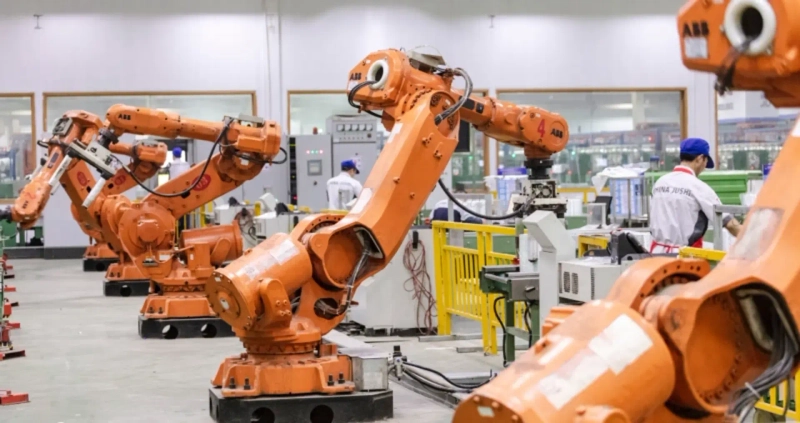
US manufacturing expanded for a fifth straight month in May. Stronger new orders and production pushed the Institute for Supply Management's manufacturing purchasing managers index above market expectations. Still, the Iran war, tariffs and price volatility remained a burden for companies.
The ISM said on June 1 that its US manufacturing PMI came in at 54.0 in May. That topped the market forecast of 53.3 and was up 1.3 points from 52.7 a month earlier.
According to the ISM, the May reading was the highest since 55.9 in May 2022. US manufacturing has now remained in expansion for five straight months after a 10-month contraction. A PMI reading above 50 generally signals expansion, while a reading below 50 points to contraction.
The underlying gauges also improved. The new orders index rose 2.7 points from a month earlier to 56.8. The production index climbed 0.9 point to 54.3. The backlog of orders index advanced to 52.2, while the new export orders index returned to expansion territory at 50.6.
Employment and inventories, however, remained in contraction. The employment index improved to 48.6 from 46.4, but stayed below 50. The inventories index rose 0.9 point from the prior month to 49.9, but still fell short of the expansion threshold.
Price pressures remained elevated. The prices index slipped 2.5 points to 82.1 from 84.6 a month earlier, but raw-material price gains extended to a 20th straight month. The ISM said higher steel and aluminum prices, tariffs on imported goods and rising petroleum-based product costs tied to conflict in the Middle East were lifting the prices gauge.
Susan Spence, chair of the ISM Manufacturing Business Survey Committee, said US manufacturing activity remained in expansion in May and grew at a faster pace than in the previous month. New orders and production increased more quickly, while employment and inventories stayed in contraction but both improved.
Sentiment on the factory floor was mixed. The ISM said 25% of respondent comments in May were positive, while 69% were negative. Among those comments, 42% mentioned the Iran war and 18% cited tariffs. Some 57% of respondents identified price volatility as a key problem for their businesses.
By industry, 16 of 18 manufacturing sectors reported growth. Six major manufacturing industries also expanded: computer and electronic products, machinery, transportation equipment, petroleum and coal products, chemical products, and food, beverage and tobacco products.
The report showed a continuing recovery in US manufacturing, though cost and supply-chain risks remain. Uncertainty tied to the Iran war and the Strait of Hormuz could test the durability of the expansion if it affects energy prices, delivery times and raw-material costs.

Minseung Kang
minriver@bloomingbit.ioBlockchain journalist | Writer of Trade Now & Altcoin Now, must-read content for investors.