Nvidia’s Jensen Huang Says It Will Invest in South Korea’s Robotics Sector
Summary
- CEO Jensen Huang said “we at Nvidia will always consider investing in Korea,” underscoring the importance of Korean semiconductor and IT companies.
- Nvidia said it is expanding cooperation in robotics and physical AI with Samsung Electronics, SK Hynix, Hyundai Motor, LG Electronics and Doosan.
- Nvidia unveiled an AI PC CPU and RTX Spark, pointing to major demand for LPDDR DRAM and direct gains for South Korea’s semiconductor industry.
Forecast Trend Report by Period


Semiconductor INSIGHT
Jensen Huang Signals Bigger Investment in South Korea Robotics
‘AI and Robotics’ Can Maximize Korea’s Potential
Meets SK Chairman Chey Tae-won Separately to Discuss Cooperation
Unveils CPU at Computex Keynote
‘Will Accelerate the Agentic AI Era’
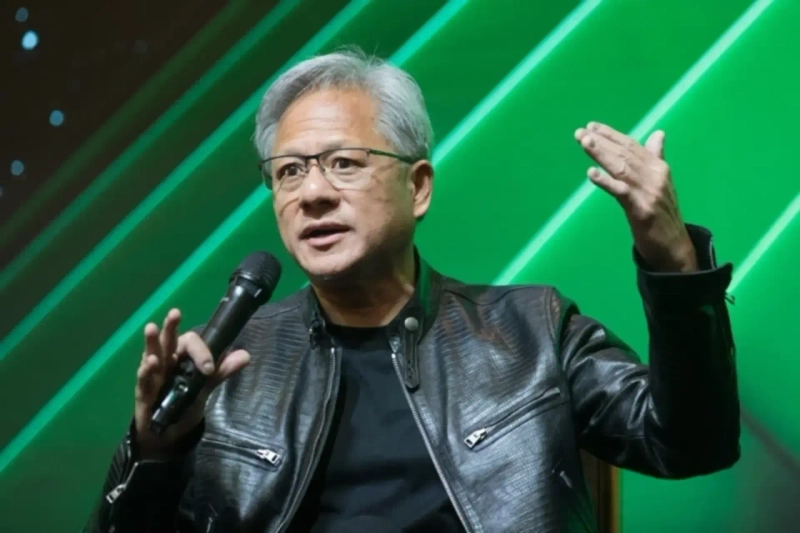
Nvidia Chief Executive Officer Jensen Huang said on June 1 that the company will invest in South Korea’s robotics sector. He also signaled plans to expand cooperation with Korean companies. Industry participants said Huang may discuss partnership plans with local robotics companies during his Korea visit this week.
Huang made the remarks while speaking with reporters during a Korea Partner Night event at a restaurant in Taipei on June 1. “Korea is a very important part of the Nvidia ecosystem,” he said. “There is a lot for us to do together, including semiconductors, science, robotics and AI factories.”
He singled out robotics as particularly important for Korea and said he hopes Nvidia can contribute to the development of the country’s robotics industry.
The event hosted by Huang drew executives from major Korean companies including Samsung Electronics, LG Electronics, Doosan and Naver, as well as SK Hynix President Kwak Noh-jung. It was the first time Huang had held an event in Taiwan bringing together multiple Korean business leaders at once. An industry official said Huang’s emphasis on robotics suggests Nvidia is already reviewing ways to expand investment in the field.
Separately, Huang used his keynote speech at Computex 2026 on June 1 to formally declare Nvidia’s entry into the AI laptop and central processing unit market. He also disclosed that the company is in full-scale production of Vera Rubin, its next-generation server for AI data centers.
“We Will Always Consider Investing in Korea”
‘AI and Robotics’ Can Maximize Korea’s Potential; Meets Chey Tae-won Separately to Discuss Cooperation
“We at Nvidia will always consider investing in Korea. Korea has a great ecosystem, and many smart, technologically advanced companies.”
Huang made the comments on June 1, a day before the opening of Computex 2026, Taiwan’s largest information-technology trade show, after inviting a large group of Korean business leaders to a separate event. It was the first time Nvidia had arranged a Korea-only gathering during Computex. Industry participants said the event symbolized how the standing of Korean semiconductor and IT companies has changed within the global AI ecosystem.
“A GTC in Seoul Is Also Possible”
Huang hosted the Korea Partner Night at a restaurant in Taipei and spoke with Korean executives for more than two hours. During the dinner, he personally mixed somaek, a Korean drink made with soju and beer, as he worked to build rapport with the guests. Attendees included Samsung Electronics Vice President Kim Jae-joon, SK Hynix President Kwak Noh-jung, LG Sciencepark President Jeong Su-heon and Naver Cloud Chief Executive Officer Kim Yu-won.
Asked why he hosted the event, Huang said he wanted to thank all of Nvidia’s Korean partners for supporting the company over the past year. He repeatedly made affectionate remarks about Korean industry. Huang also said Nvidia could hold its annual GTC technology conference in Seoul.
“Korea has been a special place since the early days of GeForce, as one of the birthplaces of esports, gaming and PC bang culture,” he said. “If Seoul wants it, we will hold GTC there.”
He also indicated Nvidia intends to increase investment in Korea, particularly in robotics. “AI and robotics will maximize Korea’s potential,” Huang said. Nvidia is expanding cooperation in robotics and other physical AI fields with Samsung Electronics, SK Hynix, Hyundai Motor, LG Electronics and Doosan.
Asked why Nvidia is focused on Korea’s robotics industry, Huang said the country is a manufacturing nation. He added that while Korea may face limits in population size, its imagination, creativity and ambition are immense.
Huang also expressed confidence in Nvidia’s partnerships with Korean chipmakers. “We work very closely with SK,” he said. “We’ve had a long relationship, and I’m proud of their success. I’m very pleased to see them recently become a $1 trillion market-cap company.”
Huang separately met with SK Group Chairman Chey Tae-won on June 1. Kwak, who attended the meeting, said the two discussed the future of AI and their future partnership.
Nvidia Targets PC Market, Challenging Intel
Industry participants said Huang’s unusual outreach reflects how indispensable Korean companies are to Nvidia’s next-stage ecosystem expansion strategy. Nvidia’s future roadmap effectively depends on Korean memory makers and robotics companies.
In his Computex keynote earlier that day, Huang challenged the traditional PC CPU market long dominated by Intel and Advanced Micro Devices. His aim is to bring every AI-enabled IT device into the Nvidia ecosystem and usher in the era of agentic AI.
Nvidia unveiled Grace Blackwell Spark, an AI PC CPU, and RTX Spark, its first laptop developed jointly with Microsoft. The products include 128 gigabytes of low-power DRAM, or LPDDR, four times the capacity of existing high-end laptops. Industry participants said the system is believed to use eight 16-gigabyte LPDDR5X memory chips from Samsung Electronics or SK Hynix. As memory content per PC rises sharply, South Korea’s semiconductor industry stands to benefit directly.
Kang Hae-ryeong, Hankyung.com reporter hr.kang@hankyung.com

Korea Economic Daily
hankyung@bloomingbit.ioThe Korea Economic Daily Global is a digital media where latest news on Korean companies, industries, and financial markets.