BOK July Rate Hike All but Locked In as May Inflation Tops 3%
Summary
- Markets are treating a July benchmark rate hike as all but certain after rises in May inflation and core inflation.
- Expectations for higher interest rates are being strongly reflected in the market, with the yield on the three-year government bond rising above 3.8%.
- Concerns are growing that prolonged high inflation and high interest rates will worsen earnings at small and midsize companies and weigh on the stock market.
Forecast Trend Report by Period


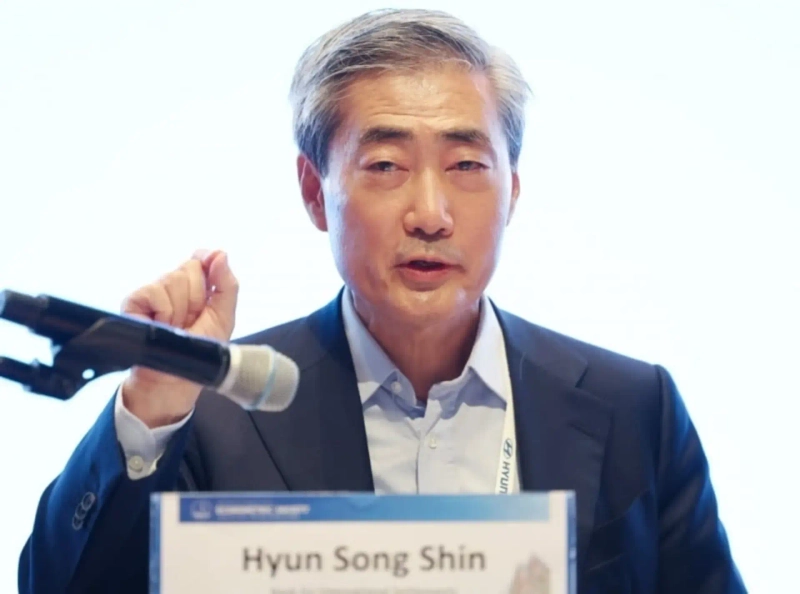
Markets are increasingly treating a Bank of Korea interest-rate increase in July as a foregone conclusion after consumer inflation climbed into the 3% range in May.
The shift comes as both the living-costs index and core inflation, two gauges the central bank has been watching closely, rose sharply. The living-costs index accelerated to 3.3% from 2.9%, while core inflation climbed to 2.5% from 2.2%.
At a press conference after the Monetary Policy Board held the benchmark rate unchanged in May, BOK Governor Hyun Song Shin indicated the central bank wanted to check one more core inflation reading before tightening.
"We could have made a sufficiently strong case for raising rates this time as well," Shin said at the May 28 briefing. "But April's core inflation reading of 2.2% was the latest available, and uncertainty over the next data release led opinion among board members to tilt toward waiting a little longer."
That means the rise in May core inflation could provide the basis for a July rate increase. Kim Myung-sil, an analyst at iM Securities, said the gain in core prices showed the latest inflation acceleration was not just a matter of volatile food or energy costs.
The living-costs index, which Shin has repeatedly said he is monitoring closely, is also climbing rapidly. The concern is over second-round effects: higher everyday prices can lift inflation expectations and then feed back into core inflation. The index is calculated from 133 items among the 458 components of the consumer price index, focusing on goods that households buy frequently and spend heavily on.
When high oil prices push up living costs, economic agents may begin to expect further price increases. Workers may then demand higher wages to protect real income, and companies facing higher labor costs may raise prices for goods and services in turn, creating an inflation spiral.
"The most important thing in inflation is the second-round effect," Shin said at the May 28 policy meeting. He added that elevated living costs were continuing to put upward pressure on prices by stoking inflation expectations.
In Seoul's bond market, the yield on three-year Korean Treasury bonds rose sharply. It climbed as high as 3.823% in morning trading, breaking through the psychologically important 3.8% level. On an intraday high basis, that was the highest since Nov. 14, 2023, when it reached 3.882%.
Kim Dong-hwan, executive vice president in charge of bond management at Woori Asset Management, said a 3 trillion won auction of 30-year government bonds prompted market participants to unload three-year debt to spread risk, sending yields higher.
Some analysts say the market may be reflecting expectations not only for two rate increases this year totaling 0.5 percentage point, but also for one additional hike next year. Kong Dong-rak, head of long-term strategy research at Daishin Securities, said persistent inflation and the BOK's hawkish tone were reviving views that another increase in 2027 was possible.
Inflation is expected to remain in the 3% range for the time being. At a price-monitoring meeting held at the BOK on June 2, Lee Ji-ho, director general of the bank's Research Department, said June inflation would likely be similar to May as petroleum-price gains remain elevated.
As the oil-price shock gradually spreads to other sectors, inflation is projected to stay in the 3% range for some time, Lee said.
Prolonged high inflation and high interest rates are set to weigh on vulnerable households' quality of life. Lee said the living-costs index had risen into the low-to-mid 3% range, increasing the burden on lower-income groups that spend a larger share of their budgets on essentials.
High rates also directly sap equity-market strength. Rising yields compress price-to-earnings ratios and add to valuation pressure. Kong said elevated funding costs increase the burden on companies, particularly small and midsize firms with limited financing capacity and greater sensitivity to rate swings. That in turn could hurt earnings and weigh on the stock market, he added. The Kosdaq closed down 2.29% at 1,026.03.
Seong-mi Shim, Hankyung.com reporter smshim@hankyung.com

Korea Economic Daily
hankyung@bloomingbit.ioThe Korea Economic Daily Global is a digital media where latest news on Korean companies, industries, and financial markets.