Nvidia’s Jensen Huang Courts Krafton, NCSoft as Game Studios Emerge as Robot Training Partners
Summary
- Nvidia and South Korean game companies are discussing cooperation in physical AI, virtual training grounds, on-device gaming, and world models.
- Krafton has emerged as a candidate for physical AI cooperation through Nvidia ACE-based AI characters, on-device deployment, and the launch of Ludo Robotics.
- NCSoft is aligning with Nvidia’s robotics and digital twin strategy through projects in world models, industrial simulation, defense physical AI, and autonomous welding AI.
Forecast Trend Report by Period


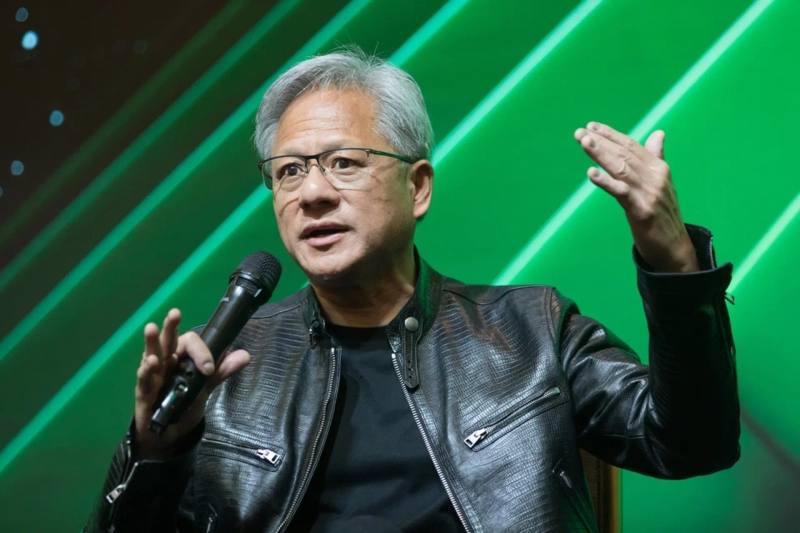
Nvidia Chief Executive Officer Jensen Huang will meet Krafton Chairman Chang Byung-gyu and NCSoft Chief Executive Kim Taek-jin during his visit to South Korea. The talks highlight how game developers, once primarily buyers of graphics processing units, are emerging as partners in the physical AI era by providing virtual training grounds. Industry officials say Nvidia and South Korean game companies could deepen cooperation in on-device gaming and world models.
Jensen Huang Reaches Out to Korean Game Companies
According to the gaming industry on June 4, Huang will arrive in South Korea on June 5 and hold a series of meetings from June 7 with executives at major local game companies, including Chang and Kim. Key AI leaders from each company will join the discussions. Krafton will send Chang, Chief AI Officer Lee Kang-wook and Jang Tae-seok, head of the PUBG IP franchise. NCSoft is also expected to have Kim and senior executives from its AI subsidiary, NC AI, in attendance.
Nvidia’s relationship with South Korea’s gaming industry dates back more than 20 years. The company was founded in 1993 with the goal of bringing 3D graphics to the gaming and multimedia markets, and it helped open the GPU era with the GeForce 256 in 1999. In South Korea, Nvidia graphics cards spread rapidly as PC bangs, or internet gaming cafes, and online games surged in popularity after 1998. Industry anecdotes say Huang once visited Seoul’s Yongsan Electronics Market to check consumer demand firsthand. GPUs later became central to AI computing after Nvidia introduced its CUDA software platform in 2006.
The meetings are drawing attention because the relationship between Nvidia and Korean game developers is shifting again. In the past, Korean game companies were key customers for Nvidia GPUs. In the physical AI era, they are emerging as partners that can provide virtual worlds and behavioral data for training robots and autonomous-driving AI. Physical AI technologies such as robotics and autonomous driving require virtual training environments where countless scenarios can be repeated before real-world deployment. Game developers already build 3D spaces, physics engines, character behavior rules and user interaction data. Korean companies, in particular, have extensive experience operating complex virtual worlds and large-scale user interactions through massively multiplayer online role-playing games and battle royale titles.
Krafton, NCSoft Emerge as Key Partners
Krafton and NCSoft are regarded as the Korean game companies with the clearest avenues for AI cooperation with Nvidia. Krafton has emerged as a leading candidate because it can experiment with both game AI and physical AI. The company has advanced AI character technology through PUBG Ally and Smart Zoi in inZOI, both based on Nvidia’s ACE AI character platform, to create characters that understand player speech, interpret in-game situations and act accordingly. Running those systems directly on user devices could improve response times and lower server costs, aligning with Nvidia’s AI PC strategy. The structure of in-game AI characters that perceive their surroundings and act toward a goal could also be extended to behavior models for humanoid robots. Krafton’s launch earlier this year of physical AI unit Ludo Robotics reflects that direction.
NCSoft stands out as a potential partner in world models and industrial simulation. The company has traditionally worked with Nvidia’s gaming ecosystem through high-end PC games and graphics technology, but recently it has expanded further into physical AI through NC AI. NCSoft has advanced generative AI and 3D production technology based on its in-house large language model Varco. It has also won projects from Hyundai Rotem related to defense physical AI and from Hanwha Ocean for autonomous welding AI. Industry officials say the company’s push to extend simulation capabilities built in game development into defense and shipbuilding sites fits with Nvidia’s robotics and digital twin strategy.
Ahn Jung-hoon, Hankyung.com reporter ajh6321@hankyung.com

Korea Economic Daily
hankyung@bloomingbit.ioThe Korea Economic Daily Global is a digital media where latest news on Korean companies, industries, and financial markets.