South Korea’s Lee Says Stocks Still Undervalued, Won’s Rise Past 1,500 Per Dollar Is Temporary
Summary
- President Lee Jae-myung said stock prices have risen faster than expected but are still slightly undervalued.
- Lee said the Kospi index could rise above 5,000 through measures to normalize past distortions and a semiconductor boom.
- Lee said the sharp rise in the won-dollar exchange rate was a temporary effect of the stock-market rally, adding that the current-account surplus was also creating factors that could push it lower.
Forecast Trend Report by Period


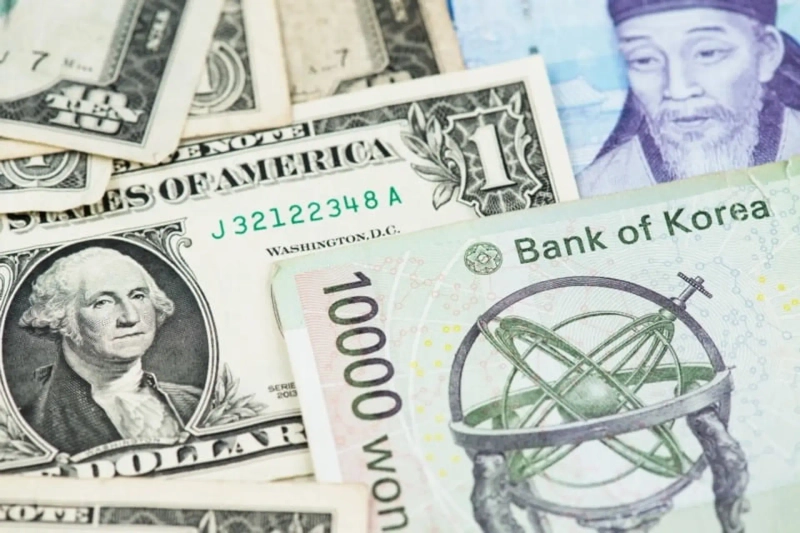
South Korean President Lee Jae-myung said on June 8 that stock prices have climbed faster than he expected but are still slightly undervalued. He also called the won’s rise past 1,500 per dollar a temporary phenomenon.
At a news conference marking his first year in office at the Blue House state guest house, Lee said the Kospi had risen sharply from 2,700 even if it could also be described as having suffered a steep drop after breaking below 8,000.
Lee said he had expected the benchmark to reach 5,000 in two to three years. But once he became convinced the market was normalizing, there was no reason to wait that long. He added that South Korea’s stock market had been abnormally cheap regardless of valuation measures such as price-to-book and price-to-earnings ratios.
He said the Kospi could move above 5,000 through what he called measures to normalize past distortions, with a semiconductor boom adding to the momentum. That, he said, could add another 2,000 to 3,000 points, and developments were unfolding as he had expected.
Lee said South Korea was generating an unprecedented current-account surplus as exports increased and that stocks still appeared slightly undervalued. He added that share prices inevitably fluctuate and urged investors not to use his remarks as a basis for trading decisions.
The gains from the stock rally have not been limited to investors holding large-cap and semiconductor shares, Lee said. All citizens are benefiting, he added, pointing to a sharp increase in the National Pension Service’s assets. That has pushed discussion of structural pension reform into the background.
Lee said earlier debate over pension reform had focused on who should bear the losses. Being able to avoid that discussion for a considerable period would be desirable for South Korea as a whole, he said. Some critics argue, however, that a stock-market rally would only delay the pension fund’s depletion by a few years and that reform should not be postponed because low birthrates and population aging, the root causes of the problem, remain unchanged.
Lee also said the higher exchange rate was a temporary consequence of the stock-market rally. South Korea’s weighting in foreign funds has become too large because local shares rose so quickly in a short period, he said. When investors sell stocks, they have to convert the proceeds into dollars, creating demand for the US currency. He said that was the biggest short-term factor.
He added that the current-account surplus was boosting dollar supply and creating many factors that could push the exchange rate lower.
Kang Hyun-woo and Kim Hyung-kyu, Hankyung.com reporters hkang@hankyung.com

Korea Economic Daily
hankyung@bloomingbit.ioThe Korea Economic Daily Global is a digital media where latest news on Korean companies, industries, and financial markets.