Trump Threatens Retaliation After US Apache Crash Near Hormuz, Putting Iran Ceasefire at Risk
Forecast Trend Report by Period


Trump says Apache helicopter was shot down by Iran, says US response is unavoidable
Iranian military source says no air attack operations were carried out in the past 24 hours
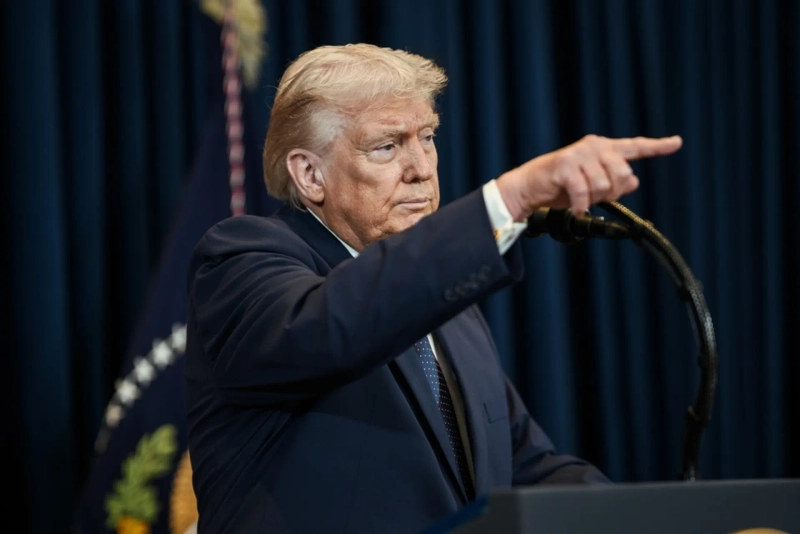
The US and Iran clashed publicly over the crash of a US Apache helicopter near the Strait of Hormuz. President Donald Trump said Iran shot it down and signaled retaliation. Iran warned it would respond firmly if Washington used the incident as a pretext to resume hostilities.
Trump wrote on Truth Social on June 9 that he had just received a report that an advanced Apache helicopter patrolling over the Strait of Hormuz the previous night had been shot down by Iran.
He said two pilots were aboard the helicopter and neither was injured. Even so, the US would have to respond to the attack, he wrote, leaving open the possibility of retaliation.
The New York Times reported on June 8 that a US Army Apache helicopter had crashed near the Strait of Hormuz and that the two crew members had been rescued. Trump also told reporters while returning from an NBA game in Manhattan that the pilots were not hurt. He said an investigative report on the cause of the accident would also be released.
The US and Iran have maintained a ceasefire since April 7 and have been holding talks on a formal end to the war. Sporadic armed clashes have continued in recent weeks, but both sides have maintained that the ceasefire remains in effect.
Trump's public mention of possible retaliation has put that truce under renewed strain. A broader escalation ahead of the FIFA North America World Cup opening on June 11 would also be a burden for Trump. But failing to respond to damage involving US military equipment could carry domestic political costs and weaken deterrence against Iran.
Until recently, Trump had voiced optimism that a wartime settlement with Iran could be reached soon. He had also personally sought to mediate tensions between Iran and Israel. Some observers had said he may have been aiming to secure a memorandum of understanding before the World Cup opens that would extend the ceasefire and start denuclearization talks.
Against that backdrop, the threat of retaliation marks a sharper tone than the administration's earlier negotiating posture. The scope of any US response and Iran's reaction will be key to whether the ceasefire holds.
Iran quickly issued a warning. Reuters reported that Iranian state media, citing a military source, said there would be a firm response if the US used the Apache crash as a pretext to restart hostile action.
The source added that there had been no air force attack operations in the Strait of Hormuz over the past 24 hours. Iran has not formally denied or confirmed Trump's claim that the helicopter was shot down.
Iranian Foreign Minister Abbas Araghchi also posted on X after the US military helicopter crash that foreign forces operating near Iranian territory are always exposed to human error, accidents or the risk of becoming involved in a confrontation. He said the best way to reduce those risks is for them to leave the area around Iran's territory.
The remarks underscored Iran's position that the US military incident near the Strait of Hormuz was not Tehran's responsibility, but rather a risk inherent in US operations in the area.
If the US takes military action and Iran judges it to be a breach of the ceasefire, not only the talks on ending the war but also the truce framework in place since April could come under pressure. It remains unclear whether the latest clash near the Strait of Hormuz will be contained as a localized flare-up or push US-Iran tensions back toward wider escalation.
Shin Hyun-bo, Hankyung.com reporter greaterfool@hankyung.com

Korea Economic Daily
hankyung@bloomingbit.ioThe Korea Economic Daily Global is a digital media where latest news on Korean companies, industries, and financial markets.