Trump Says Iran ‘Dragged Out’ Talks Too Long, Warns It Will ‘Pay the Price’
Summary
- The downing of a US Apache helicopter was followed by US strikes on Iranian air defense systems and surveillance radar sites.
- Iran said it launched missiles and drones targeting US military bases across the Middle East and the US Navy’s Fifth Fleet in Bahrain.
- Trump said Iran had dragged out negotiations for too long and would now have to pay the price, while the White House said there had been no change in the progress of the talks.
Forecast Trend Report by Period


US Launches Retaliatory Strikes After Apache Helicopter Is Downed
Iran Fires Missiles at US Bases Across the Middle East
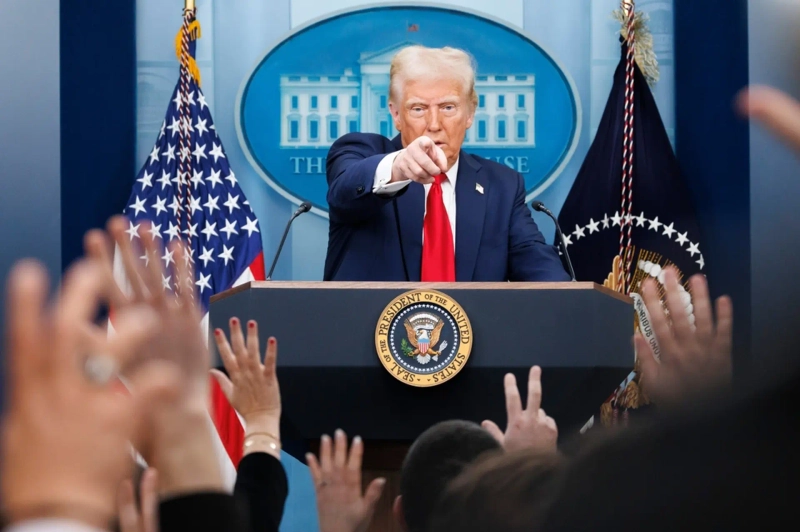
The US and Iran exchanged attacks after a US military Apache helicopter was shot down while patrolling near the Strait of Hormuz. President Donald Trump also signaled he was prepared to order additional strikes, saying Iran had dragged out negotiations for too long. White House officials, however, said the confrontation did not mark the start of a new war and that they remained optimistic about talks.
US Central Command said it began self-defense strikes against Iran at 5 p.m. Eastern Time on June 9 in response to the downing of a US Army Apache helicopter. It called the operation a proportional response to an unjustifiable Iranian attack. US forces later struck Iranian air defense systems, ground control centers and surveillance radar sites near the Strait of Hormuz. Iranian media reported explosions in major areas including Qeshm Island.
Iran also retaliated. It attempted a drone attack on the US Navy’s Fifth Fleet based in Bahrain. It also launched multiple missiles and drones at US military bases across the Middle East. The US said most were intercepted. Iran’s Islamic Revolutionary Guard Corps said its navy had carried out 21 attacks on a US base in Jordan, but the US military denied the claim.
Iranian authorities have not accepted responsibility for the Apache crash. Iranian media called Trump’s assertion that the helicopter was brought down in an Iranian attack false. Kazem Gharibabadi, Iran’s deputy foreign minister, told Al Jazeera that Iran had not “deliberately targeted” a US helicopter. Iran’s state broadcaster IRIB cited a military official as saying no military operation had been carried out over the strait in the past 24 hours. Foreign Minister Abbas Araghchi, without confirming an Iranian attack, said, “The best solution to reduce the danger is for them to leave” the region.
Trump has continued pressing Iran to move quickly in negotiations. In a social media post on June 10, he wrote that Iran had taken too long to negotiate a deal that would have benefited it and that “now they will pay the price.” In an interview with Fox News the same day, he said he was close to ordering airstrikes on Iran’s power plants and bridges.
Still, both sides appear unwilling to abandon the talks. A senior White House official told Politico that “nothing has changed” in the progress of the negotiations.
Lee Sang-eun, Washington correspondent / Kim Dong-hyun, reporter selee@hankyung.com

Korea Economic Daily
hankyung@bloomingbit.ioThe Korea Economic Daily Global is a digital media where latest news on Korean companies, industries, and financial markets.