PiCK
BOK Governor Shin Gives Third Signal for Rate Increase, Says Move Shouldn’t Be Delayed
Summary
- Bank of Korea Governor Shin Hyun-song said rate increases should not be delayed, with the focus on price stability.
- He said the case for rate increases rests on financial-market overheating, including rising home prices in the Seoul metropolitan area, an increase in debt-driven stock investing and expanding household loans.
- He said foreign investors’ access to the won market would improve through next month’s launch of 24-hour foreign-exchange trading and the creation of an offshore won settlement system.
Forecast Trend Report by Period


Reaffirms tightening stance in speech marking central bank’s 76th anniversary
Third public signal after May rate meeting and last week’s BOK conference
Says rates need to rise with focus on price stability
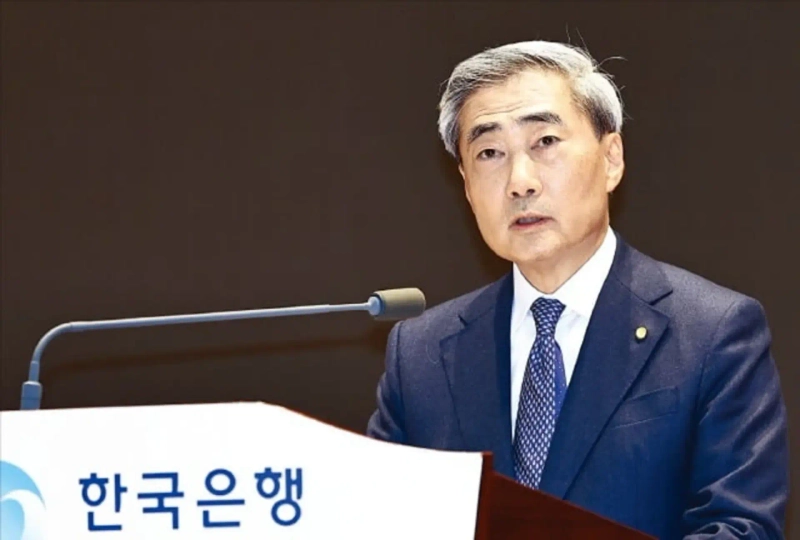
Bank of Korea Governor Shin Hyun-song again stressed the need to raise interest rates, delivering his third public signal in favor of tighter policy after last month’s Monetary Policy Board meeting and the central bank’s conference last week.
In a speech on June 12 marking the Bank of Korea’s 76th anniversary, Shin said rates need to be raised “without delay” with the focus on price stability. Growth, inflation and financial stability are pointing monetary policy in one direction, and data received since the May monetary policy meeting have reinforced that view.
Shin had already emphasized the need for tighter policy at a press briefing after last month’s rate-setting meeting, citing inflation and financial stability risks. He also strongly signaled the possibility of a rate increase at the Bank of Korea’s international conference last week.
He pointed to inflation and financial instability as the basis for a rate increase. Pressure from rising global oil prices has intensified as the war in the Middle East drags on, pushing South Korea’s consumer inflation rate back into the 3% range in May. Core inflation also climbed to the mid-2% range. Shin also cited living-cost inflation, which is rising faster than headline consumer prices, as a concern.
He also warned about overheating in financial markets. Home prices in the Seoul metropolitan area continue to rise, while so-called debt-driven stock investing has increased, widening gains in household lending.
At the same time, Shin said the Korean economy continues to show solid growth, with first-quarter economic growth of 1.8%.
Shin acknowledged the side effects of higher rates. Rate increases inevitably raise debt-servicing burdens for companies and households. Still, he said targeted support for those facing difficulties would be more effective through fiscal policy.
Looking ahead, Shin pointed to the need to manage risks in the housing market and household debt, internationalize the won and expand the economy’s growth potential. He said the planned launch next month of 24-hour foreign-exchange trading and an offshore won settlement system would improve foreign investors’ access to the won market.
Shim Seong-mi, Hankyung.com reporter smshim@hankyung.com

Korea Economic Daily
hankyung@bloomingbit.ioThe Korea Economic Daily Global is a digital media where latest news on Korean companies, industries, and financial markets.