PiCK
Bitcoin Tries to Rebound on Iran Ceasefire Hopes; $63,800 Recovery Is Key
Summary
- Analysts said whether Bitcoin can hold the $60,000 level and recover $63,800 will determine its near-term direction.
- They said US spot Bitcoin ETFs have seen $5 billion in net outflows over four weeks, and that it is hard to call a definitive bottom before ETF inflows resume.
- Analysts said a move below $60,000 could extend the bearish trend, but that a recovery above $65,000 could open the door to a retest of $74,000, making the current range potentially attractive for buy-the-dip investors.
Forecast Trend Report by Period



Bitcoin pared some of its recent losses as hopes for a ceasefire agreement between the US and Iran resurfaced. Analysts say the near-term outlook hinges on whether the token can hold $60,000 and regain $63,800.
As of 10:52 a.m. on June 12, Bitcoin was trading at $63,407 on Binance's USDT market, up about 1.86% from a day earlier. On Upbit, it changed hands at 95.3 million won. The kimchi premium, which tracks the price gap between domestic and offshore exchanges, stood at minus 1.22%.
Trump Says MOU Could Be Signed This Weekend, Reviving Ceasefire Hopes
Middle East tensions, which had escalated after President Donald Trump's hard-line remarks on Iran, showed signs of easing as expectations for US-Iran ceasefire talks resurfaced. Global stocks rallied on hopes for an end to the conflict, while oil prices fell on the prospect that the Strait of Hormuz could reopen.
CBS and other outlets reported on June 11 that Trump told reporters at the White House a memorandum of understanding between the US and Iran could be signed in Europe as early as this weekend. He added that the Strait of Hormuz could reopen immediately after the signing and that the US naval blockade on Iran could also be lifted. A day earlier, Trump disclosed that the US military had carried out strikes using 49 Tomahawk missiles and said additional bombing could follow if Iran did not sign the US proposal.
The MOU is being viewed as an interim accord rather than a final peace treaty. It would cover the reopening of the Strait of Hormuz, the start of nuclear talks and principles for sanctions relief. Key issues, including Iran's stockpile of highly enriched uranium, the dismantling of nuclear facilities and the structure of sanctions relief, would probably be left for follow-up negotiations after the MOU is signed.
Inflation remains a risk. US consumer prices rose 4.2% in May from a year earlier, the biggest increase since April 2023. Producer prices climbed 6.5%, the largest gain in three and a half years. With energy prices feeding inflation pressures, markets remain wary about the path of interest rates.
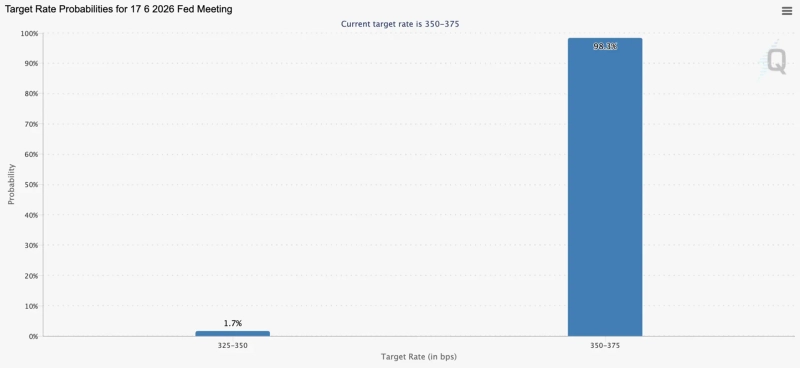
The Federal Open Market Committee meets on June 16-17, and the benchmark rate is poised to stay unchanged. Even so, markets are watching whether new Fed Chair Kevin Warsh maintains a dovish stance at his first meeting or leaves open the possibility of rate increases in response to inflation. CME FedWatch data showed a 98.5% probability of a hold at the June meeting.
US Bitcoin ETFs See $5 Billion in Outflows Over Four Weeks; Demand Recovery Needed to Confirm Bottom
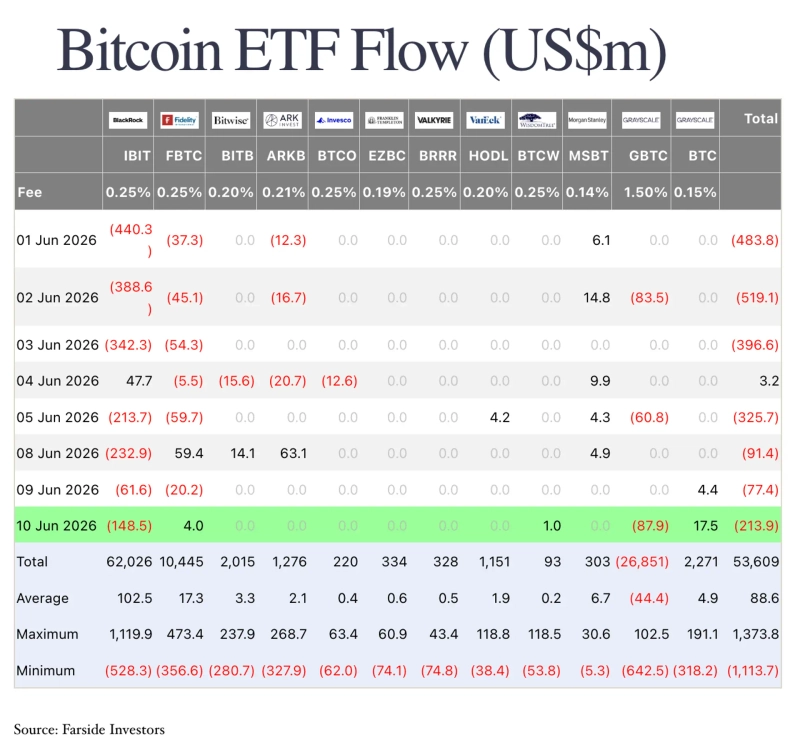
US-listed spot Bitcoin exchange-traded funds posted net outflows of $1.722 billion last week, and the pullback in funds has continued. Net assets in US spot Bitcoin ETFs have fallen back to levels seen just after Trump's election victory, while cumulative net outflows over the past four weeks reached $5 billion.
Glassnode said in a weekly research report that Bitcoin's drop toward $60,000 left more than 95% of short-term holders underwater. Implied volatility jumped after the selloff, and defensive positioning has dominated the options market. The firm said current indicators have fallen to levels that have historically signaled undervaluation, but a strong rebound in demand has yet to be confirmed.
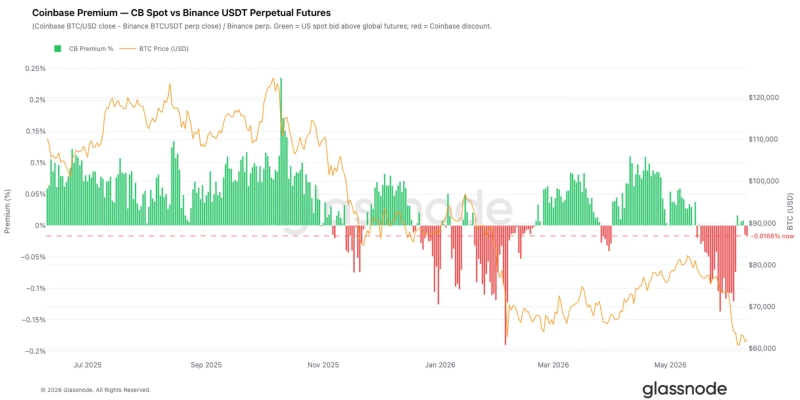
Glassnode also said a durable recovery in Bitcoin would require either the dollar index to fall below 99 or the yield on the 10-year US Treasury to decline to around 4.2%. Neither condition has been met. Investing.com data showed the DXY at 99.99 and the 10-year Treasury yield near 4.5% on the day.
10x Research said holders of spot Bitcoin ETFs began trimming exposure after US consumer prices for April, released last month, rose 3.8%. The firm added that Bitcoin would need inflation to stabilize below 4% to stage a meaningful rebound. US May CPI later came in at 4.2% from a year earlier, the highest in three years and one month, deepening market caution.
Leverage has been partially flushed out, but analysts say better inflows are still needed before declaring a bottom. Bitfinex said in its weekly report that more than $5.9 billion of positions were liquidated in the recent derivatives washout, easing excessive leverage. Even so, it said it was too early to call a firm bottom before ETF inflows resume. The exchange expects Bitcoin to trade in a $59,000 to $65,000 range ahead of the June FOMC meeting.
Break Below $60,000 Would Raise Risks; Reclaiming $63,800 Is Needed for Rebound Attempt
Analysts say Bitcoin could face renewed downside pressure if it fails to hold the $60,000 level. A move back above $63,800 is the first hurdle for any short-term rebound.
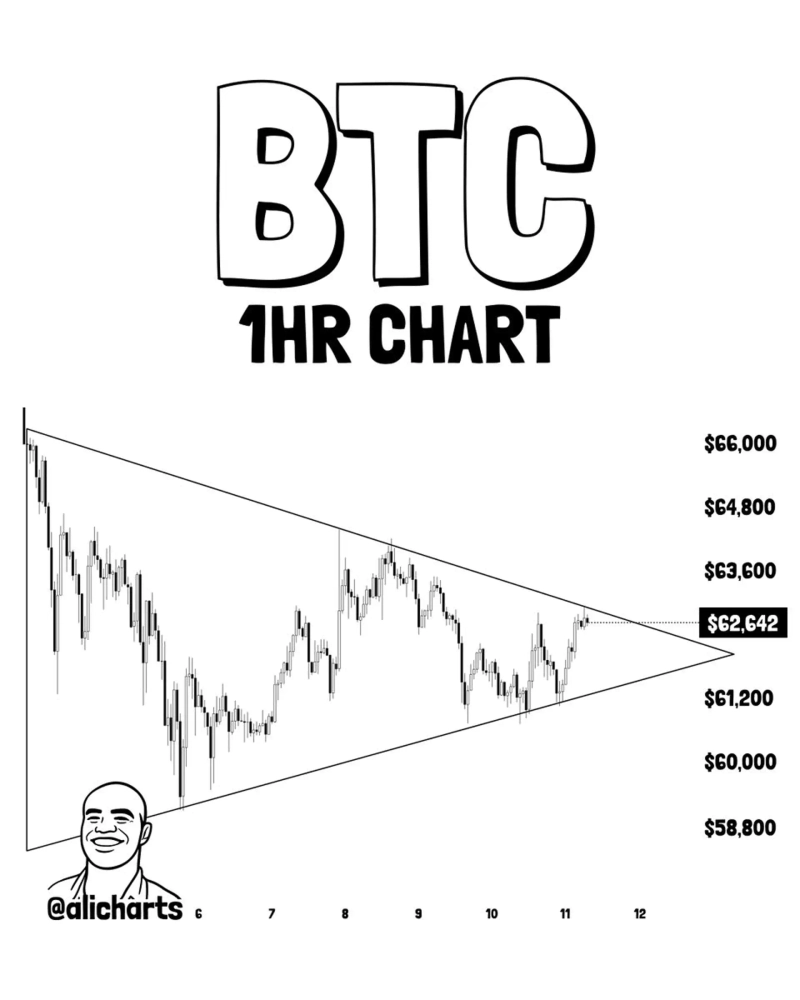
Aayush Jindal, an analyst at NewsBTC, said Bitcoin was testing support at $63,500 while maintaining a short-term bearish tone. If it fails to hold $63,200 on the hourly chart, another leg lower could follow. Immediate support below sits at $61,650 and $61,200.
The recent plunge has moderated, but analysts caution it is too early to call a broader recovery. Alex Kuptsikevich, chief analyst at FxPro, said total cryptocurrency market capitalization rose 0.9% over the past 24 hours to $2.15 trillion, but described the move as more of a technical rebound than a full trend reversal. Bitcoin was trading near $63,000 and remained below its previous range, though the market had not slipped into panic selling. In the short term, he said, price action may be closer to sideways trading than another sharp drop.
Julian Pineda, a market analyst at Forex.com, said continued fund outflows and extreme fear in investor sentiment showed that demand for digital assets had yet to recover clearly. Technically, $60,000 is the key support level, and a break below it could extend the bearish trend. By contrast, a recovery above $63,800 could set up a short-term rebound, while $70,000 would be the main resistance level for a medium-term trend shift.
From a longer-term investment perspective, some analysts see the current correction as a potential buy-the-dip opportunity. Coinbase Research said a recovery above $65,000 could open the way for a retest of $74,000, though the $74,000 to $75,000 zone remains a heavy resistance area. If Bitcoin fails to break through that range, it could slip back toward $65,000. The firm added that current levels may appeal to bargain hunters, but a break below $60,000 could lead to a deeper decline.
Kang Min-seung, Bloomingbit reporter minriver@bloomingbit.io

Minseung Kang
minriver@bloomingbit.ioBlockchain journalist | Writer of Trade Now & Altcoin Now, must-read content for investors.