Summary
- SpaceX said it raised $75 billion in its Nasdaq listing, giving the company a market capitalization of $1.77 trillion.
- SpaceX said it will use the proceeds to expand launch infrastructure, satellite constellations and AI computing infrastructure, bolstering its space, communications and AI businesses.
- Speculation has emerged that Musk-led Tesla and SpaceX could merge by 2027 with better than 80% odds, concentrating capital and technology in AI.
Forecast Trend Report by Period


Starlink Cash Fuels Musk’s Expanding Bet on AI and Space
SpaceX Prices IPO at $135 a Share
$75 Billion Offering Sets IPO Record
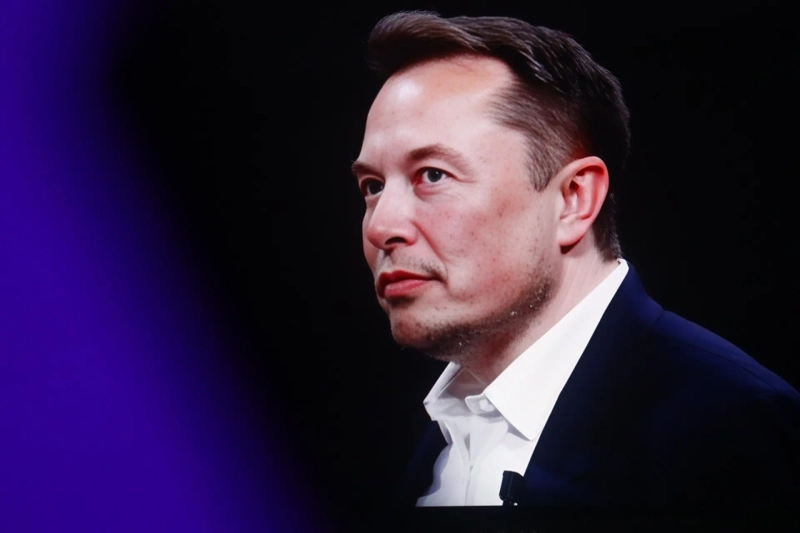
Elon Musk’s SpaceX listed on the Nasdaq on June 12, breaking records for both IPO proceeds and market value.
The company sold about 550 million Class A common shares at $135 each, raising $75 billion. The stock trades under the ticker SPCX. SpaceX was valued at $1.77 trillion at the time of the listing. The previous record belonged to Saudi Aramco, which raised $29.4 billion in an offering that valued the company at $1.7 trillion. Bloomberg reported that investor orders reached $250 billion, four times the target amount.
Founded in 2002, SpaceX is the world’s largest space company, operating the reusable Falcon rocket and the Starlink satellite internet network. It is widely credited with helping shift the space industry from government-led programs centered on agencies such as NASA to a private-sector model.
In February, SpaceX merged with Musk’s artificial intelligence company xAI, giving it operations spanning space, communications and AI. The move made Musk the first entrepreneur to simultaneously lead two public companies with market capitalizations above $1 trillion, alongside Tesla.
$250 Billion Floods Into SpaceX IPO
Starlink Revenue to Fund a Million-Person Mars City
“Make humanity a multi-planet species.”
That was the goal Space Exploration Technologies, or SpaceX, set out in its IPO prospectus on May 20. The company’s $1.77 trillion valuation is difficult to explain using traditional financial metrics. It has never posted a profit in the 23 years since its founding in 2002. Without earnings, a price-to-earnings ratio cannot be calculated.
Even so, $250 billion poured into the June 12 listing, reflecting investor backing for Musk’s vision of Mars colonization. Musk is using the offering as a springboard to build a broader empire spanning space, robotics and AI.
Cutting Space Travel Costs to One-50,000th
Musk wants to build a permanent city for 1 million people on Mars. His rationale is that humanity cannot remain on Earth forever. Reaching that goal would require about 1,000 spacecraft. Each would carry 200 people and make 50 round trips. The vehicle at the center of that plan is Starship, which SpaceX successfully launched on its 12th test flight on May 22.
The main prerequisite is a sharp drop in the cost of space travel. The Apollo program, the first crewed moon mission, cost $10 billion. Musk’s calculation is that the cost must fall to $200,000, or one-50,000th of that amount, for mass migration to become possible.
Musk has laid out four ways to cut costs: full rocket reusability, orbital refueling, the use of methane propellant and fuel production on Mars. Reusability has already shown partial success. Falcon 9, which first reused a first-stage booster in 2017, has seen individual vehicles fly more than 35 times. Starship was designed so both its first stage and second stage can be reused. It also uses methane fuel, which would be easier to produce on Mars.
The next target is orbital refueling. SpaceX plans to send a crew-and-cargo vehicle into orbit with minimal fuel, then launch three to five tanker spacecraft from Earth to refill it.
Will Tesla and SpaceX Merge?
The IPO is aimed at securing funds for that roadmap. In its prospectus, SpaceX said the proceeds would be used to strengthen launch infrastructure and launch vehicles, expand its satellite constellation and build out AI computing infrastructure.
SpaceX now operates in three businesses: space launch, communications through Starlink and AI. In its early years, the company focused on carrying out government missions for agencies including NASA and launching satellites for private companies. But project-based work had its limits. In 2019, SpaceX introduced Starlink, a consumer subscription communications service. The company launches communications satellites on its own rockets and then collects subscription fees from users. Six years after its debut, Starlink had 7.8 million subscribers and generated 61% of company revenue last year, making it SpaceX’s cash cow.
AI is the huge market SpaceX is using to persuade investors about its growth prospects, projecting a market worth $26.5 trillion. That is 71 times the size of the $370 billion space launch market and 16 times the size of the $1.6 trillion communications market. The February merger with xAI laid the groundwork. SpaceX plans to build giant land-based data centers such as Colossus and deploy solar-powered data centers in space, supplying more than 1 gigawatt of computing power a year.
Some investors also speculate that Tesla and SpaceX could merge after the listing. Combining the two companies would allow Musk to concentrate capital and technology now spread across both businesses into AI, the field expected to be the next main battleground. It would also strengthen his control. At Tesla, which follows a one-share, one-vote structure, Musk’s voting power has remained in the low teens. A merger could lift that stake to more than 70%. Dan Ives, an analyst at Wedbush Securities, wrote in a recent report that there is more than an 80% chance SpaceX and Tesla will become a single company by 2027.
Kim In-yeop, Silicon Valley correspondent, and Kim Dong-hyun, reporter, Hankyung.com inside@hankyung.com

Korea Economic Daily
hankyung@bloomingbit.ioThe Korea Economic Daily Global is a digital media where latest news on Korean companies, industries, and financial markets.