Summary
- Iranian Foreign Minister Abbas Araghchi said a memorandum of understanding (MOU) with the US is nearing signature.
- He said the MOU would include the full lifting of the maritime blockade, the reopening of the Strait of Hormuz and an end to conflicts on multiple fronts.
- Araghchi said future talks over highly enriched uranium stockpiles would hinge on diluting the material inside Iran, and that Iran and Oman would retain sovereignty over administrative control of the Strait of Hormuz while directly guaranteeing safe passage for ships.
Forecast Trend Report by Period


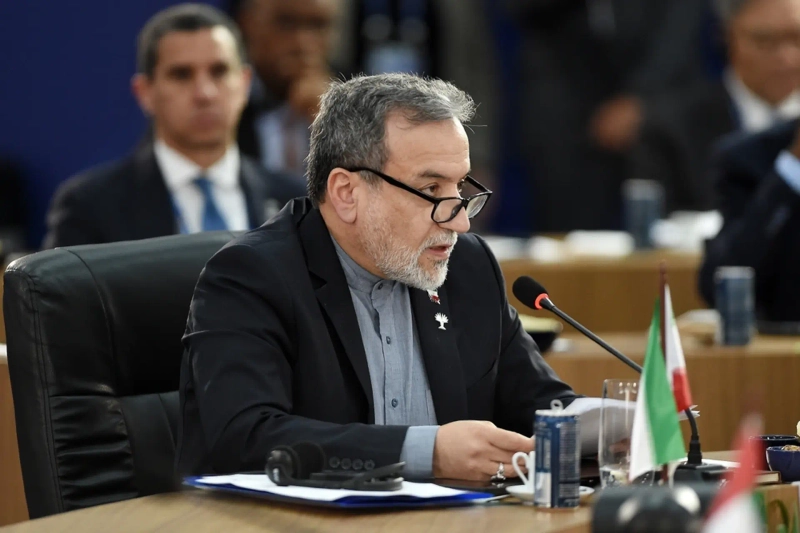
Iranian Foreign Minister Abbas Araghchi said a memorandum of understanding with the US is on the verge of being signed. Iran’s top leadership, including the supreme leader, has approved the accord, and remote digital signatures could come within days.
In a televised national address on June 12, Araghchi said the agreement with Washington had entered its final stage and had been cleared by Iran’s senior leadership, including the supreme leader and the National Security Council.
The first item in the document is the full lifting of the maritime blockade, he said. The MOU will also cover reopening the Strait of Hormuz and ending conflicts on multiple fronts.
Araghchi said substantive nuclear negotiations with the US would begin only after the MOU is signed. While the text could still change because it has not yet been executed, each side plans to sign digitally and remotely once the final stretch of negotiations is complete, he said, adding that he is highly hopeful the signing will take place within days.
He also voiced strong concern about outside efforts to derail the process. The agreement has enemies, Araghchi said, accusing the “Zionist regime,” meaning Israel, of seeking a pretext to sabotage it.
He reiterated that full-scale nuclear talks with the US would only start after the signing of the MOU, which he described as a temporary agreement. On the future handling of Iran’s stockpile of highly enriched uranium, Araghchi said the only way to deal with the material is to dilute it inside Iran, maintaining Tehran’s hard-line position.
He also made clear that Iran wants to retain the initiative over how the Strait of Hormuz is managed. Administrative control of the strait will never be the same as before, he said. Sovereignty over the waterway belongs to Iran and Oman, and the two countries will directly guarantee safe passage for ships, he added. Iran is in close talks with Oman on the matter.

Doohyun Hwang
cow5361@bloomingbit.ioKEEP CALM AND HODL🍀