Stealing Bitcoin Is Theft in China, Marking a New Line in Crypto Regulation
Forecast Trend Report by Period


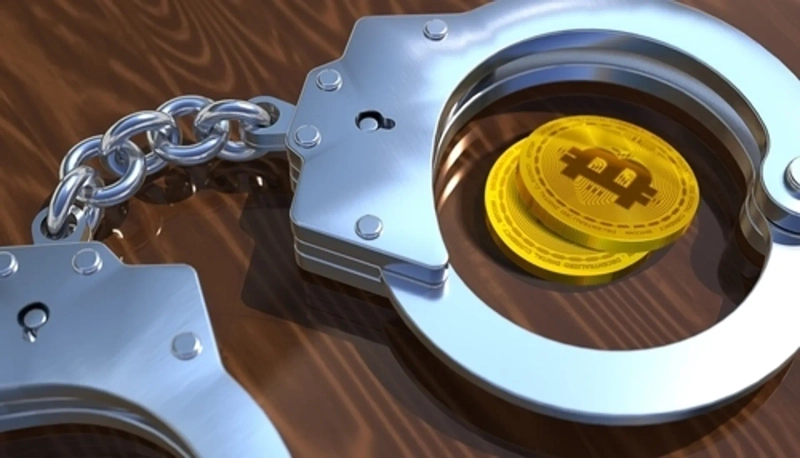
In July 2023, in an office in Qingdao, Shandong province, a man surnamed Peng was setting up a new digital wallet. Moving a Bitcoin wallet required 12 English words, known as a mnemonic or seed phrase. The phrase functions like a password for opening the wallet. Whoever possesses it effectively owns the wallet.
As Peng created the new wallet, he wrote the 12 words on paper. He apparently did not notice a man surnamed Zhang beside him taking a glance. In that brief moment, Zhang memorized 11 words and the first letter of the 12th, according to the case record. That night he went home and sat down at his computer. Mnemonic phrases are drawn from a fixed list of 2,048 English words. Once he knew the first letter of the final word, finding it was not difficult.
Zhang transferred 107 Bitcoin from Peng's wallet to another one. He then sold part of the holdings through a conversion site and pocketed more than 660,000 yuan, or about $92,000. Given Bitcoin's market price at the time, that was a relatively small amount. It is unclear whether he sold only part of the Bitcoin or accepted a discount through an underground market because crypto trading is illegal in China.
By the time Peng discovered the theft, it was too late. Police opened an investigation and prosecutors brought charges. On April 28, 2025, the Licang District People's Court of Qingdao issued its first-instance ruling. Zhang was convicted of theft, sentenced to 10 years and nine months in prison, and fined 100,000 yuan. He appealed, but the Qingdao Intermediate People's Court rejected it on Nov. 10, 2025. More than a year has passed since the original ruling.
Why revive a year-old ruling now
The case resurfaced on June 7 on the official account of China's Supreme People's Procuratorate. It was more than a routine case summary. Authorities presented the ruling as a model case, and the title of the post carried political weight, saying officials should "deeply study and implement Xi Jinping Thought on the Rule of Law" and handle every case efficiently. That makes the previous six months of developments worth examining.
On Dec. 13, 2025, Procuratorial Daily, the official newspaper of the Supreme People's Procuratorate, published a commentary titled "Building Diverse Judicial Disposal Paths for Virtual Currency Involved in Criminal Cases." It said investigators had seized a large amount of crypto over the years, but the legal basis for disposing of those assets remained unclear. The article proposed a three-track model of sale, destruction and return, with different treatment depending on the case.
On Feb. 6, 2026, eight Chinese government agencies led by the People's Bank of China jointly issued a policy document. The message was blunt. It reaffirmed that all business activities related to virtual currencies constitute illegal financial activity. It also brought newly emerging stablecoins under regulatory oversight, broadening the scope of the trading ban.
Then in May, China's Supreme People's Court said it would conduct in-depth research on judicial responses to new types of financial cases involving virtual currencies and other assets. The statement signaled an effort to impose a unified standard on lower courts, where rulings have differed.
That was followed by the June 7 post designating the Qingdao ruling as a model case. It can reasonably be seen as the final step in a six-month effort by China's judicial authorities to build a more coherent approach.
The contradiction of banning crypto while protecting it
The prosecutor in the Qingdao case included one notable line in the post: "Current policy denies virtual currency the status of legal tender, but does not deny its property attributes."
The first part is familiar. It means virtual currencies are not recognized as a means of payment like the yuan or the dollar. In China, you cannot pay for a restaurant meal with Bitcoin, and you cannot open a crypto exchange as a business. The second part is newer. If someone steals that Bitcoin, the act constitutes theft.
Consider endangered wildlife products whose trade is banned. Buying and selling tiger pelts or ivory is illegal. But if someone steals those goods, that still constitutes theft as a separate crime. The illegality of the trade and the protection of property rights operate on separate tracks. China is now applying similar logic to Bitcoin.
There is also a practical reason. Chinese authorities have seized crypto in investigations involving fraud, money laundering and gambling. Even if they adopt the three-track model proposed by Procuratorial Daily — sale, destruction or return — each option creates a problem. Selling the assets conflicts with the ban on trading. Holding them leaves authorities exposed to price swings. Returning them raises the question of who should receive them.
Clearly recognizing crypto as property provides the legal basis for all three options. An asset must first be treated as property before it can be sold, destroyed or returned. The proposition that policy "does not deny its property attributes" is the starting point for how China may handle seized crypto assets in the future.
Two paths to institutionalization, and China's AI-era choice
It may seem natural to assume that harsher punishment and tighter regulation would provoke resistance. But the crypto industry has often welcomed the arrival of laws and formal rules around the world. That is not because the industry is unusually tolerant of regulation. Strong penalties and strict rules become possible only after lawmakers define crypto in legal terms, and the industry has often read that as the beginning of legalization.
That was the case when the US Internal Revenue Service classified Bitcoin as property rather than currency in 2014. The decision brought capital-gains taxes, but the industry still viewed it as a signal that Bitcoin had entered a recognized property category. The same pattern appeared when the European Union introduced a tough regulatory framework through MiCA and when Japan revised its Payment Services Act to require exchange licenses. The underlying logic was simple: if the industry could operate in the open, it was willing to accept heavier obligations.
China, however, is taking a different route. While other jurisdictions have moved to bring trading and business activity into the open, China has started by bringing property rights into the open first. Even under the same broad idea of institutionalization, the starting points may differ.
China has at times chased the US, kept pace with it or moved ahead in next-generation technologies such as artificial intelligence, robotics and autonomous driving. But in digital assets, it is taking another path. The reasons appear to lie in its own priorities, including checking dollar dominance, maintaining capital controls and advancing the digital yuan.
Yet the faster technology develops, the more costly it may become to treat trading and property rights as separate domains. The revival of the Qingdao case after a year, this time as a model example of Xi Jinping Thought on the Rule of Law, suggests China's judiciary believes this two-track structure needs further refinement. The next question is where, and when, China will take its next step on digital assets.
Kim Oe-hyeon, adjunct professor at Woosuk University
Hankyung Business outside contributor

Korea Economic Daily
hankyung@bloomingbit.ioThe Korea Economic Daily Global is a digital media where latest news on Korean companies, industries, and financial markets.