US, Iran Agree to 60 More Days of Talks After Ceasefire With Nuclear Dispute Unresolved
Forecast Trend Report by Period


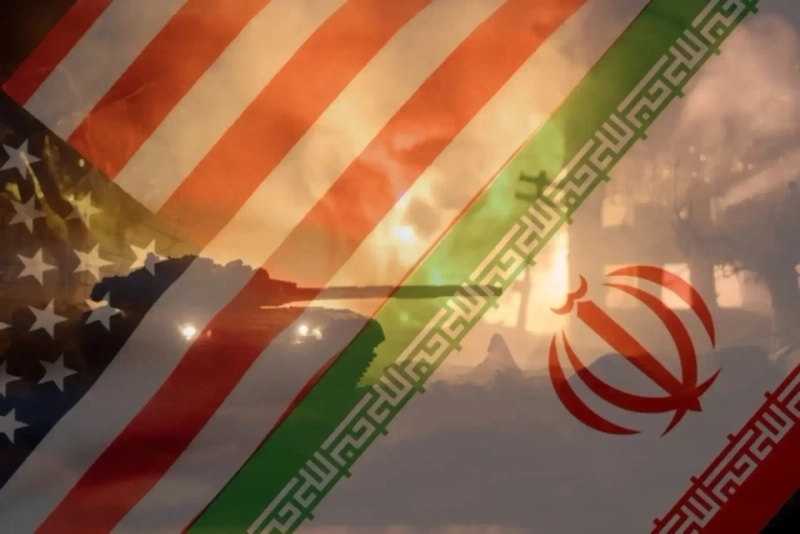
The US and Iran agreed on June 14 to sign a memorandum of understanding centered on ending the war, but the accord falls short of a final agreement on Iran’s nuclear program. Over the next 60 days, the two sides must work out solutions on Iran’s nuclear activities and US economic sanctions to fully end the conflict. Because the Trump administration cited the nuclear issue as the main reason for attacking Iran, tensions could flare again if the sides fail to narrow their differences in the additional talks.
60-Day Talks Set to Focus on Nuclear Program
The two sides are expected to spend the next 60 days negotiating detailed terms on Iran’s nuclear program, sanctions on Tehran and the reopening of the Strait of Hormuz.
The most closely watched part of the US-Iran peace agreement is that both sides agreed on the principle that Iran cannot possess nuclear weapons, while leaving out any plan for how to handle its nuclear program.
A ban on nuclear weapons amounts to a political declaration that Iran will not develop or acquire them in the future. That is relatively easy for Tehran to accept, since it has long maintained that it has no intention of building a nuclear bomb.
The nuclear program itself is far more sensitive. The issue includes concrete steps such as whether Iran would ship out or destroy its existing stockpile of highly enriched uranium, dismantle uranium-enrichment facilities and centrifuges, and submit to international verification.
That is the outcome Washington ultimately wants. Removing the materials and facilities needed to build a nuclear weapon would be the surest way to block any path to weaponization.
The US negotiating team has made two demands on Iran’s nuclear program. First, Iran would have to immediately transfer all nuclear material it has enriched, including highly enriched uranium, to a third country or permanently destroy it. Second, it would have to institutionalize a sweeping post-agreement control system that permanently bans uranium enrichment on Iranian soil.
Iran, by contrast, says keeping enriched uranium at home and preserving a peaceful nuclear program are matters of sovereignty it cannot surrender. Senior Iranian officials have repeatedly told the International Atomic Energy Agency and Western negotiators that Iran’s nuclear program is entirely peaceful and that it has never sought nuclear weapons.
Iran Could Build About 10 Nuclear Bombs
According to the IAEA, Iran had 441 kilograms of uranium enriched to 60% and about 184 kilograms enriched to 20% as of June 2025. Experts believe the material is still stored in the form of uranium hexafluoride, or UF6, gas.
Uranium-235, the fissile isotope found in natural uranium, makes up less than 1% of the raw material. That makes enrichment essential for producing nuclear fuel or nuclear weapons. Iran has enriched uranium with centrifuges at facilities including Natanz, Fordow and Isfahan.
CNN reported that experts believe Iran, which already has uranium enriched to 60%, could reach the 90% threshold generally associated with weapons-grade material within weeks if it secures additional enrichment capacity. Its stockpile is theoretically enough to produce around 10 nuclear bombs.
Experts say recovering nuclear material by military force would be difficult. Brewer, a researcher, said Iran may have dispersed some of its nuclear material to other locations before the airstrikes, making it hard to know the precise location of every site.
Iran Needs Immediate Cash Inflows
The agreement also says Iran would receive half of its $24 billion in frozen assets first, with talks to continue over the return of the remaining half during the 60-day negotiations.
For Iran, which has experienced public unrest under economic sanctions, immediate cash inflows and the lifting of sanctions are the main justification for accepting the ceasefire negotiations.
That leaves Tehran eager for a swift release of frozen funds.
The US, however, is expected to press an action-for-action approach under which frozen assets would be released in stages depending on Iran’s level of compliance, including denuclearization measures, rather than unfrozen with no conditions attached.
Israel’s Response Remains a Variable
The agreement, mediated by Pakistan, also covered issues involving Israel and Lebanon. Lebanon was one of the biggest sticking points in the negotiations. Earlier, concern that the agreement could collapse intensified after the Iran-backed militant group Hezbollah fired rockets toward northern Israel and Israel responded with airstrikes on Hezbollah positions in southern Beirut. Major uncertainties remain, including how tightly Iran’s proxy forces such as Hezbollah and the Houthi rebels can be controlled, and whether Israel will refrain from further military action.
Israeli Prime Minister Benjamin Netanyahu has long criticized international efforts to ease pressure on Iran or pursue a nuclear agreement, saying a bad deal is worse than no deal at all. He has also said no agreement with Iran can bind Israel and that Israel will take any independent action needed for its security. That suggests Israel could use force on its own if the US fails to dismantle Iran’s nuclear program.
Park Shin-young, New York correspondent, Hankyung.com, nyusos@hankyung.com

Korea Economic Daily
hankyung@bloomingbit.ioThe Korea Economic Daily Global is a digital media where latest news on Korean companies, industries, and financial markets.