Hormuz Reopening May Not Restore Oil Supply for at Least Three Months
Summary
- Reuters reported that even if the Strait of Hormuz reopens, it could take at least 60 to 90 days for oil prices to stabilize and for crude supply to normalize.
- Reports said damage to oil facilities and strategic reserve releases during the war have left countries facing inventory shortages, raising the possibility of a surge to more than $150 a barrel.
- They added that weaker Chinese crude demand and improved energy efficiency across major economies could reduce the risk of a sharp spike in oil prices.
Forecast Trend Report by Period


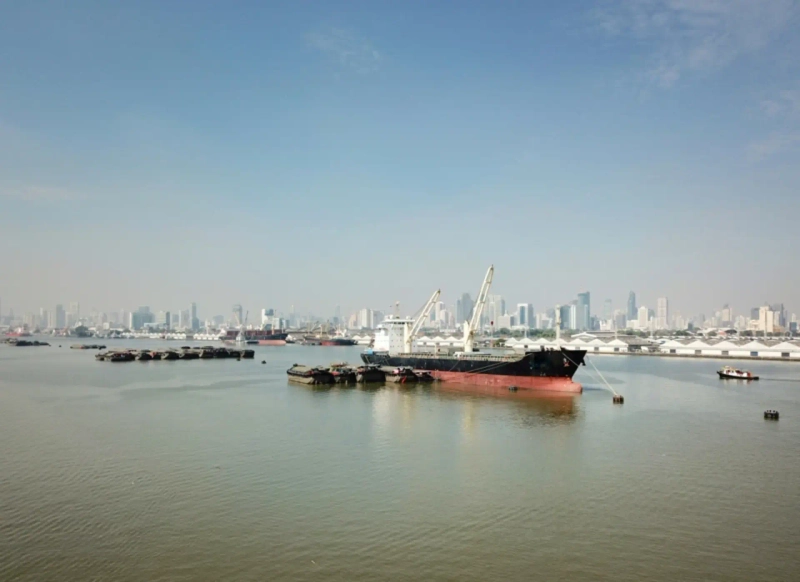
The Strait of Hormuz became a chokepoint for global growth after Iran's blockade in March halted 20% of seaborne crude shipments. That helps explain why oil prices fell and stock markets rallied on June 14 on hopes the waterway would return to normal.
Even so, it is too soon to count on stable oil prices. Iran and Oman have offered conflicting accounts of how the strait would be managed. Damage to Middle Eastern oil facilities during the war and depleted petroleum inventories across major economies are also adding to price uncertainty.
FT: Transit-Fee Exemption Would Last Only 60 Days
Expectations are building that the Strait of Hormuz, blocked for more than 100 days, will reopen after ceasefire talks concluded on June 14. Investors are also betting crude flows will improve if a formal peace accord is signed on June 19 and the strait reopens.
Reuters reported that about 60 million barrels of crude and refined products are stranded in the Persian Gulf, equal to roughly 80% of global daily demand. Brent crude fell more than 4% on June 14 as the market priced in the prospect of higher supply. President Donald Trump wrote on social media that the strait would reopen as soon as a memorandum of understanding ending the war with Iran is signed.
Uncertainty remains high. The Financial Times reported that any exemption from transit fees would apply for only 60 days. An Iranian government official said Iran and Oman provide safety, navigation and security services in the strait and collect related fees, adding that those rights would remain in place under any agreement.
Oil supply also cannot increase immediately. The Financial Times said the Iranian military would spend 30 days clearing mines after the war ends. More than 500 vessels are currently stranded, and clearing their passage through the strait will take time. Reuters said restoring the supply chain would take at least 60 to 90 days. Repairs to production facilities damaged in the war could take several months and, in some cases, two to three years.
Strategic Reserve Releases Leave Stockpiles Depleted
Concern is also growing that oil prices will not fall right away if supply-chain repairs are delayed. The Wall Street Journal reported on June 14 that strategic petroleum releases by the US and other major economies during the war have pushed inventories close to the floor. Neil Chapman, Exxon Mobil's senior vice president, said spot prices could surge back above $150 a barrel if low inventories limit further reserve releases.
Still, the outlook is not entirely bearish. China's crude demand has weakened because of broader electric-vehicle adoption and soft domestic demand. China, the world's largest crude buyer, imported 7.8 million barrels a day in May, the lowest level in eight years. Improved energy efficiency is also reducing the risk of a sharp price spike. Since 2000, the amount of energy needed to generate $1 of inflation-adjusted gross domestic product has fallen by about one-third in the US and Europe and by about 40% in China, according to the World Bank.
Korean Fuel Prices May Not Fall Until July
Attention is also focused on when 24 South Korean ships trapped in the strait will be able to leave. Industry officials expect no quick return because transit through the waterway remains restricted.
Gasoline prices in South Korea are expected to start falling only after another two to three weeks. Refiners are still holding inventories of crude bought at relatively high prices, making an immediate cut in retail prices difficult. Given shipping times for Middle Eastern crude, refining schedules and the pace at which existing inventories are used up, fuel prices are expected to begin trending lower around July.
Hwang Jung-su, Park Jong-gwan and Noh Yoo-jung, Hankyung reporters hjs@hankyung.com

Korea Economic Daily
hankyung@bloomingbit.ioThe Korea Economic Daily Global is a digital media where latest news on Korean companies, industries, and financial markets.