CLARITY Act’s Developer Protections Are Key to US Crypto Competitiveness, Smith Says
Summary
- The market sees the CLARITY Act, its software developer protection provision, and the Blockchain Regulatory Certainty Act (BRCA) as central to reducing regulatory uncertainty in the US digital-asset industry.
- Smith said the BRCA provision must remain in place to prevent damage to the US digital-asset market and its competitiveness by clearly defining standards for open-source software, node operations, and money transmitters.
- Smith said weakening the developer protection provision could accelerate the decline in the US share of open-source crypto developers and spur a faster overseas relocation of developers.
Forecast Trend Report by Period


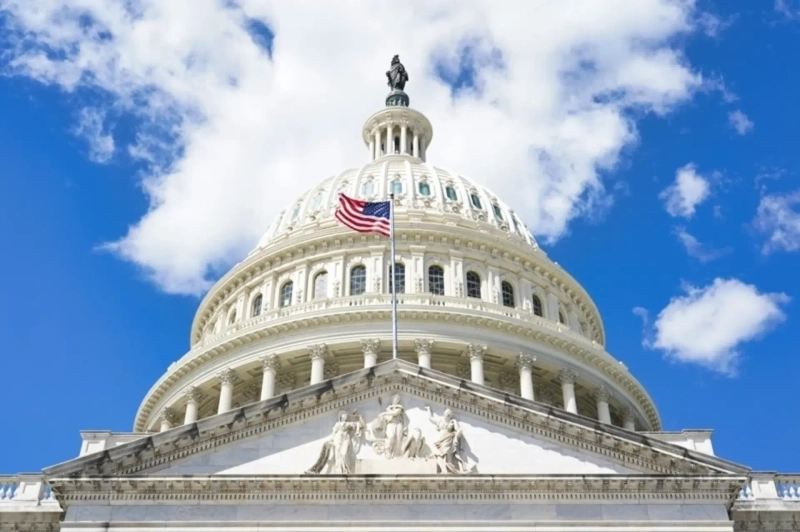
Weakening protections for software developers in the CLARITY Act, a US digital-asset market structure bill, would undermine American competitiveness in crypto, according to an opinion essay cited by CoinDesk on June 15.
Kristin Smith, president of the Solana Policy Institute, wrote that the US must protect the people building crypto if it wants to lead the sector.
Smith said leading crypto founders, chief executives and investors recently sent a joint letter to Senate leaders urging them not to dilute the bill’s software developer protections. Though they compete for talent, capital and market share, they agreed on the request because they understand what is at stake, she wrote.
At the center of the debate is the Blockchain Regulatory Certainty Act, or BRCA. The provision would clarify that people who write open-source software, operate nodes or help validate transactions are not money transmitters under federal law if they do not custody or control customer funds.
The law must draw a clear line, Smith wrote: People who write open-source software or run nodes, while holding or controlling no one’s money, are not money transmitters under federal law.
She argued that the rest of the CLARITY Act’s regulatory framework rests on that guarantee. If developers cannot build software in the US, the digital-asset market regulators are trying to oversee will weaken as well. Smith added that the provision survived the committee review process and should remain intact through the final vote.
Treating developers like financial institutions is misguided, Smith wrote. “Calling a software developer the equivalent of a bank teller makes about as much sense as calling an email app developer a postal worker.”
She also cited 2019 guidance from the Financial Crimes Enforcement Network, a bureau of the US Treasury Department, saying that merely providing software or network tools used by money transmitters does not make someone a money transmitter. BRCA would bring the criminal-law framework into line with that standard, she wrote.
Unclear laws invite regulators and law-enforcement agencies to fill the gap, Smith wrote. She said the Treasury Department has taken action against developers who wrote and published software without holding customer assets, and called the case against Tornado Cash developer Roman Storm one that anyone concerned about US innovation should watch.
That trend is already pushing developers overseas, she argued. The US share of global open-source crypto developers has fallen to about 19% from 38% in 2015, according to Smith. “The US cannot lead an industry it has pushed abroad,” she wrote. “We have to decide whether this activity will remain under American rules and oversight, or whether we will watch it move to Singapore and Abu Dhabi.”
Smith rejected concerns that protecting developers would weaken enforcement against crime. “BRCA does not legalize money laundering, sanctions evasion, fraud, human trafficking or terrorist financing,” she wrote. People who actually hold customer funds would remain subject to the same anti-money-laundering rules as before.
Clear boundaries would strengthen law enforcement, not weaken it, Smith argued. Distinguishing legitimate developers from criminals would make it easier for investigators to identify whom they need to pursue.
Smith also said BRCA has drawn bipartisan support. In the Senate, Republican Senator Cynthia Lummis and Democratic Senator Ron Wyden have led the provision, while in the House the effort has been led by Republican Representative Tom Emmer and Democratic Representative Ritchie Torres.
“The CLARITY Act is a once-in-a-generation opportunity to replace unpredictable, enforcement-driven regulation with durable and predictable rules,” Smith wrote. “That is why developer protections must not be weakened at the last minute.”
The CLARITY Act is widely viewed as a key bill for reducing regulatory uncertainty in the US digital-asset industry. But if its developer protections are weakened, the US could still create rules for exchanges and issuers while driving away the developers behind the underlying technology.

Minseung Kang
minriver@bloomingbit.ioBlockchain journalist | Writer of Trade Now & Altcoin Now, must-read content for investors.