US, Iran Sign MOU but Withhold Terms, Raising Questions Over Hormuz Fees
Summary
- The differing positions of the US and Iran over toll-free passage and whether transit fees will be imposed in the Strait of Hormuz are adding to investor uncertainty.
- Iran’s statement that it would design and collect charges for navigation services, insurance and environmental protection has raised the possibility that service fees could be introduced for using the strait.
- Resistance from hard-liners in the US, Israel and Iran, along with the continued lack of disclosure around the MOU, means risk factors tied to the Middle East remain in place.
Forecast Trend Report by Period


Trump’s ‘war bill’… $300 billion reconstruction fund under review
US says text will be released within 48 hours
Delay in disclosure fuels doubts about what was agreed
Trump repeatedly stresses toll-free passage
US official says that would apply for only 60 days
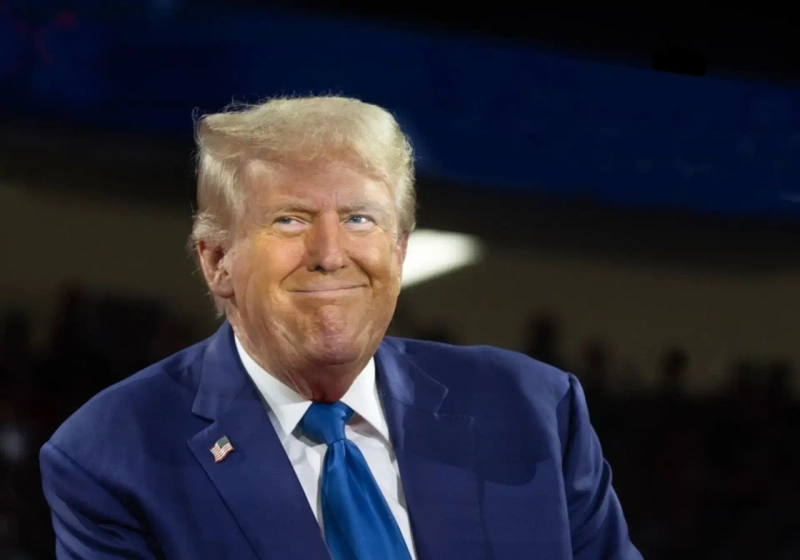
President Donald Trump and Vice President JD Vance said on June 15 that they had signed a memorandum of understanding with Iran on June 14, committing to a 60-day ceasefire for negotiations to end the war. A formal signing ceremony is scheduled for June 19 in Switzerland, but the two sides have already completed the signing electronically. On the Iranian side, Parliament Speaker Mohammad Bagher Ghalibaf signed instead of Supreme Leader Mojtaba Khamenei. Vance described it as “a very rough document” of about a page and a half.
The two sides have not released the text, fueling questions about what was actually agreed. Senior US officials told reporters on a telephone briefing that the MOU would be made public transparently within 24 to 48 hours and that there was no side deal. They did not explain why the document could not be disclosed immediately.
◇ Will the strait charge service fees?
The US and Iran are also offering differing accounts of the negotiations. A key example is whether vessels passing through the Strait of Hormuz will face charges. Trump, announcing the agreement with Iran a day earlier, emphasized that passage would be “toll-free.” He repeated at the Group of Seven summit in France on June 15 that the strait would remain open without charges, as it was before the war.
Senior US officials, however, said toll-free passage would apply for 60 days. Whether fees would be imposed after that remains undecided. Esmail Baghaei, spokesman for Iran’s Foreign Ministry, said a day earlier that Iran was not seeking to collect transit tolls but would design and levy charges for navigation services, insurance and environmental protection.
US officials did not directly dispute Iran’s statement. They said the aim was to create a framework that would ensure the strait is never closed again while protecting the region’s various interests. They also said the arrangement might not simply return the waterway to its prewar status. The comments suggested the US may recognize a management framework by Iran and Oman, whose territorial waters cover the Strait of Hormuz.
◇ Lebanon ceasefire adds another variable
The two sides also differ over a ceasefire in Lebanon. Both agree the deal should end hostilities on all fronts, including Lebanon, but Iran is seeking more. Iran’s Fars News Agency and other outlets have claimed the MOU also includes preserving Lebanon’s current borders and requiring Israeli forces to withdraw from Lebanese territory. Senior US officials denied that.
Iranian Foreign Minister Abbas Araghchi said in a statement on June 15 that difficulties had emerged in concluding the agreement with Washington. Ending the war in Lebanon cannot be separated from ending the war with Iran, he said, and ending the war includes ending the occupation in Lebanon. Israeli Prime Minister Benjamin Netanyahu rejected that position, saying Israel would keep forces in Lebanon and elsewhere for as long as necessary.
Pushback from hard-liners in the US, Israel and Iran is also threatening the negotiations. In the US, critics have increasingly accused Trump of capitulating to Iran. Senator Lindsey Graham, a South Carolina Republican, said he was concerned because Iran’s understanding of the agreement appeared to differ from the version described by the US negotiating team. Some foreign media outlets said the decision not to publish the MOU immediately may be a strategic move to blunt criticism from hard-liners and preserve room for further revisions.
Lee Sang-eun, Washington correspondent, selee@hankyung.com

Korea Economic Daily
hankyung@bloomingbit.ioThe Korea Economic Daily Global is a digital media where latest news on Korean companies, industries, and financial markets.