PiCK
Bitcoin Nears $60,000 as Hawkish Fed, Strategy Funding Squeeze Add Pressure
Summary
- Hopes for Fed rate cuts have collapsed, leaving Bitcoin down about 50% from its record high.
- The plunge in Strategy’s STRC price and the halt of its ATM program have cut off a funding source for Bitcoin purchases and fueled concerns over sales of its Bitcoin holdings.
- As cumulative net outflows continue from US spot Bitcoin ETFs, the ARMA bill’s 20-year ban on sales is being cited as a potential catalyst for a price rebound.
Forecast Trend Report by Period


Fed Crushes Rate-Cut Hopes
Strategy Funding Channel Comes Under Strain
Legislative Delays Chill Institutional Demand
‘Bitcoin Reserve’ Bill Seen as Remaining Hope

Bitcoin is facing pressure on multiple fronts. A more hawkish-than-expected Federal Reserve has undercut hopes for rate cuts, while a key funding channel for Strategy, one of the largest corporate Bitcoin holders, has been shut off, adding to downside pressure.
On June 18, Bitcoin fell as low as $62,272 intraday, putting it at risk of breaking back below $60,000 for the first time in about two weeks. The token had held in the $65,000 to $66,000 range ahead of the Fed’s June 17 rate decision. After the central bank kept rates unchanged and left open the possibility of rate increases, Bitcoin dropped about 4%. It is now down about 50% from the record high it reached in October last year.
Bitcoin Buckles After Hawkish Fed Turn
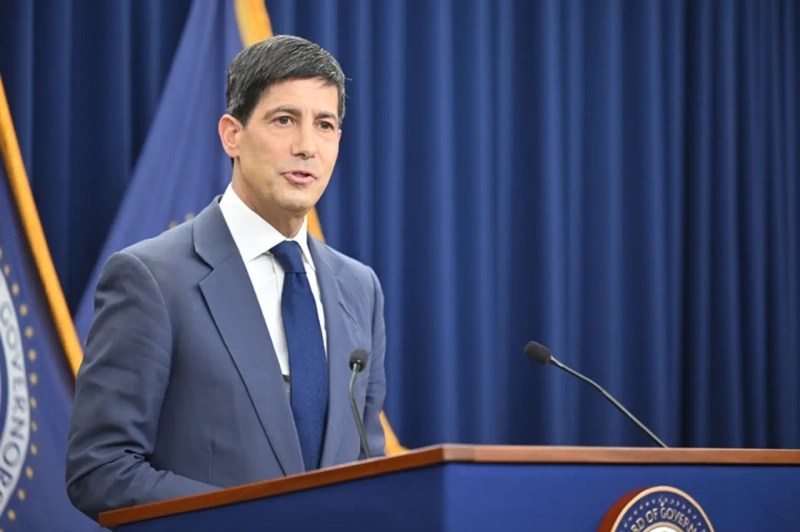
The abrupt shift in the macro backdrop is weighing heavily on market sentiment. Expectations for Fed rate cuts, long viewed as a key support for global risk assets, were effectively shattered after the June Federal Open Market Committee meeting, the first under Chair Kevin Warsh.
The Fed left its benchmark rate unchanged at 3.50% to 3.75%, but removed the phrase “easing bias” from its statement. Markets were rattled not just by the hold, but by the return of rate-hike risk. Half of FOMC members now project at least one rate increase this year, underscoring the hawkish tilt. Warsh also signaled skepticism toward forward guidance and the dot plot, pointing to a quieter Fed that offers fewer policy hints.
Global investment banks have revised their policy outlooks in response. Citigroup pushed its expected rate-cut path back by one month, moving its calls from September, October and December to October, December and January next year. Nomura and Bank of America maintained forecasts for rates to stay unchanged this year, but concluded that the odds of a Fed rate increase this year had risen after the latest meeting. CME FedWatch data showed the probability of a September rate hike jumping to 51% from 27% in a single day. That has dealt a heavy blow to Bitcoin, which had been counting on a liquidity rally driven by lower rates.
Pressure has intensified with concerns over Strategy’s funding channels. The company has been buying Bitcoin by selling its floating-rate perpetual preferred stock, STRC, through an at-the-market program. STRC offers a dividend yield of about 12.9%.
But after STRC fell well below its $100 par value and slid to $82.50 intraday on June 18, the ATM program tied to that funding source was fully halted. One of Strategy’s core avenues for financing Bitcoin purchases has effectively been cut off.
Fears are also spreading that the company, facing greater cash demands from the early redemption of convertible debt, may sell some of its Bitcoin holdings to fund dividend payments. Strategy had already stoked investor concern earlier by selling 32 Bitcoin.
Clarity Act Talks Drag On as Institutions Pull Back
Passage of the crypto market structure bill known as the Clarity Act, long seen as a potential breakthrough for digital assets, is also being delayed.
The White House remains optimistic that the Clarity Act can pass in July. Market specialists are much less convinced. Eleanor Terrett, a reporter at Crypto America, said the bill would need an ethics compromise acceptable to both parties, a resolution to disputes involving the Agriculture Committee and at least 60 votes in the Senate to become law by July 4. Completing that process within two weeks is physically impossible, she added.
Negotiations over ethics provisions have emerged as a new obstacle, especially with Democrats demanding stronger conflict-of-interest safeguards. That has reinforced the view that a first-half resolution is effectively out of reach. If talks slip beyond July, Congress’s August recess would likely push passage of the Clarity Act into the second half of the year.
Institutional money is also leaving the market at a faster pace. Data from crypto platform SoSoValue show US spot Bitcoin ETFs posted cumulative net outflows of $4.36652 billion from October last year, when Bitcoin reached a record high, through June this year.
Over that nine-month stretch, six months posted net outflows. Funds recorded monthly outflows of $3.48 billion in November last year, $1.09 billion in December, $1.61 billion in January this year and $206 million in February. That was followed by another $2.43 billion in May and $2.26 billion in June. Monthly net inflows were recorded only three times during the period — in October 2025, March 2026 and April 2026.
ARMA Emerges as the Last Line of Support
The biggest variable for Bitcoin may now be whether the US passes legislation tied to a strategic Bitcoin reserve, formally called the America Reserve Modernization Act, or ARMA. The bill would establish a strategic Bitcoin reserve and a digital asset stockpile under the US Treasury, while consolidating management of Bitcoin and other digital assets held by the federal government.
Ahn Kwang-ho, a researcher at Tiger Research, said the core of the ARMA bill is no longer the prospect of fresh US purchases, as many had initially hoped, but a 20-year ban on sales. Expectations for new buying by the US government have faded. If the bill passes, however, it would send a strong signal that Washington does not intend to sell its holdings, which could help drive a price rebound.
He added that liquidity and regulation remain the two key areas to watch for any Bitcoin recovery. With the war in Iran reviving inflation concerns and lowering the chances of rate cuts, the next US consumer price index report and employment data will be an important turning point for the market.

Doohyun Hwang
cow5361@bloomingbit.ioKEEP CALM AND HODL🍀