Trump Says Harder Line on Iran Risked Hormuz Closure, Global Depression
Summary
- Trump said a stronger push against Iran risked a global depression caused by the closure of the Strait of Hormuz.
- The US said it had immediately allowed Iran's oil exports, but argued that easing sanctions did not give Tehran any new benefit because crude had already been flowing to China and other countries.
- Even after the MOU signing reflected most of Iran's long-standing demands, Iran's top leadership kept an aggressive stance and said it would reject excessive US demands.
Forecast Trend Report by Period


President Donald Trump said he refrained from pressing Iran harder because doing so could have triggered a global depression.
In an interview with Axios published on June 18, Trump responded to criticism that he should have taken a more hard-line approach toward Iran. The only way to escalate further, he said, would have been to go in and bomb the country intensely for two or three weeks. That would have prevented the Strait of Hormuz from remaining open. As long as the bombing continued, the waterway would effectively be closed, he added, and that could cause a global depression.
Trump made a similar argument at a news conference the previous day. He said markets could have collapsed to levels seen during the 1929 Great Depression and that he did not want to end up like former President Herbert Hoover. The strait had to remain open because oil stockpiles would have run out within four weeks, he said. The Wall Street Journal criticized that rationale, saying it explained why Trump, who had once wanted regime change in Iran, chose to negotiate with Tehran even though other options remained. Trump described the memorandum of understanding, or MOU, with Iran as Tehran's "unconditional surrender."
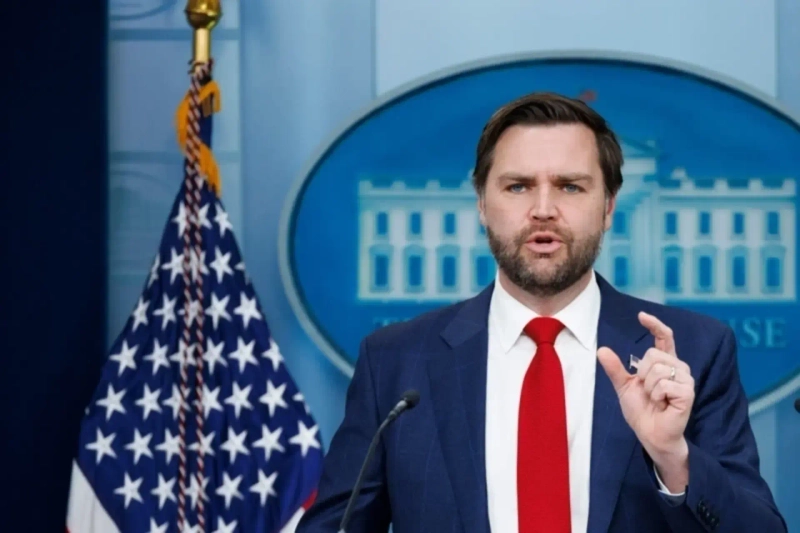
The Trump administration is now trying to defend the outcome of those negotiations. Vice President JD Vance told reporters at the White House on June 18 that the US holds all the cards. If Iran changes its posture, that would bring major changes for both Iran and the world. Even if it does not, the US loses nothing, he said.
Vance also defended Washington's decision to immediately allow Iranian oil exports. Despite years of sanctions, Iran had been exporting crude to China and elsewhere anyway, he said. Iran's problem was not sanctions but a blockade. On that basis, lifting sanctions does not amount to a new benefit for Tehran. Still, sanctions relief and a return to the international community had been one of Iran's central goals from the start.
Vance also pushed back against hard-liners in Israel who have voiced dissatisfaction with the US. He said the US provides two-thirds of the weapons used to defend Israel and told them to face reality. He also said Trump is currently the only head of state sympathetic to Israel.
Despite signing an MOU that reflected most of Tehran's long-standing demands, Iran has not softened its confrontational stance. Supreme Leader Mojtaba Khamenei said in a statement on June 18 that he had, in principle, held a different view of the agreement. Still, he approved the signing because President Masoud Pezeshkian, who chairs Iran's Supreme National Security Council, had promised to protect the rights of the Iranian people and the resistance front and had accepted responsibility for the outcome.
Khamenei also said Pezeshkian had pledged to reject any excessive US demands. That can be read as an effort to preserve the supreme leader's authority if negotiations break down while placing practical responsibility on the president. Khamenei also stressed that any face-to-face talks going forward would not mean recognizing the enemy's position.
A planned in-person US-Iran meeting in Burgenstock, Switzerland, on June 19, in place of a formal signing ceremony, appears to have been postponed. Vance's office told the White House press pool on June 18 that the vice president would not leave for Switzerland. It said only that the negotiating team's travel schedule is never simple or predictable, without giving a specific reason.
Lee Sang-eun, Washington correspondent, selee@hankyung.com

Korea Economic Daily
hankyung@bloomingbit.ioThe Korea Economic Daily Global is a digital media where latest news on Korean companies, industries, and financial markets.