Retail Investors Pile Into Samsung, SK Hynix With Leverage as Kospi Tops 9,000
Summary
- The Kospi has broken above the 9,000 level, while debt-fueled investing has surged, with outstanding margin loans reaching 37.8005 trillion won.
- Samsung Electronics and SK Hynix alone drew 9.095 trillion won in margin balances, as leveraged investing and forced selling increased sharply.
- As brokerages move to cool the market through higher margin requirements and restrictions on margin-financed purchases, investors are being advised to invest in line with their own risk tolerance.
Forecast Trend Report by Period


Debt-Fueled Buying Props Up Rally as Forced-Sale Risks Flash Warning Signs
Investors should keep bets in line with their risk tolerance
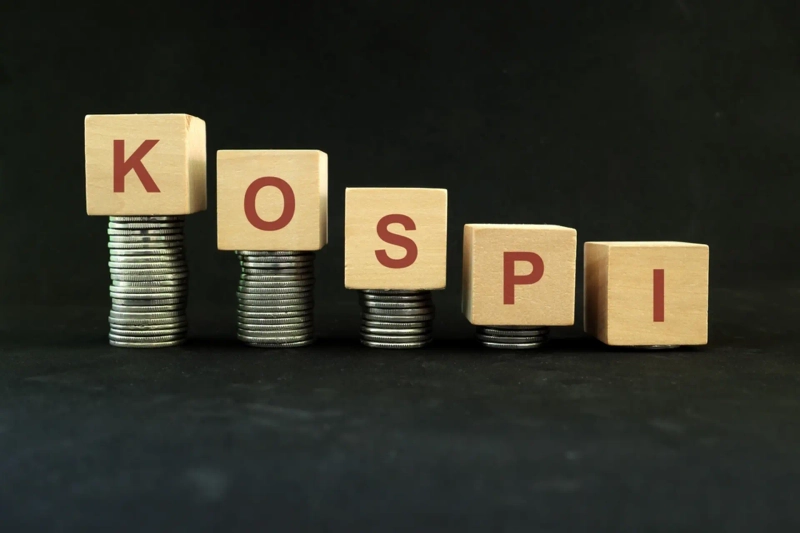
The Kospi has broken above 9,000 and extended its run of record highs, but concern is mounting over debt-fueled stock buying. Leveraged investing through margin loans and overdraft accounts has surged, prompting brokerages to tighten risk controls by restricting margin financing and raising margin requirements.
Margin loan balances approach 38 trillion won
The balance of margin loans stood at 37.8005 trillion won as of June 17, according to the Korea Financial Investment Association. That compares with 27.2864 trillion won at the end of last year, an increase of nearly 10 trillion won. Margin balances have risen sharply this year in step with the stock-market rally. Of the total, 28.8433 trillion won was tied to Kospi stocks and 8.9572 trillion won to Kosdaq shares.
Margin financing allows investors to borrow from brokerages to buy stocks. It can amplify gains in a rising market, but losses also deepen when share prices fall sharply. As South Korea's stock market has heated up, borrowing has accelerated.
The Kospi rose as high as 9,106.07 intraday on June 18 before ending the session at 9,063.84. It reached the 9,000 mark just 16 trading days after first breaking above 8,000 on May 26. The index closed at 9,052.42 on June 19. On June 20, it climbed as high as 9,385.59, setting an intraday record.
Borrowed money has flowed heavily into Samsung Electronics and SK Hynix, the two stocks that led the Kospi's advance. As of June 18, margin balances stood at 4.7628 trillion won for Samsung Electronics and 4.3322 trillion won for SK Hynix. Combined, the two stocks accounted for 9.095 trillion won.
At the end of last year on Dec. 30, the combined margin balance in the two names was about 2.5319 trillion won. In six months, Samsung Electronics rose to 4.7628 trillion won from 1.6477 trillion won, while SK Hynix surged to 4.3322 trillion won from 884.1 billion won. That means margin balances in the two stocks alone increased by about 6.5632 trillion won this year, underscoring how debt-funded buying concentrated in the pair.
The issue is no longer just the size of margin balances. The risks of leveraged investing are increasingly spilling into forced liquidations. In the past, margin investors often held on by posting additional collateral, but forced selling has been increasing recently. As market volatility rises, forced liquidations are also climbing among investors using deferred-payment trades, not just margin accounts.
The Korea Financial Investment Association said forced sales against unpaid customer balances have surged this year. They totaled 214.3 billion won in January, 229.5 billion won in February, 550.8 billion won in March and 707.7 billion won in April. The increase has continued in June. Through June 17, cumulative forced sales had already reached 694.6 billion won. With the month not yet over, forced selling remains elevated.
If volatility worsens further, monthly forced sales could exceed 1 trillion won. Daily forced sales topped 100 billion won for five straight sessions from June 5 to June 9. On June 9, 169.8 billion won was liquidated in a single day, one of the highest readings on record. The trend shows that leverage-driven liquidations are increasing as market swings widen.
In a report, the Korea Capital Market Institute said margin trading increases additional buying demand during rallies but amplifies selling pressure through forced liquidation during downturns. Concentrated forced selling can trigger a chain reaction of deleveraging.
Brokerages move to cool signs of overheating
As the Kospi moved above 9,000 and debt-fueled retail trading showed signs of overheating again, some brokerages began stepping in. Mirae Asset Securities said on June 20 that it had changed 10 stocks, including Doosan Enerbility, Samsung Electro-Mechanics, Samsung SDI, EcoPro BM, POSCO Holdings and Hanwha Ocean, from group E to group F.
For HANARO Fn K-Semiconductor and TIGER 200 IT exchange-traded funds, as well as KakaoBank and Shinsegae, the brokerage also raised margin requirements to 100% from 30% to 40% in addition to reclassifying them into group F. New margin loans and maturity extensions are restricted for stocks subject to 100% entrusted margin requirements or classified in group F.
KB Securities said on June 17 that it would temporarily restrict margin-financed buy orders to comply with credit extension limits under the Capital Markets Act. Meritz Securities, a day earlier, raised margin requirements to 100% from 30% to 50% for three stocks, including Jeju Semiconductor and Jusung Engineering.
Market participants also say bank lending, not just brokerage credit, is flowing into stock purchases. According to financial industry data, outstanding overdraft balances at South Korea's five major commercial banks stood at 42.9 trillion won as of June 8, the highest level in about three years and seven months. Because overdraft accounts are difficult to restrict by purpose, they are often used to fund stock trading.
A financial investment industry official said the burden of margin borrowing may remain manageable if foreign investors keep buying. But if the market corrects because of interest rates or external factors, the nearly 38 trillion won in debt-funded investing could add to volatility. Even if the rally continues, investors should avoid excessive borrowing and invest within their own tolerance for risk, the person added.
Kang Kyung-ju, Hankyung.com reporter qurasoha@hankyung.com

Korea Economic Daily
hankyung@bloomingbit.ioThe Korea Economic Daily Global is a digital media where latest news on Korean companies, industries, and financial markets.