June Won Averages 1,521.4 Per Dollar, Highest Since Financial Crisis
Summary
- The average won-dollar exchange rate this month reached 1,521.4, the highest level since the Asian financial crisis.
- The rise in the dollar index and the Federal Open Market Committee's (FOMC) signal that benchmark interest rates could rise further helped drive dollar strength and won weakness.
- Concerns are growing that the 1,500 won exchange rate could become entrenched as foreign investors continue net selling of domestic stocks and the won's real effective exchange rate index declines.
Forecast Trend Report by Period


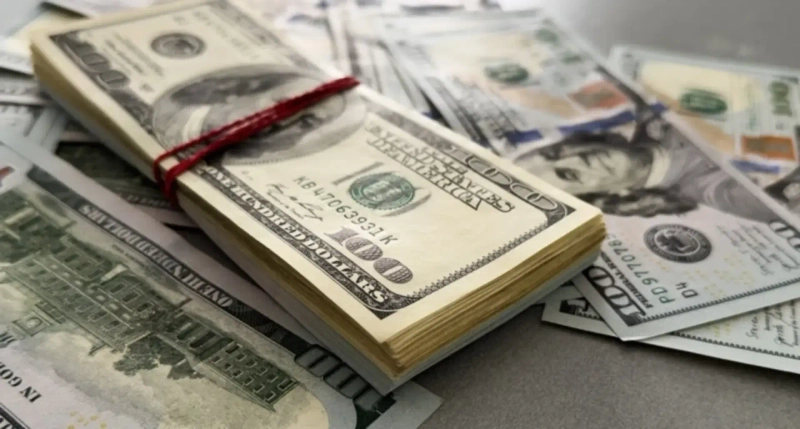
The won has averaged above 1,520 per dollar this month, reaching its highest level since the Asian financial crisis.
According to the Bank of Korea's economic statistics system, the won averaged 1,521.4 per dollar through June 19, based on the 3:30 p.m. daytime-trading close.
That is the highest monthly average since February 1998, when the exchange rate stood at 1,626.7 per dollar during the financial crisis. It is the highest level in 28 years and four months. The average is also about 70 won higher than in March 2009, when it reached 1,453.3 around the global financial crisis. Even in March this year, when the exchange rate jumped after the outbreak of war in the Middle East, the monthly average was 1,492.5 and did not top 1,500.
The won reached 1,500.8 per dollar on June 15 and stayed in the 1,500 range for 23 consecutive trading sessions through June 19. That is the longest stretch since the 49 trading days from Dec. 30, 1997, to March 13, 1998, during the financial crisis.
The won's real value is also falling. Bank for International Settlements data showed the won's real effective exchange rate index for May fell 0.32 point from a month earlier to 84.75, with 2000 set at 100.
That was the lowest since March 2009, when the index stood at 79.31, marking the weakest level in 17 years and two months.
The real effective exchange rate measures the won's purchasing power in international trade. A decline in the index means the won's real value has weakened relative to other currencies.
Several factors appear to be behind the recent rise in the exchange rate. Most notably, the Federal Open Market Committee on June 18 signaled the possibility of further benchmark interest-rate increases because of inflation concerns, bolstering the dollar.
The dollar index, which measures the greenback against six major currencies, rose as high as 101.123 intraday on June 19, the highest since May 16, 2025, when it touched 101.256.
The index hit a short-term intraday low of 97.620 on May 6 before gradually rebounding. It has remained above 100 since June 17.
Foreign selling of South Korean stocks after a sharp rally is also adding pressure on the won. Overseas investors were net sellers of 120.2123 trillion won ($87.1 billion) worth of shares on the KOSPI market this year through June 19.
Net selling this month alone has exceeded 20 trillion won.
Even so, foreign ownership rose to 41.03% as of June 19 from 36.27% at the end of last year, an increase of nearly 5 percentage points. That reflects steep gains in stocks heavily held by overseas investors. Concerns are growing that further foreign outflows could keep the won under pressure and entrench the exchange rate in the 1,500 range for the time being.
Choi Su-jin, Hankyung.com reporter, naive@hankyung.com

Korea Economic Daily
hankyung@bloomingbit.ioThe Korea Economic Daily Global is a digital media where latest news on Korean companies, industries, and financial markets.