PiCK
Ahn Do-geol Urges South Korea to Fast-Track Digital Asset Law
Summary
- Rep. Ahn Do-geol said South Korea should move quickly on digital asset institutionalization and the enactment of the Framework Act on Digital Assets.
- He said digital assets are no longer merely investment products and are rapidly developing into next-generation financial infrastructure and the real-world asset (RWA) market.
- Ahn said he would step up legislation in the second half of the year, including the Framework Act on Digital Assets and the Electronic Financial Transactions Act, to remove institutional uncertainty surrounding the digital asset industry.
Forecast Trend Report by Period


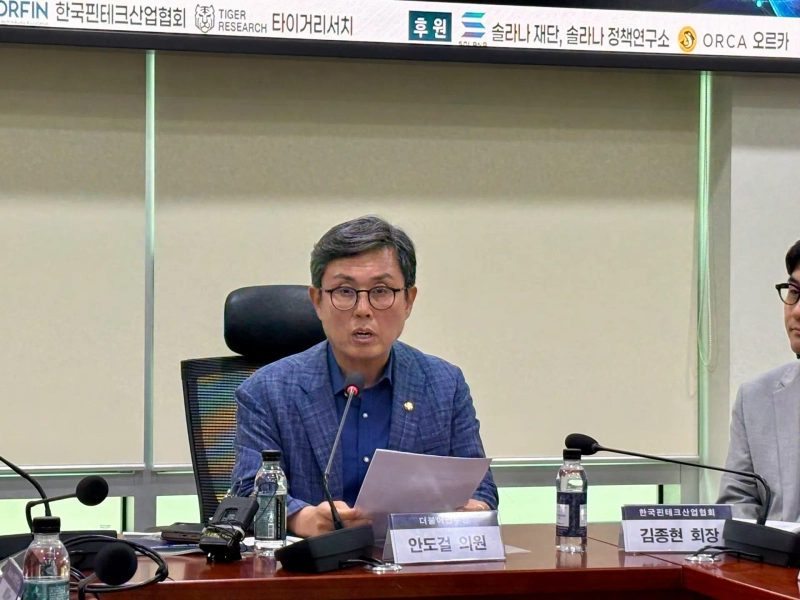
Ahn Do-geol, a lawmaker from South Korea’s Democratic Party, called for a swift push to institutionalize digital assets, saying the country needs to accelerate passage of the Framework Act on Digital Assets, which remains pending in the National Assembly.
Speaking at a seminar at the National Assembly Members’ Office Building in Seoul’s Yeouido district on June 22, Ahn said putting digital assets on a legal footing is no longer optional. Major economies and financial institutions are already competing to build new financial infrastructure, and South Korea must quickly remove regulatory uncertainty if it wants to avoid falling behind.
He said digital assets are evolving beyond mere investment products into next-generation financial infrastructure. They are dramatically improving the efficiency of payments and remittances, while the market for real-world assets, or RWAs, is also growing rapidly as government bonds, money market funds, deposits and real estate are issued and traded in the form of digital tokens.
Ahn also cited moves by major economies overseas. The US is seeking to secure leadership in the emerging digital financial order by enacting stablecoin legislation known as the GENIUS Act and pursuing the CLARITY Act to refine the legal foundation for digital assets. Japan, he said, is also moving beyond its earlier conservative approach by incorporating stablecoins into its domestic payments infrastructure as it adapts to a new financial order.
The Democratic Party proposed the Framework Act on Digital Assets last year, but the bill has continued to spin its wheels in the National Assembly. Industry participants say fostering the digital-asset industry is effectively impossible without a basic law. Ahn said the purpose of institutionalization is clear: whether digital assets will be left untended or developed into trusted financial infrastructure within the regulated financial system.
Ahn said he intends to revive full-scale discussions on the bill in the second half of this year. The legislation must now move beyond debate and toward enactment, he said, adding that he would step up efforts in the National Assembly later this year. He also said he would actively pursue follow-up legal reforms, including revisions to the Electronic Financial Transactions Act, and work to lay the legislative foundation for digital assets to develop into financial infrastructure used in the real economy.

JOON HYOUNG LEE
gilson@bloomingbit.ioCrypto Journalist based in Seoul