Iran Agrees to Nuclear Inspections in Swiss Talks, Testing Trump’s Sunshine Strategy
Summary
- Iran agreed to accept nuclear inspections and allow an IAEA monitoring regime, setting the stage for fuller talks on Iran’s denuclearization.
- The US Treasury Department announced an immediate waiver of sanctions on Iranian oil exports, opening the way for Iran to sell oil at normal prices and receive payment in dollars.
- Amid expectations that the move will lower Iran’s exchange rate and ease pressure on the country’s economy, uncertainty remains over Strait of Hormuz transit fees and plans to charge for war-risk insurance.
Forecast Trend Report by Period


The US and Iran established a basic framework for a final ceasefire agreement at their first high-level peace talks in Switzerland, laying groundwork for further negotiations despite initial tensions.
The two sides met in Switzerland on June 21. After some early sparring, they agreed to set up a high-level committee to oversee the mediation process, a step toward a substantive final deal.
Iran Accepts Nuclear Inspections
The biggest breakthrough was Iran’s agreement to accept nuclear inspections. Allowing oversight by the International Atomic Energy Agency, the United Nations’ nuclear watchdog, can be read as a sign that Tehran is prepared to halt nuclear development.
Trump wrote on Truth Social on June 23 that “everybody knows full well that Iran will agree to accept major weapons inspections to ensure ‘nuclear transparency’ for a long time to come.” The US plans to use the talks, which run through Aug. 16, to address Iran’s stockpile of highly enriched uranium, set a period for suspending enrichment and establish an IAEA verification regime, with the aim of formalizing Iran’s denuclearization.
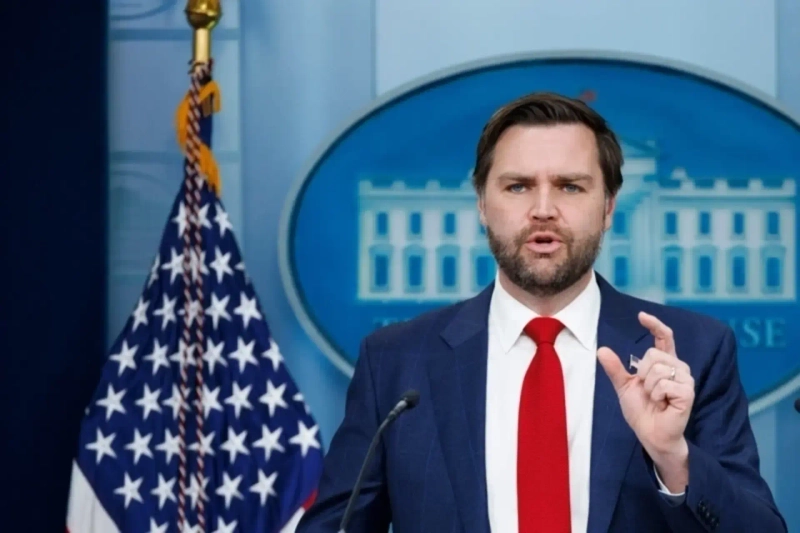
Asked whether Iran’s pledge could be trusted, Vice President JD Vance said, “You have to trust actions, not words.” He added that negotiators would need to see what IAEA inspectors are actually allowed to do once they enter Iran, and that the issue would form part of the talks.
Iranian media have not yet reported that Tehran has accepted an IAEA inspection team. President Masoud Pezeshkian had previously said that deciding uranium enrichment levels is a matter of Iranian sovereignty, leaving open how the government will explain the issue at home.
US Immediately Waives Sanctions on Iranian Oil Exports
In return for progress on the nuclear issue, Iran is poised to receive major economic benefits. The US Treasury Department announced on June 23 that it would waive sanctions related to Iranian crude oil and petroleum products, allowing the country to produce and sell them. The waiver lasts 60 days, through midnight on Aug. 21.
During that period, Iran will be able to sell its oil products and receive payment in dollars. It had continued exporting oil to China and India, but sanctions prevented it from receiving full market prices. A return to normal oil sales would provide significant economic relief.
The measure also permits related financial transactions, effectively exempting financial institutions such as Iran’s central bank from sanctions. That would mark a fundamental break from the Iran sanctions framework built by the US Congress over the past two decades.
Iran’s economy minister said the move would play a major role in lowering the country’s exchange rate. Hopes are rising that an economy squeezed by inflation and currency weakness will improve.
Mechanism to Manage Lebanon Issues
Another major issue in the negotiations was attacks on Hezbollah in Lebanon. The US and Iran agreed with the Lebanese government to establish a mechanism to prevent clashes.
They also agreed to ensure that any halt to military operations in Lebanon is carried out in line with the memorandum of understanding.
Communication Channel for the Strait of Hormuz
The two sides offered somewhat different accounts of arrangements for the Strait of Hormuz, though they agreed to establish a communication channel to address issues involving the waterway.
Differences remain over transit tolls or fees. Trump has said the strait will remain open free of charge after 60 days, while Iran has stressed that the waterway will remain under its control.
Mohammad Bagher Ghalibaf, speaker of Iran’s parliament and head of the Iranian negotiating team, said on June 23 that Iran would comply with international law. He added that the strait would be managed by Iran and would not return to its prewar status.
Iran is planning to require ships passing through the strait to carry war-risk insurance. It is also considering charging premiums for that coverage.
Trump Keeps Up Pressure
Trump again signaled that he could resort to force if Iran fails to honor its commitments. “If Iran doesn’t keep its promises or doesn’t behave properly, I will do what I have to do,” he said.
The remark suggested the US could take military action against Iran if negotiations break down.
Washington — Lee Sang-eun, Hankyung correspondent, selee@hankyung.com

Korea Economic Daily
hankyung@bloomingbit.ioThe Korea Economic Daily Global is a digital media where latest news on Korean companies, industries, and financial markets.