South Korea’s NPS Sells $920 Million of Stocks in Four Days, Dumps Samsung Electro-Mechanics and Buys Naver
Summary
- The National Pension Service sold about $920 million of shares over four straight trading days ahead of the end of a rebalancing grace period later this month, after its domestic equity weighting on the Kospi rose above 30%.
- The market says further selling of as much as $43.5 billion may be unavoidable as the National Pension Service works to reduce its domestic equity weighting back within the permitted range.
- The National Pension Service took heavy profits in Samsung Electro-Mechanics and other names while buying Naver and SK Hynix, prompting concern that pension-fund selling could slow the Korean stock market’s upward momentum.
Forecast Trend Report by Period


Pension funds sell about $920 million of stocks over four straight sessions
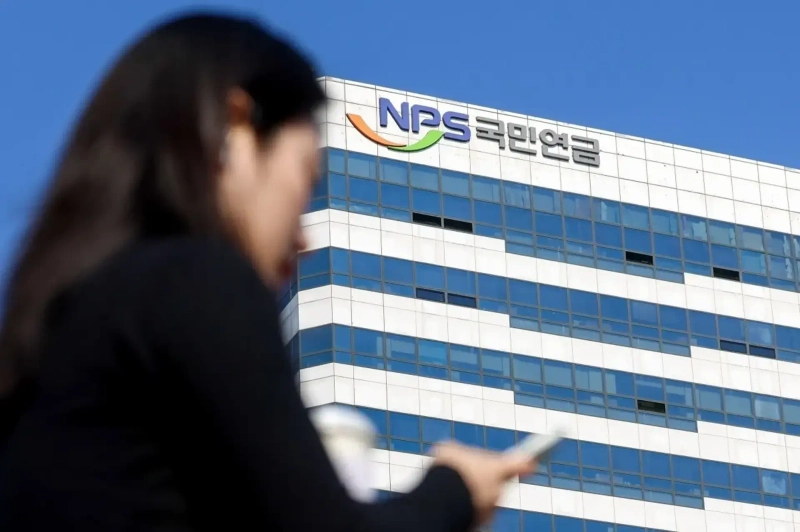
South Korea’s National Pension Service has sold nearly 1.27 trillion won ($920 million) of shares on the benchmark Kospi over four consecutive trading days. The selling came as the Kospi climbed as high as 9,100, pushing the fund’s domestic equity allocation beyond its upper limit. Market participants say the NPS is moving ahead of the end of a temporary rebalancing grace period later this month. Its next steps on rebalancing are now emerging as a key variable for Korean stocks.
According to Korea Exchange data, pension funds were net sellers of about 2.5 trillion won ($1.81 billion) on the Kospi over the past month. From June 17 to June 22, they sold a net 1.2696 trillion won ($920 million) of shares over four trading days. Net sales totaled 167.6 billion won ($121 million) on June 17, 392 billion won ($284 million) on June 18, 526.7 billion won ($382 million) on June 19 and 183.3 billion won ($133 million) on June 22, reflecting profit-taking.
People in the financial investment industry estimate that most of the selling came from the NPS. Some see the move as more than short-term profit-taking, instead viewing it as a structural cut in domestic equity exposure.
A key driver is the timing of the pension fund’s asset-allocation rules. Under a January decision by the fund management committee, the NPS was allowed to defer automatic selling even if its holdings moved outside the permitted allocation band. That measure expires at the end of June.
From July, the normal asset-allocation rules will again be applied strictly. The fund appears to be trimming positions in advance to spread out any selling shock that could follow the end of the grace period. The committee had earlier raised the target weighting for domestic equities and widened the tactical asset-allocation band to ease downward pressure from large stock sales, lifting the upper limit to 28.8%. Since then, however, the Kospi has surged to 9,100, and the NPS’s domestic equity weighting is known to have risen above 30%.
If stocks hold at current levels or rise further, mechanical selling by pension funds to maintain long-term asset-allocation principles will be unavoidable. Some in the market say the NPS may have to sell as much as 60 trillion won ($43.5 billion) of domestic shares to bring its weighting back within the permitted range.
Still, the market sees limited risk of the kind of selloff seen in the past. The NPS has reduced the amount it can execute in a single day to minimize market disruption, and is expected to spread sales over a longer period.
Lee Kyung-min, an analyst at Daishin Securities, estimated that the NPS’s domestic equity weighting within its portfolio had risen to 31.4% as of June 19. He said supply pressure from stock sales is increasing. Lee identified 20 net-sold sectors, including trading companies and capital goods, IT hardware, secondary batteries, IT home appliances, securities firms and automakers.
Samsung Electro-Mechanics was the stock most heavily sold by pension funds over the past month, with net sales of 777 billion won ($563 million). It was followed by SK Square with 474.9 billion won ($344 million), Mirae Asset Securities with 292.1 billion won ($212 million), Doosan with 211.7 billion won ($153 million), LG Innotek with 187.9 billion won ($136 million), Samsung Electronics preferred shares with 185.8 billion won ($135 million), and POSCO Holdings with 155.3 billion won ($113 million). The recent surge in equities appears to have driven profit-taking alongside asset-allocation adjustments.
Even amid rebalancing-driven net selling, pension funds bought Naver, with net purchases of 459.8 billion won ($333 million), SK Hynix with 431.8 billion won ($313 million), Hyundai Mobis with 158.9 billion won ($115 million), Samsung Life Insurance with 110 billion won ($80 million), and Shinhan Financial Group with 101.6 billion won ($74 million).
A financial investment industry official said the underlying need to gradually reduce domestic equity exposure above the permitted cap has not changed. Continued selling by pension funds, a key source of demand in Korea’s stock market, is likely to remain a major drag on the market’s upward momentum for the time being.
Kang Kyung-ju, Korea Economic Daily reporter qurasoha@hankyung.com

Korea Economic Daily
hankyung@bloomingbit.ioThe Korea Economic Daily Global is a digital media where latest news on Korean companies, industries, and financial markets.