Nvidia’s HBM Push Opens Door to $1.52 Trillion Memory Market Next Year
Summary
- The global memory market is projected to grow to $1.09 trillion this year and $1.52 trillion next year.
- Expanded investment in AI data centers and servers will lift the share of server memory to 56% this year and 57% next year.
- Counterpoint said a sharp correction in memory prices could emerge in the second half of 2027, while HBM, LTA, and custom HBM strategies will be key variables in the fight for market share.
Forecast Trend Report by Period


Global memory market to reach $1.52 trillion next year
This year’s market seen at $1.09 trillion
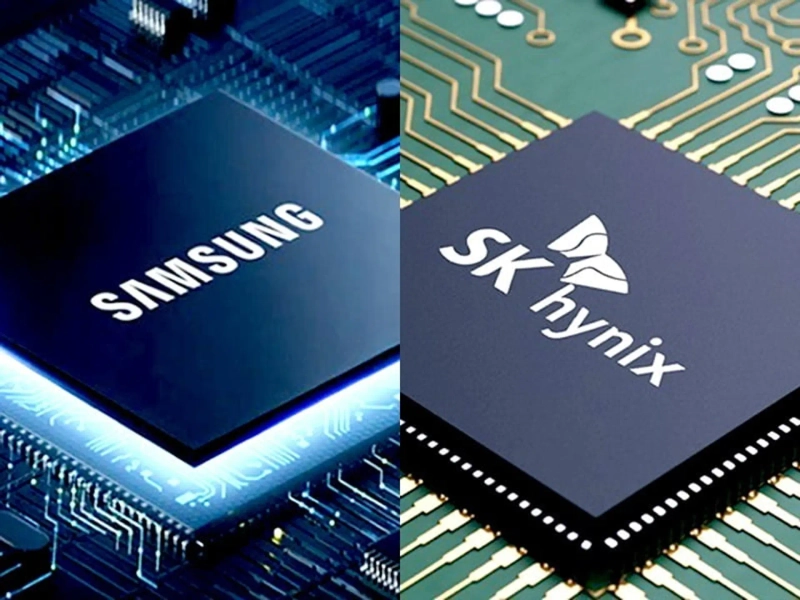
The global memory market is set to exceed $1.45 trillion next year as demand for artificial intelligence servers surges. This year’s market is also projected to reach $1.09 trillion, quadrupling from a year earlier.
Counterpoint Research said June 23 that the global memory market should continue expanding through the first half of next year. It forecast the market at about $1.52 trillion next year.
Server memory is the main growth driver. Demand for high-capacity, high-performance memory is rising rapidly as investment in AI data centers and servers expands. Counterpoint expects server products to account for 57% of total memory revenue next year.
The research firm said memory has become a key variable in AI infrastructure investment. As AI server deployments increase, so does demand for high-performance memory. The jump in server-memory demand is also pushing suppliers to reshape product portfolios and production strategies around higher-value memory.
Still, managing supply and demand will be critical if the current growth trajectory is to continue. Counterpoint said supply could increase quickly once new capacity additions begin to materialize. If supply growth outpaces demand, the risk of a price correction would rise.
That risk is expected to come into view in the second half of next year. Counterpoint said it cannot fully rule out a sharp correction in memory prices starting in the second half of 2027. Even if AI demand remains strong, memory prices could come under pressure if capacity expansions arrive all at once.
That could also alter the competitive dynamics among suppliers. Long-term supply agreements, or LTAs, designed to secure stable volumes, custom HBM strategies tailored to customer needs and the speed of migration to next-generation processes are emerging as key factors in the battle for market share. The focus is shifting away from mass production toward which suppliers can reliably serve which customers with which products.
For this year, the outlook still points to steep growth. Counterpoint forecast the memory market at about $1.09 trillion in 2026, up fourfold from a year earlier.
Server memory’s share is also set to expand further this year. Server products will account for 56% of total memory revenue in 2026, up from 37% in 2025, according to Counterpoint.
Supply shortages and rising prices are also driving market growth this year. Demand for server memory is increasing rapidly, deepening supply imbalances and sustaining upward pressure on prices.
A surge in demand for server products, a shift in product mix toward higher-value chips and supply constraints have even pushed the price of commodity DRAM per gigabit above that of HBM. HBM, despite its more complex and costly manufacturing process, also has room for further price increases.
Samsung Electronics has already surpassed $1 billion in revenue from sixth-generation HBM4 shipments within four months of starting mass production. SK Hynix recently supplied samples of its 12-layer HBM4E, a next-generation product, to major customers, intensifying competition between the two companies.
Nvidia Chief Executive Officer Jensen Huang previously met executives from Samsung Electronics and SK Hynix during a visit to South Korea to discuss HBM cooperation. At a dinner meeting, he drew attention by saying, “Give me more HBM.”
Kim Dae-young, Hankyung.com reporter kdy@hankyung.com

Korea Economic Daily
hankyung@bloomingbit.ioThe Korea Economic Daily Global is a digital media where latest news on Korean companies, industries, and financial markets.