Micron Blowout Reverses Chip Fears, Sparks Sharp Rebound in Samsung and SK Hynix
Summary
- Micron said record quarterly results, an EPS surprise, and a strong fourth-quarter revenue outlook turned anxiety over the memory cycle into renewed optimism.
- The results signal that an HBM-led memory shortage and firm pricing are taking hold across the industry, lifting earnings expectations for Samsung Electronics and SK Hynix.
- Mehrotra said rising AI demand, structural supply constraints, the pace of HBM4 mass production, long-term supply contract terms, and the durability of commodity DRAM prices will determine continued supply tightness in memory beyond 2027, as well as second-half earnings for Samsung Electronics and SK Hynix.
Forecast Trend Report by Period


Micron posts record quarterly results
Strong HBM demand boosts profitability
"Memory supply tightness to last beyond 2027"
Samsung, SK Hynix earnings expectations rise
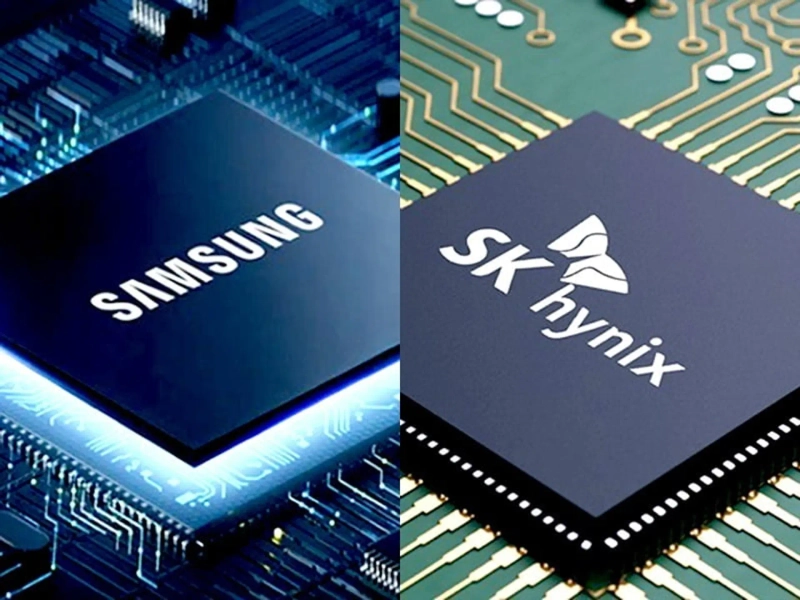
Sentiment reversed within a day. Micron Technology shares plunged 13% the previous session as concern spread that the artificial-intelligence chip rally had become overheated. SK Hynix also sank more than 12%. Those fears quickly gave way to renewed optimism after Micron reported results that easily beat market expectations, lifting earnings expectations for Samsung Electronics and SK Hynix as well.
According to the industry on June 25, Micron posted fiscal third-quarter revenue of $41.46 billion for the March-May period. That was up 345.7% from $9.3 billion a year earlier. It also far exceeded the $35.84 billion estimate compiled by LSEG. The company surpassed its previous quarterly revenue record of $23.86 billion, set just one quarter earlier.
The main driver was high-bandwidth memory, or HBM, used in AI servers. Revenue from the cloud memory segment, which includes HBM, totaled $13.769 billion, the largest among its businesses. Core data center revenue was $11.524 billion, while mobile and client brought in $11.521 billion. Automotive and embedded revenue came to $4.634 billion. The figures suggest memory demand that began in AI data centers is spreading to general data centers, mobile devices and automotive and industrial applications.
Profitability also improved sharply. Micron's operating margin jumped to 81.2% from 26.8% a year earlier. That was more than 10 percentage points above the previous quarter's 69%. Adjusted earnings per share came to $25.11, beating Wall Street's consensus estimate of $20.78. Micron expects fourth-quarter revenue for the June-August period to reach $50 billion, above the market forecast of $43.58 billion.
The product roadmap is also adding to optimism about the cycle. Micron said its sixth-generation HBM product, HBM4, is being deployed at scale on customer platforms. It expects HBM4E to enter mass production next year. Chief Executive Officer Sanjay Mehrotra said the record third-quarter results and an even stronger fourth-quarter outlook reflect the strategic value of memory in the AI era.
Before the earnings release, markets had moved in the opposite direction. On June 23, Micron and SanDisk each fell 13% in New York trading. The Philadelphia Semiconductor Index tumbled 7.8%. Investors had grown more skeptical that spending on AI data centers would translate into profits, while profit-taking hit memory shares that had rallied sharply this year.
South Korean stocks also came under pressure. SK Hynix dropped more than 12%, and the Kospi fell about 10%. Micron's earnings were closely watched as a test of whether the correction was merely a pause or a turning point in the AI investment cycle. Ahead of the release, FactSet had forecast Micron's third-quarter earnings per share at $20.76 and revenue at $35.75 billion. The company needed to clear those estimates to provide a basis for a rebound in its stock.
The results are also being taken as a positive signal for Samsung Electronics and SK Hynix. Micron's performance is not just a one-off company result. It points to industrywide memory shortages and firm pricing.
According to market researcher TrendForce, global DRAM revenue rose 81% in the first quarter from the previous quarter to $97 billion. Samsung Electronics retained the top spot with $37.32 billion in revenue and a 38.5% market share. SK Hynix followed with $27.98 billion and a 28.8% share.
Samsung Electronics stands to be one of the biggest beneficiaries of rising commodity DRAM prices. TrendForce projects second-quarter contract prices for commodity DRAM will rise 58% to 63% from the previous quarter. For Samsung, which has large production capacity, higher prices for server, mobile and PC memory could bolster earnings alongside HBM. Given its recent progress in restoring HBM competitiveness, the memory business could grow even faster.
SK Hynix also has a chance to reaffirm the advantage it gained by moving early in HBM. Micron's results again showed demand exceeds production capacity, suggesting suppliers are likely to retain the upper hand in HBM for the time being. At the same time, Micron's expansion of HBM4 supply also suggests customers are diversifying their supply chains. Even with stronger pricing power, SK Hynix still needs to preserve both its technology lead and shipment volumes.
On June 25, Samsung Electronics rose more than 4% in early trading and SK Hynix jumped more than 9%. According to the Korea Exchange, a buy-side sidecar was triggered as Micron's blockbuster results helped drive a sharp rally in the Kospi.
Mehrotra said he expects tight supply-demand conditions in the memory market to continue beyond 2027 because of rising AI demand and structural supply constraints. That indicates AI memory demand is unlikely to ease even after 2027. The key variables are the pace of HBM4 mass production, the terms of long-term supply contracts and the durability of commodity DRAM prices. How those three factors develop will shape expectations for Samsung Electronics and SK Hynix in the second half.
Kim Dae-young, Hankyung.com reporter, kdy@hankyung.com

Korea Economic Daily
hankyung@bloomingbit.ioThe Korea Economic Daily Global is a digital media where latest news on Korean companies, industries, and financial markets.