PiCK
Min Byung-duk Says 200 Companies Want to Issue Stablecoins in US, Urges Korea to Prepare; Scott Puts CLARITY Act Odds at 50-50
Forecast Trend Report by Period


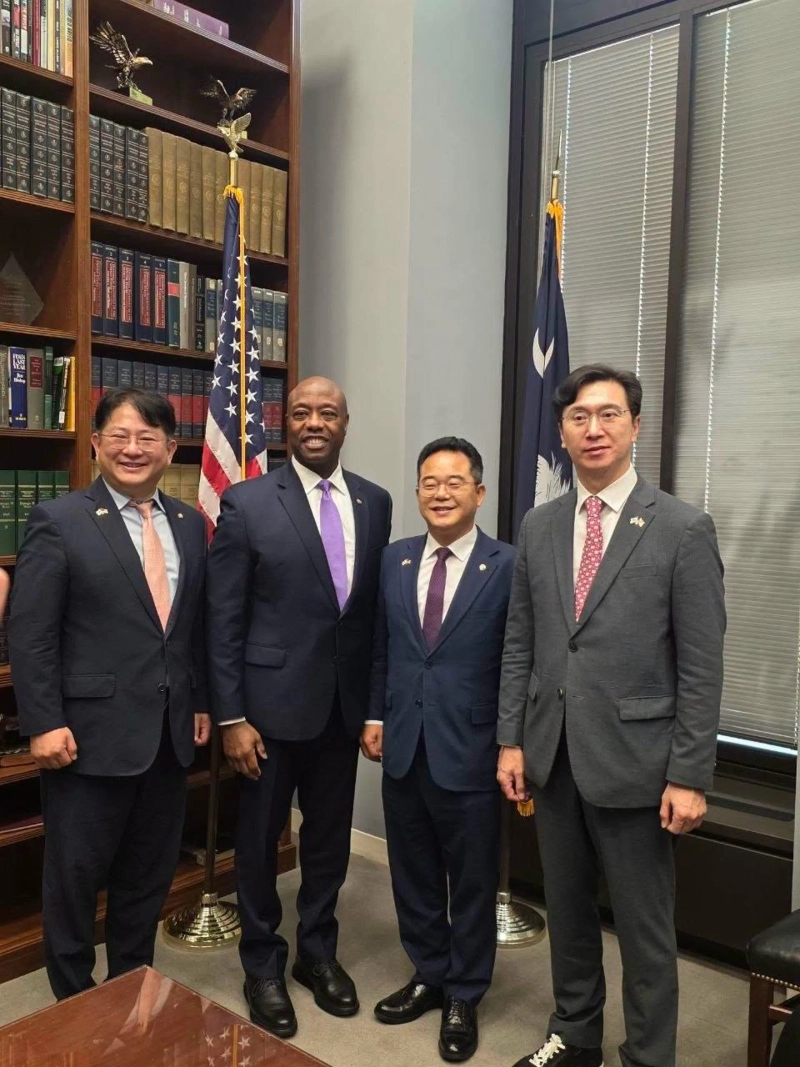
South Korean lawmaker Min Byung-duk of the Democratic Party said he discussed key issues in US stablecoin legislation and the CLARITY Act, a digital-asset market structure bill, during a visit to Washington with US Senator Tim Scott. Scott indicated the chances of the CLARITY Act passing were "50-50," according to Min.
According to an itinerary Min posted on Facebook on June 25, a National Assembly delegation met Scott that day to discuss the GENIUS Act and the CLARITY Act. Scott, chairman of the Senate Banking Committee, is a central figure in US efforts to formalize stablecoin rules and advance digital-asset legislation.
Min said Scott expressed optimism that the GENIUS Act would help expand the use of the US dollar globally. Min said the remarks clearly showed how Republicans view dollar-based stablecoins.
Scott said five issues remain unresolved in the CLARITY Act, Min wrote. The first is compensation, or interest payments. Because banks and crypto firms have different legal status, crypto companies cannot pay interest in the same way banks do, Scott explained, according to Min.
Min said Scott described the interest issue as a solution "that makes nobody happy." The remark suggested a compromise would be needed that reflects the differences between banks and crypto firms, even if neither side is fully satisfied.
The second issue is DeFi, or decentralized finance. Banks have raised concerns about know-your-customer and anti-money-laundering requirements in decentralized payment systems, and discussions are continuing over what institutional safeguards may be needed.
The third issue is securing a quorum to move the bill. The fourth is jurisdiction within the Senate, referring to the need to coordinate authority between the Senate Banking Committee and the Agriculture Committee over digital-asset legislation. The fifth is conflicts of interest involving senior officials or elected officeholders. Min described that issue as involving "President Trump and the Democrats."
Scott also said the CLARITY Act could help curb North Korea's illicit use of cryptocurrencies, according to Min.
On the second day of the Washington trip, the delegation met with Coinbase and the US Securities and Exchange Commission. Min said he met over breakfast with Kara Calvert, Coinbase's vice president for US policy. Coinbase is the largest digital-asset trading platform in the US and is involved in ongoing legislative discussions on the sector.
Min said Coinbase expects the CLARITY Act could pass next month and is counting votes in the Senate. The company cited several major issues in the legislative process, including ethical concerns over elected officials such as the president participating in digital-asset businesses, political questions surrounding appointments of the SEC and Commodity Futures Trading Commission chairs, and technical issues tied to financial regulation.
The standoff between banks and nonbanks over who can issue stablecoins was also a central topic. According to Min, Coinbase said both banks and nonbanks should be allowed to issue them, but under strict conduct rules. In other words, the market should be open to all entrants while applying tough standards across the board.
Min said that approach is intended to support innovation and could broaden the scope for future cooperation between banks and nonbanks. "They say around 200 companies in the US are currently seeking to issue stablecoins," he said. "That is a number we should also be considering."
The question of whether stablecoins should pay interest also came up. Min said the GENIUS Act moves toward a strict ban on both direct and indirect interest payments on stablecoins, while the CLARITY Act is discussing whether users can be rewarded for activity.
Later the same day, Min visited SEC headquarters and met with Commissioner Hester Peirce. Peirce outlined the main provisions of the CLARITY Act now under discussion and said regulators should recognize the market's natural development rather than obstruct it, according to Min.
Peirce also said the SEC is providing technical support to Congress during the legislative process, while lawmakers use that input to build the broader regulatory framework. On tokenization, she said the way an asset is traded matters more than the type of asset, Min said.

Minseung Kang
minriver@bloomingbit.ioBlockchain journalist | Writer of Trade Now & Altcoin Now, must-read content for investors.