PiCK
Forbes Says Altcoins May See Selective Recovery This Year Instead of Broad Rally
Forecast Trend Report by Period


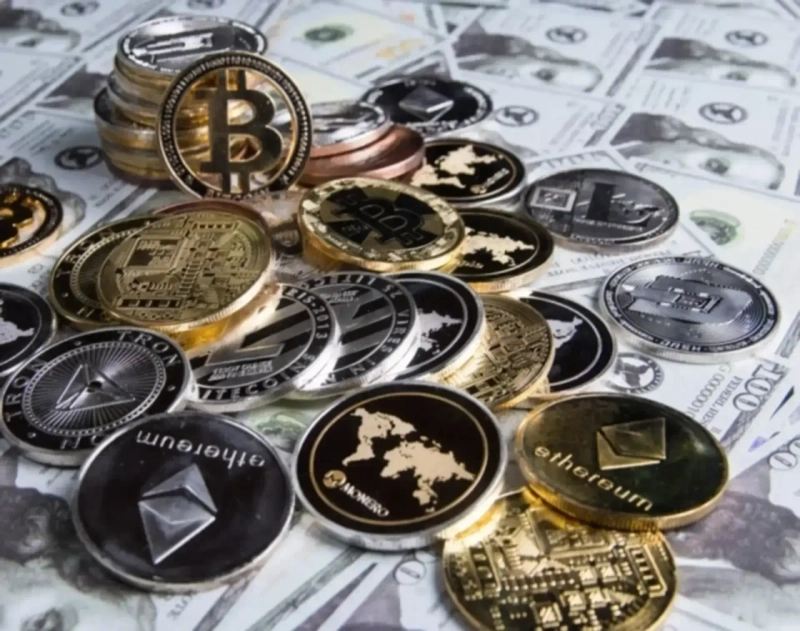
This year’s altcoin market may recover selectively, led by projects with real-world use cases and profitability, rather than through the broad rallies seen in past cycles.
Forbes reported on June 25 that major altcoins remain far below their record highs, but market participants expect capital to concentrate in a limited number of projects rather than fuel a traditional “altseason” in which nearly all altcoins rise together.
According to Forbes, the largest altcoins by market capitalization — Ether, BNB, XRP, Solana and Tron — are trading on average about 60% below their all-time highs. The number of cryptocurrency holders worldwide has surpassed 740 million, but the broader altcoin market has yet to post a full recovery.
Forbes said Bitcoin’s elevated market dominance reflects investors’ risk aversion. Within altcoins, projects with actual revenue, established user bases and clear use cases are attracting relatively more attention.
Hyperliquid and Solana were cited as examples. Hyperliquid has been conducting buybacks and token burns using revenue from perpetual futures trading, and its protocol support fund has recently purchased more than $1.3 billion worth of HYPE. Solana has shown strength in memecoins, real-world assets, stablecoins and consumer applications. Ethereum was still described as core infrastructure for smart-contract platforms.
Experts said any altcoin recovery in 2026 would probably follow a narrow sequence of capital inflows. Jason Lindal, chief executive officer of tokenization company Nebula DeFi, said money would move first into Bitcoin, then into large-cap assets such as Ethereum and Solana, and only afterward selectively into higher-risk assets.
Some market watchers also said speculative tokens should be monitored for signs that risk appetite is returning. Lindal said some of the first assets to respond if market momentum revives could be speculative tokens with high liquidity and volatility.
Gracy Chen, chief executive officer of Bitget, said a traditional altseason may be difficult to achieve in this cycle. “This could become a period in which winners and losers are increasingly clearly separated,” she said. In the short term, Bitcoin dominance is likely to remain high while low-utility tokens continue to face shakeouts.
Eric Wade, editor of Crypto Capital at Stansberry Research, said the biggest mistake is to treat altcoins as a single asset class. He divided the market into three groups. The first is infrastructure projects tied to institutional demand, including real-world asset tokenization, payments and on-chain private credit.
Forbes said tokenized real-world assets expanded from about $5 billion in early 2025 to more than $30 billion by mid-2026. The on-chain private credit market has also continued to grow, offering yields above government bond returns.
The second group is narrative-driven tokens with no clear revenue, users or development teams. Forbes said many of them have fallen more than 70% since 2025. The third is community-based projects that continue building regardless of the macro backdrop. Wade said the next generation of winners could emerge from that segment.
Forbes said the next altcoin cycle may look less like the broad rallies of the past and more like a market where token selection matters. Projects that prove real-world use cases, profitability and links to traditional finance may recover, while projects driven purely by speculation could continue to struggle.
Bart Smith, chief executive officer of Avalanche Treasury, said the key questions in valuing altcoins are: “What is the purpose, and what problem does it solve?” Coins and chains that cannot answer those questions will continue to struggle regardless of the macro environment, he added.

Minseung Kang
minriver@bloomingbit.ioBlockchain journalist | Writer of Trade Now & Altcoin Now, must-read content for investors.